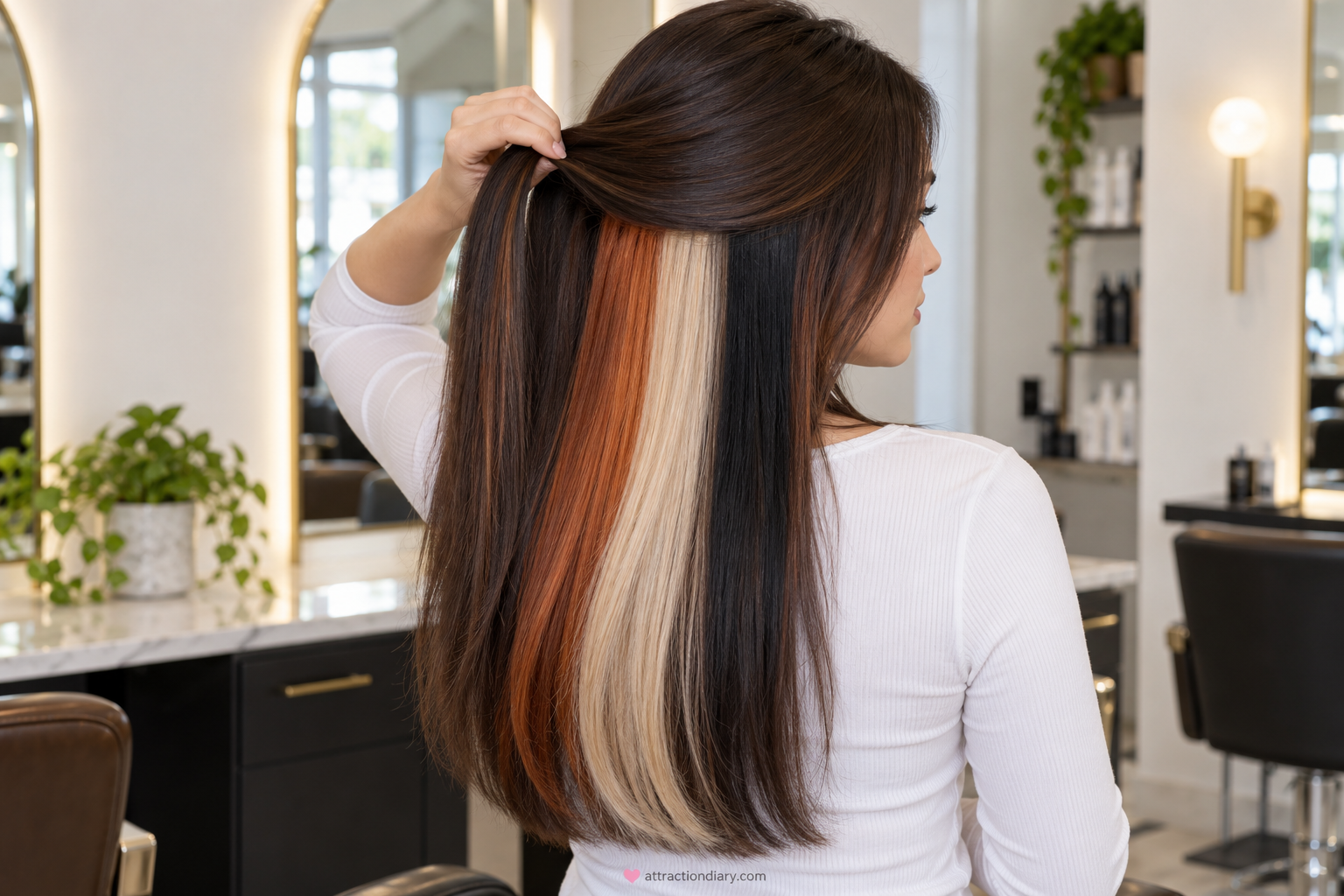
Calico peekaboo hair combines a few contrasting shades underneath a quieter top layer. Copper, cream, and deep brown are a familiar mix, but the size and position of the panels can change the whole effect.
The ideas below focus on placement as much as color. Choose a version that suits the way you normally wear your hair, then discuss the lightening and upkeep with a qualified colorist.
1. Espresso Hair With Copper and Cream Underlayers
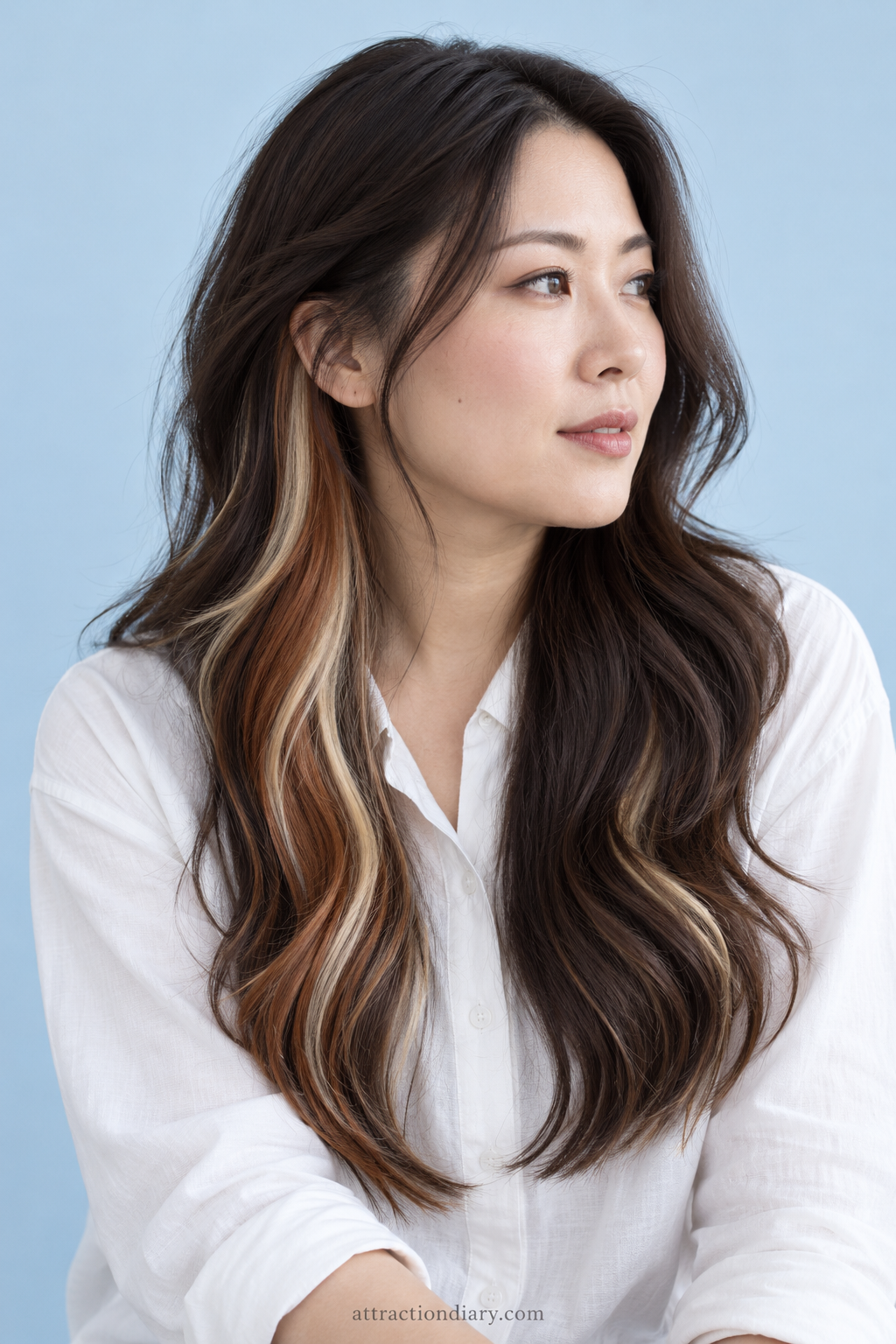
A dark top layer gives copper and creamy blonde panels a little room to surprise you. Worn down, the color sits quietly beneath the surface. A loose tuck behind one ear reveals enough contrast to make the long, simple shape feel more interesting.
Ask your colorist to map the lighter sections beneath the crown rather than through the whole head. A smooth blowout shows the panel edges clearly, while loose waves soften them.
2. A Narrow Calico Ribbon at the Nape
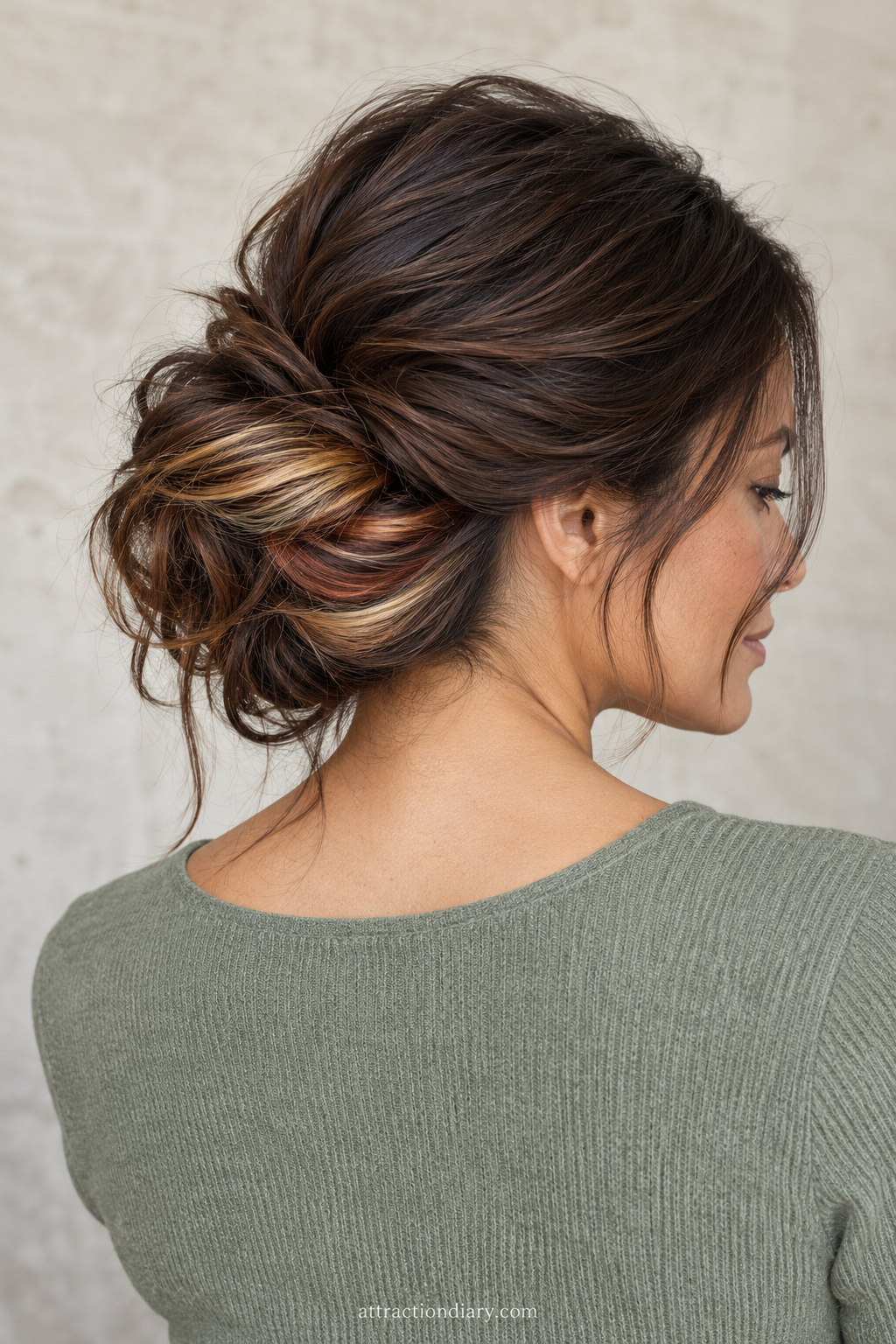
A slim band of copper, blonde, and deep brown at the nape offers a smaller introduction to calico color. Most of the hair stays close to your natural shade, so the hidden detail appears mainly in a ponytail or loose updo.
The placement matters more than the amount of color. Bring a photo showing how much you want visible with your hair down. A narrow panel can still look striking, especially against a dark base with a clean, even perimeter.
3. Long Waves With Offset Copper Panels
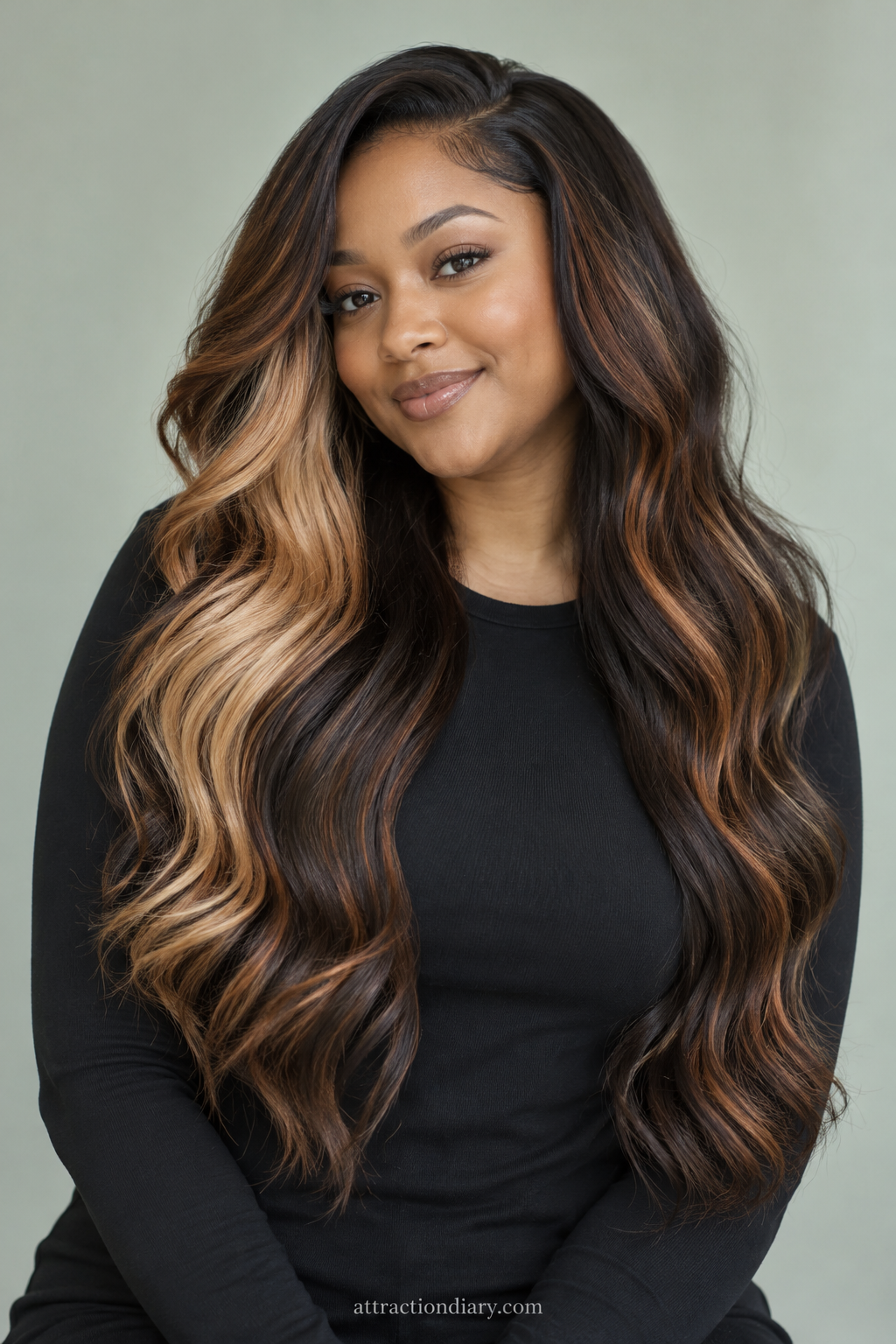
Unevenly placed copper and cream sections give long waves a less rigid finish. One side can show a broad pale ribbon while the other reveals a thinner warm panel. The dark top layer keeps the whole look connected instead of turning it into scattered highlights.
Let the waves fall loosely rather than brushing everything into perfect matching curls. A colorist can place the panels around your usual parting, which helps the hidden shades appear in the areas you actually notice while styling your hair.
4. Cream Blonde Hair With Dark Calico Underneath
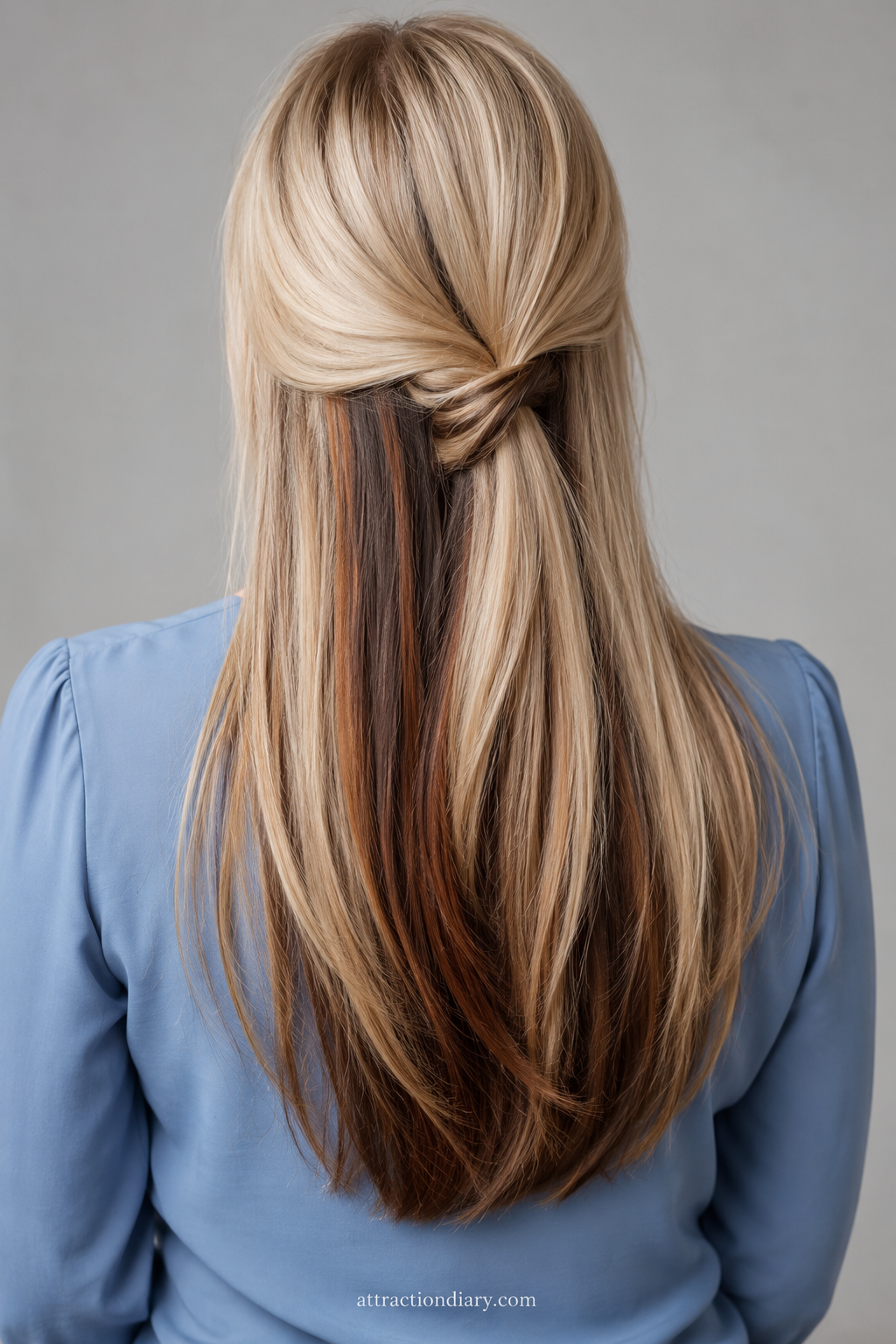
A light blonde surface changes the usual calico contrast. Deep brown and soft copper underneath create shadow rather than brightness, especially around the back of the head. The effect feels strongest on long, straight hair with a simple center or slightly off-center part.
Keeping the darker panels underneath lets the blonde remain the main color. Ask about the upkeep needed for both shades before committing.
5. A Side-Swept Calico Reveal
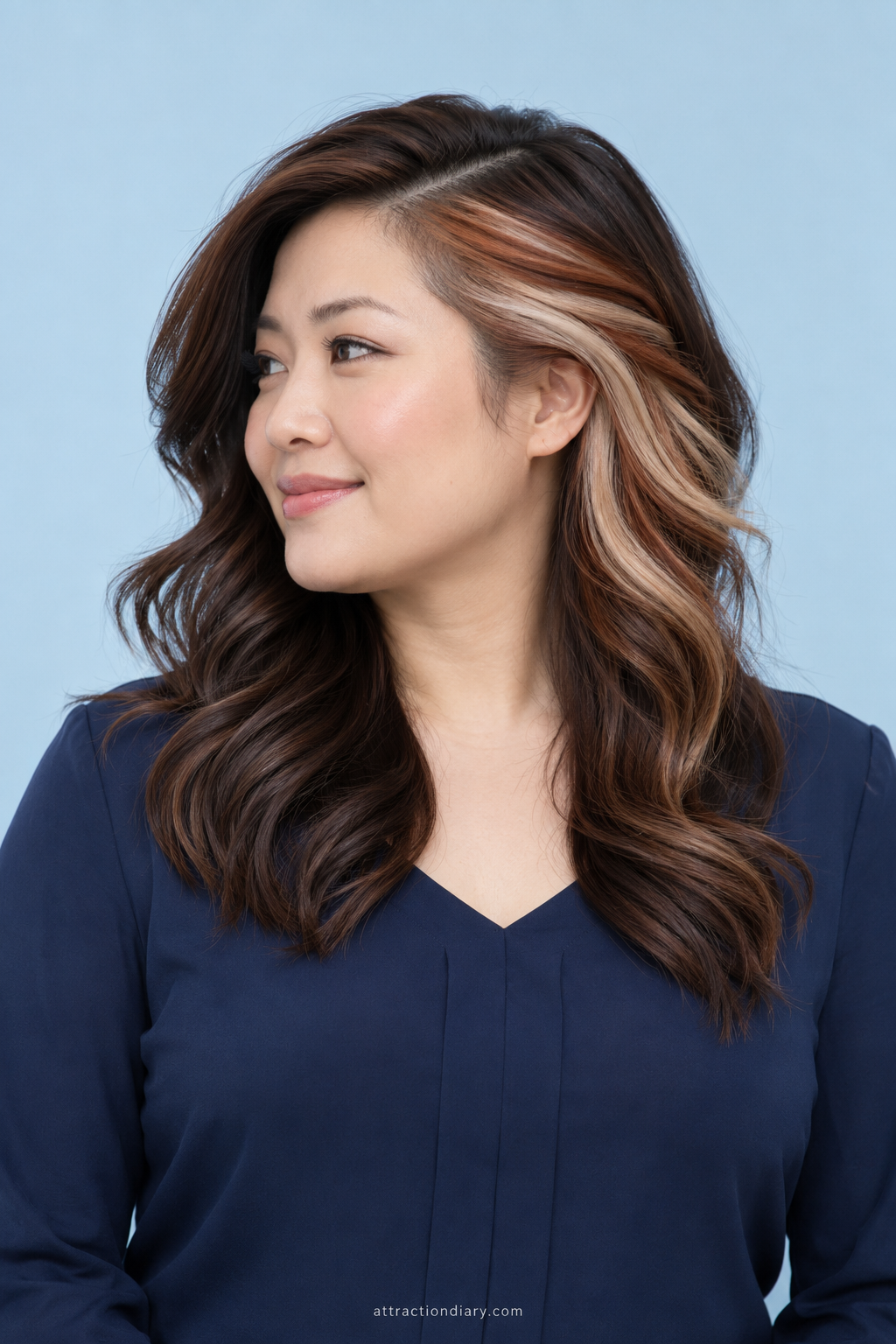
A deep side part can uncover a hidden panel without putting the whole color pattern on display. Copper and pale blonde placed above one ear peek through as the hair sweeps across the head. The other side stays darker and more understated.
Choose the placement with your everyday part already in place. Moving that part after coloring can hide the panel or reveal much more than planned.
6. Calico Panels Beneath Long Layers
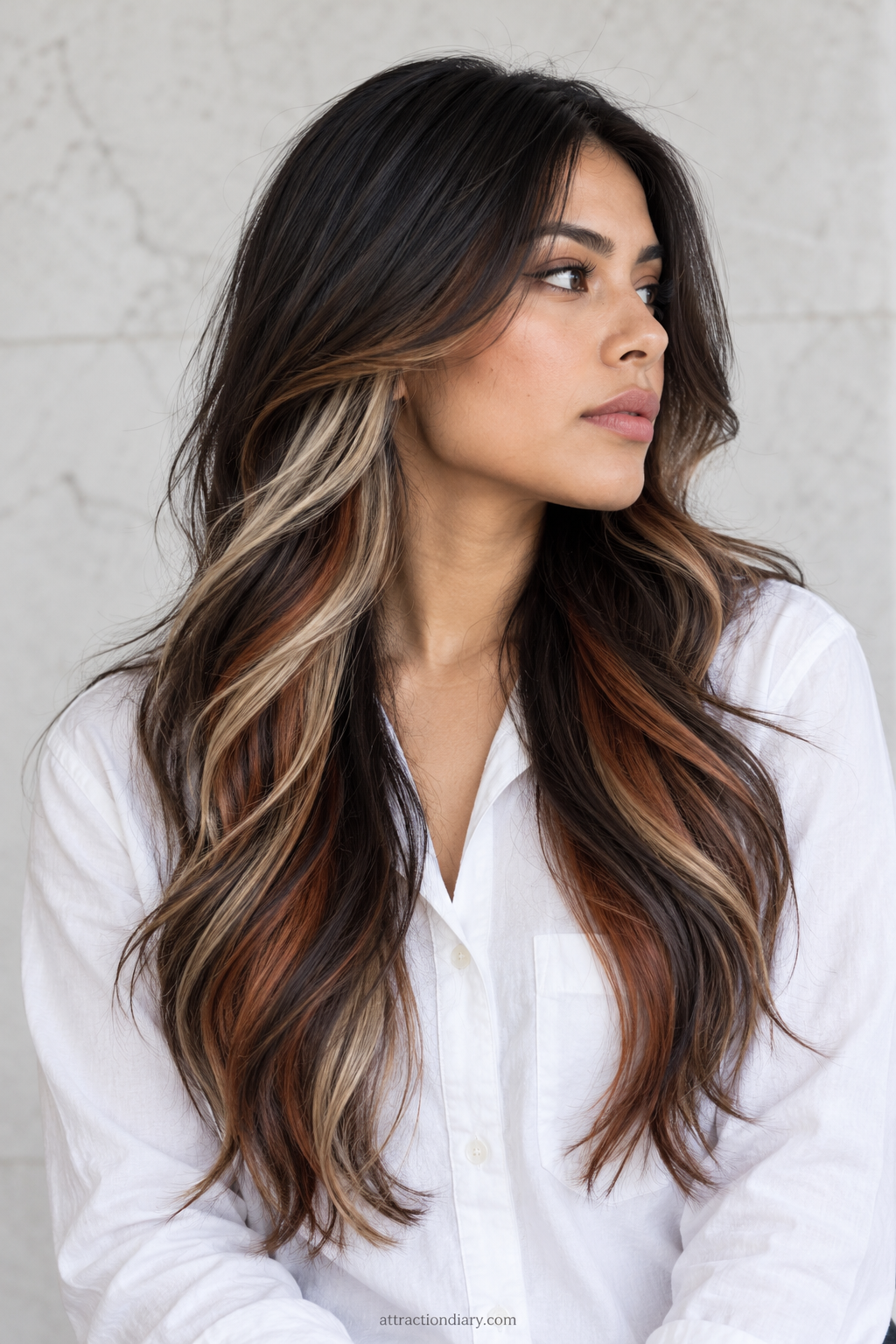
Long layers allow a hidden mix of black, cream, and copper to appear in small steps. The shorter surface pieces move away from the lower panels, so the colors show through without requiring a ponytail. The result has depth even with very simple styling.
Avoid asking for lots of short layers just to reveal the color. A few well-placed long sections can provide movement while keeping the ends looking full.
7. A Half-Up Style With a Tri-Color Underlayer
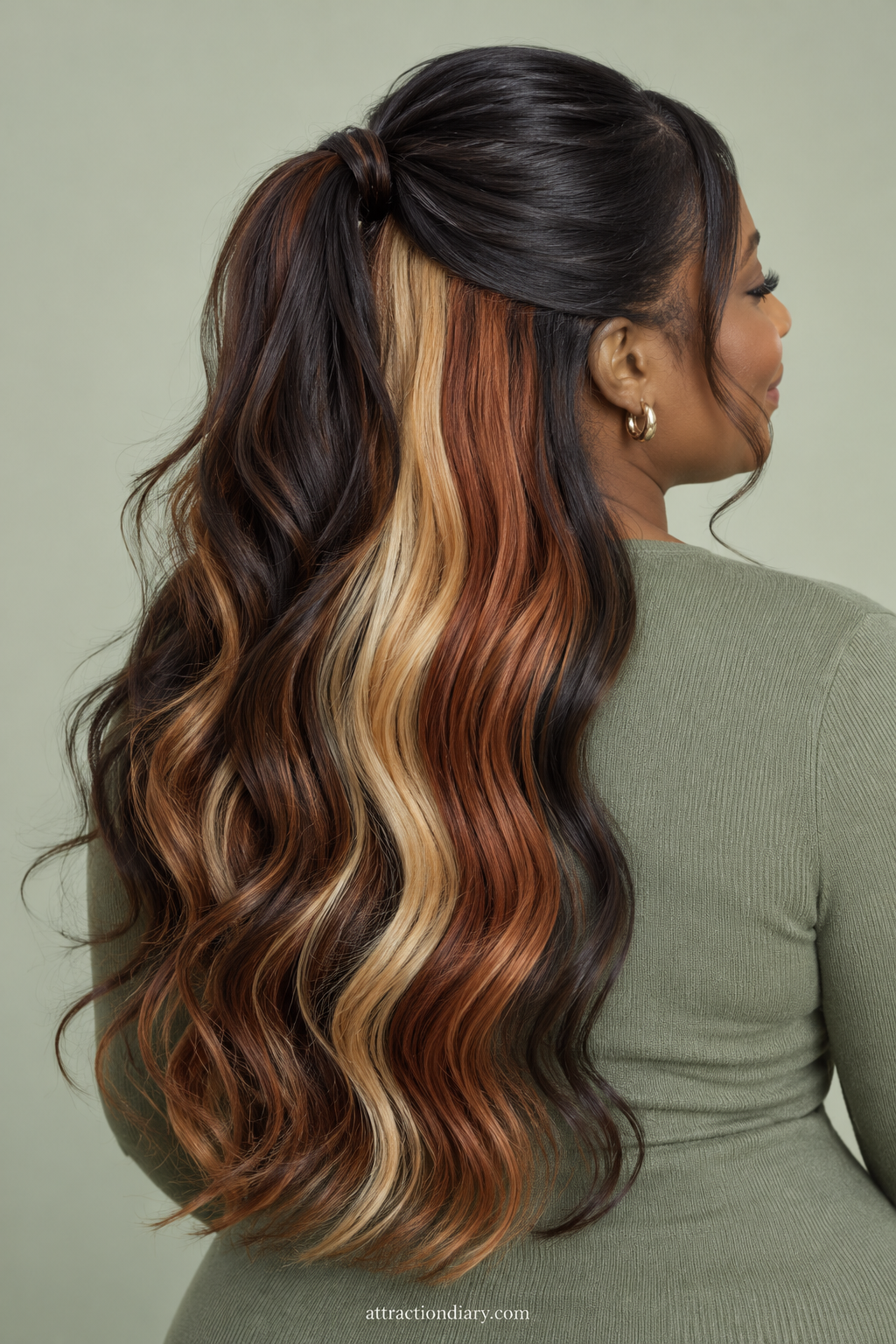
A small half-up ponytail lifts the dark surface away from a copper, blonde, and brown underlayer. The top remains simple, while the lower hair becomes the main feature. Long lengths give the three shades enough space to form clean, readable sections.
Gather only the upper crown so the colored panels stay loose rather than disappearing into the ponytail. A plain elastic or small barrette keeps the focus on the hair.
8. A Hidden Calico Panel in Loose Curls
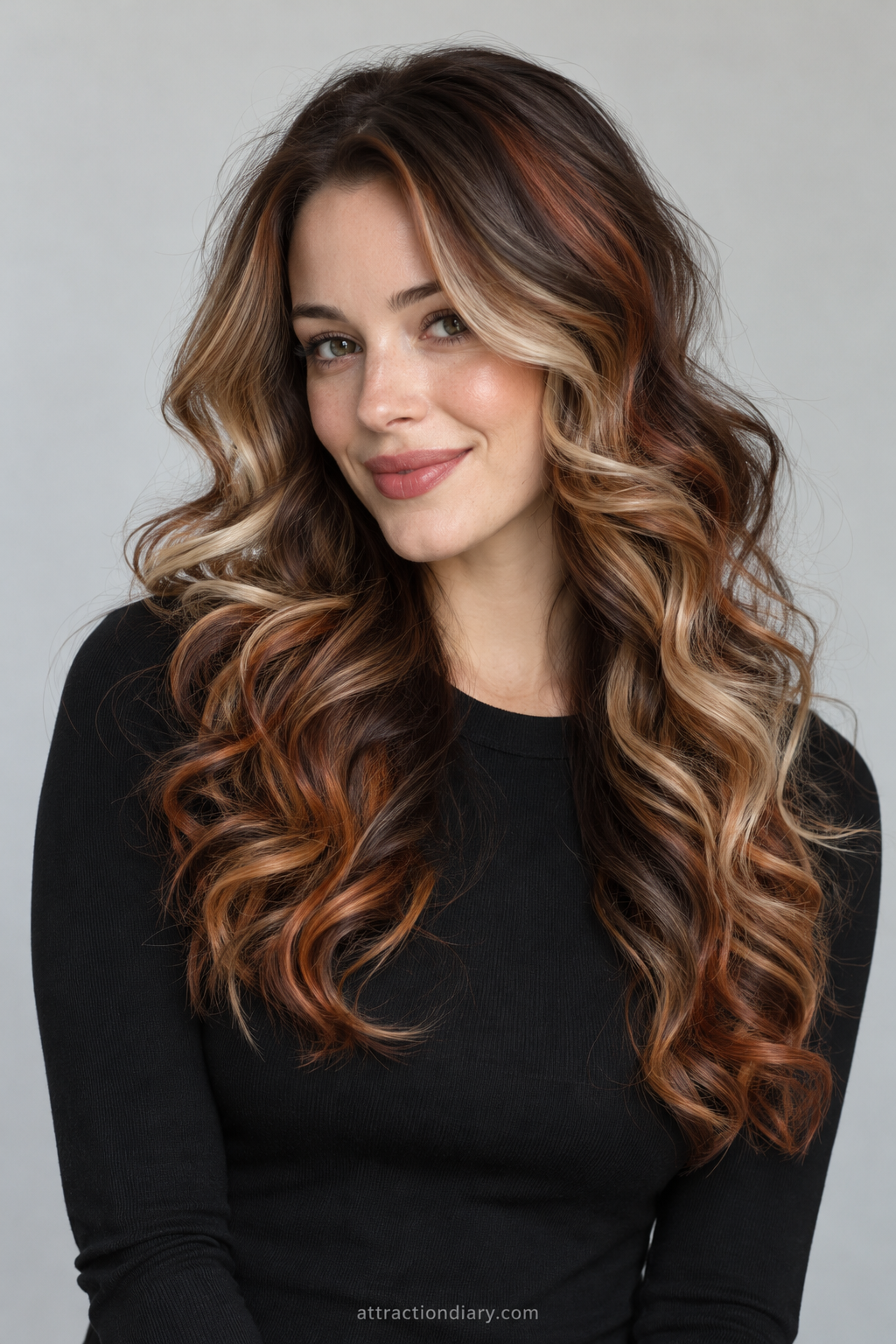
Loose curls break the panel edges into smaller flashes of color. Copper sits beside creamy blonde, with deep brown separating the lighter areas. As the curls turn, different shades come forward, creating a softer finish than the same placement on straight hair.
Show your colorist how your hair falls in its usual curl pattern. Color placement can look different stretched out than it does after the curls settle.
9. A Low Ponytail With a Calico Underside
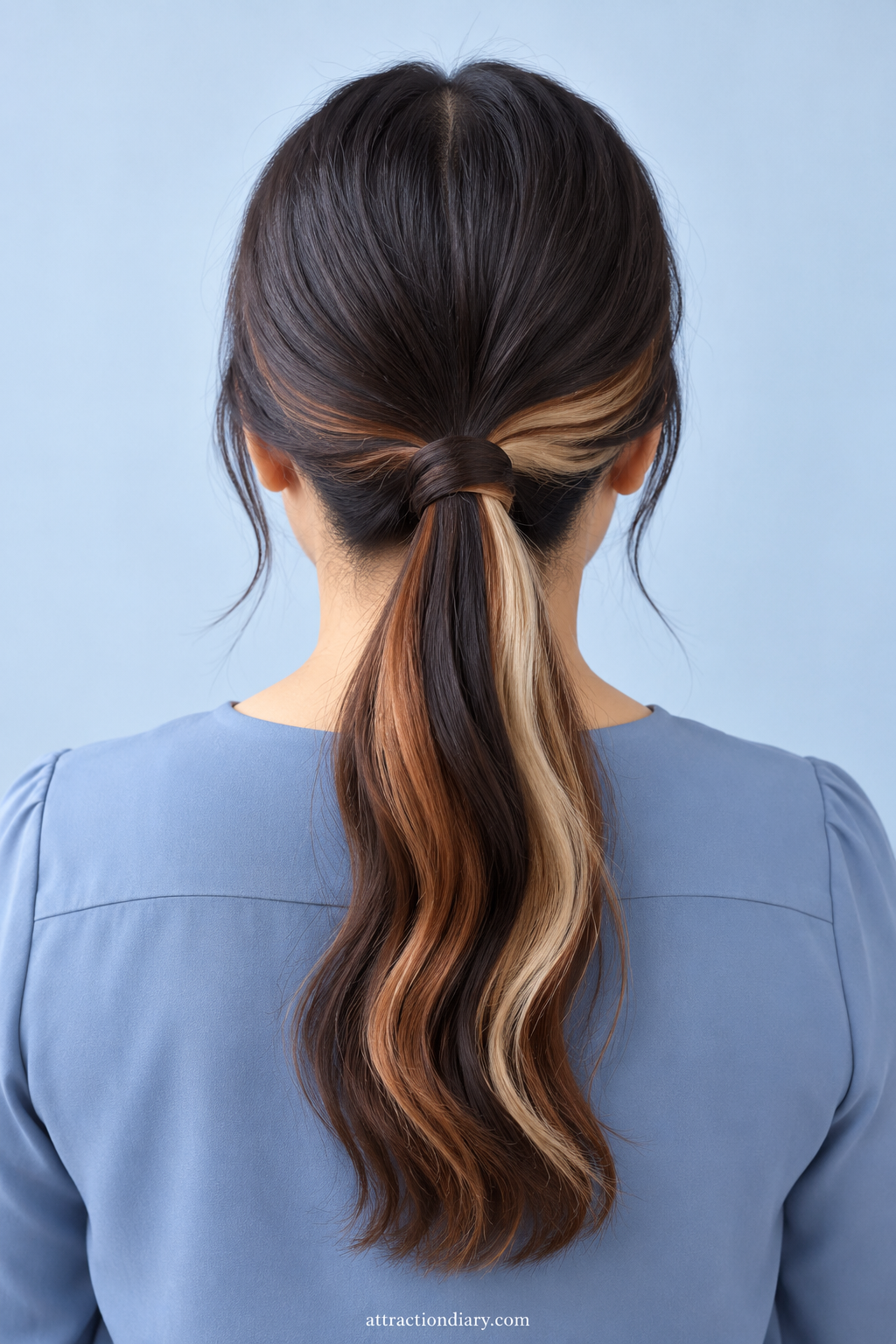
A low ponytail reveals the nape and underside without needing a complicated finish. The darker top section folds over copper and cream panels, leaving a striped effect through the tail. A simple center part helps the colors feel deliberate rather than busy.
Secure the ponytail comfortably near the nape and let the lengths hang freely. Wrapping a small dark section around the elastic can make the transition neater.
10. Face-Framing Copper With a Hidden Cream Panel
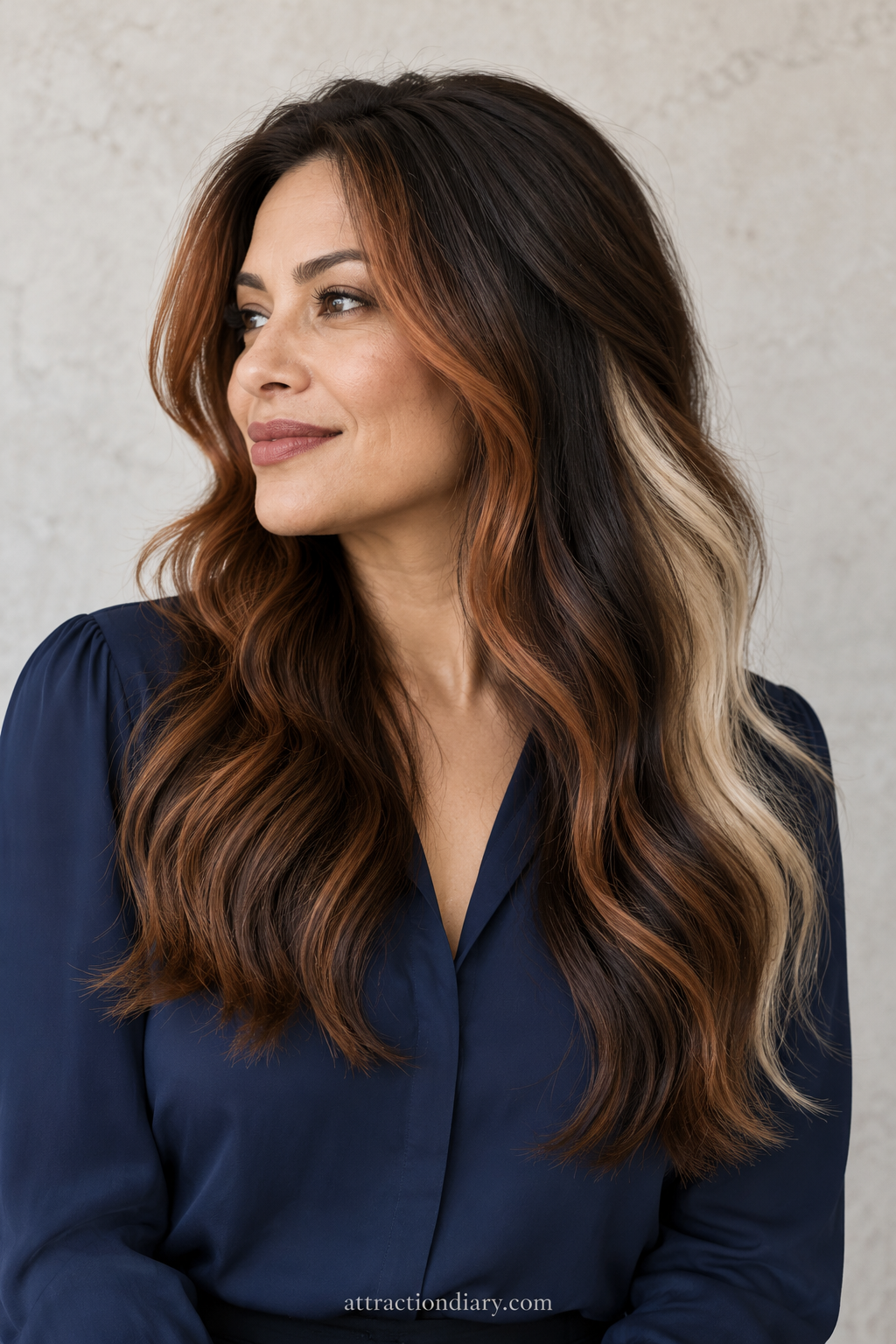
A slim copper section beside the face can connect a hidden calico underlayer to the front of the hairstyle. A creamy blonde panel sits farther back, with dark hair between the two. The arrangement gives a clear accent without turning the whole front into bold stripes.
Keep the face-framing section narrow if you prefer a quieter result. Tucking one side behind the ear reveals the pale panel, while wearing the hair forward covers most of it.
11. A Diagonal Calico Underlayer
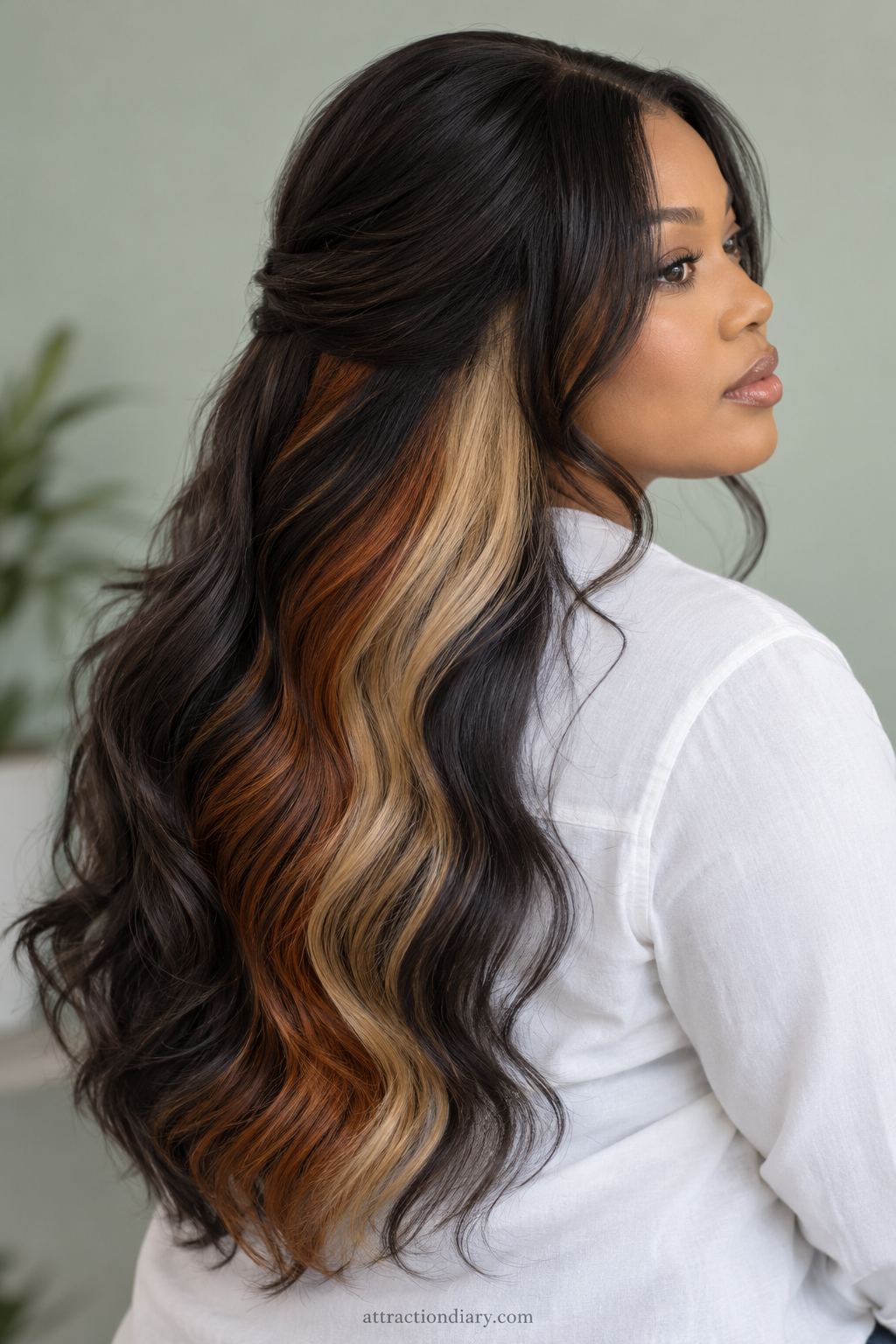
Diagonal panels create a gentle slant across the underside of long hair. Instead of three straight vertical blocks, copper and blonde angle through a dark base. The pattern becomes especially clear from the back when the top layer is lifted slightly.
This placement benefits from a careful salon consultation because the boundaries need to follow the head rather than a flat drawing. Bring references for both the color balance and the shape.
12. A Hidden Calico Band in a Long Bob
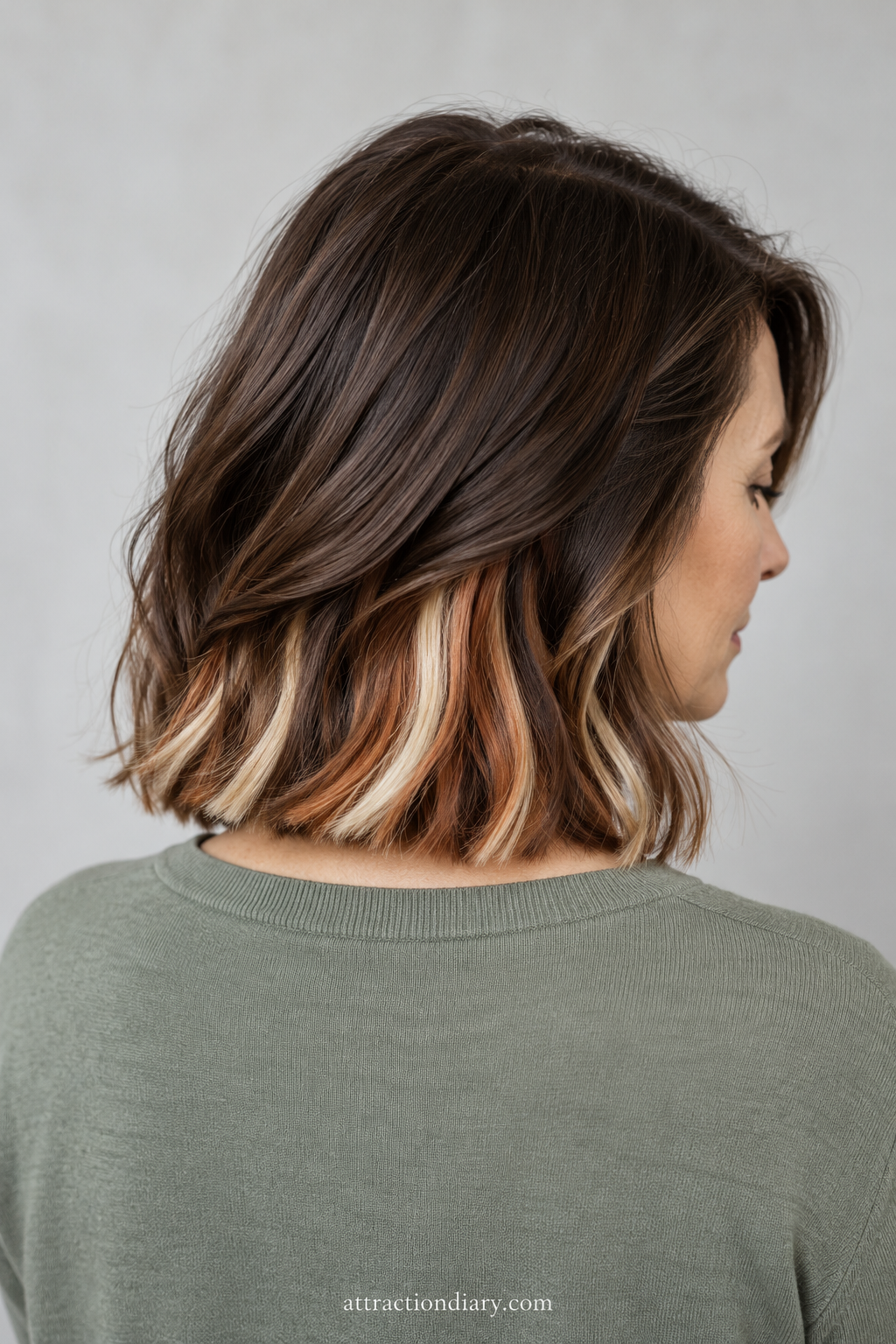
A shoulder-grazing long bob can carry a small calico panel underneath without losing its clean outline. Dark brown on top keeps the shape polished, while copper and cream appear around the lower edge. The blunt ends make the color placement look especially intentional.
Ask for the panel to sit high enough to show with a gentle bend, but low enough to remain mostly covered when worn straight. A loose ear tuck offers another easy reveal.
13. A Copper Base With Cream and Brown Peekaboo Color
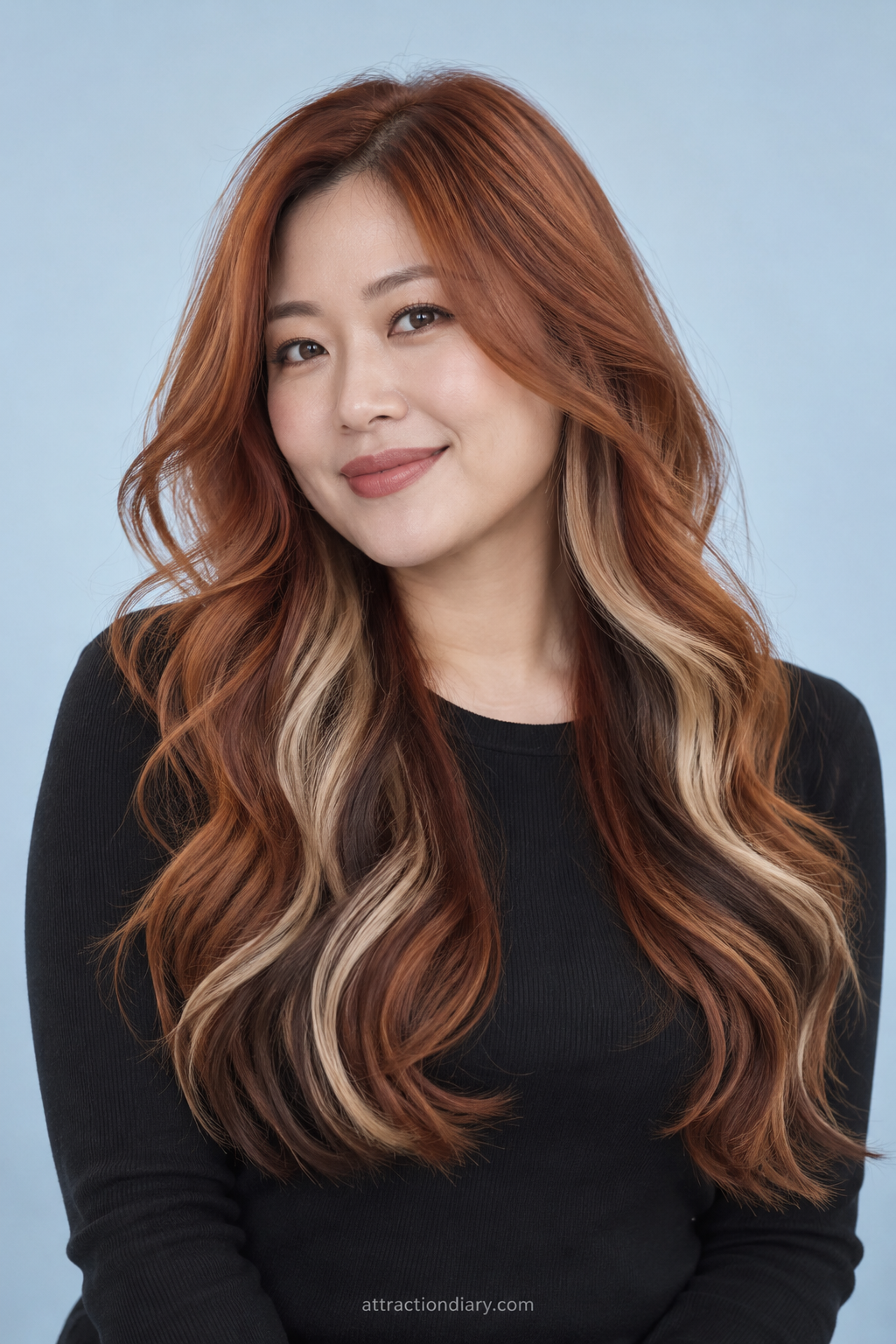
Copper becomes the main shade here, with cream and deep brown tucked underneath. The warm surface softens the contrast, so the hidden panels feel connected to the rest of the hair. Long, brushed-out bends give each color a little space to show.
Pick the copper shade with your colorist rather than relying on a filtered photo. The amount of lightening needed will depend on your starting color.
14. Calico Color Beneath a Loose Braid
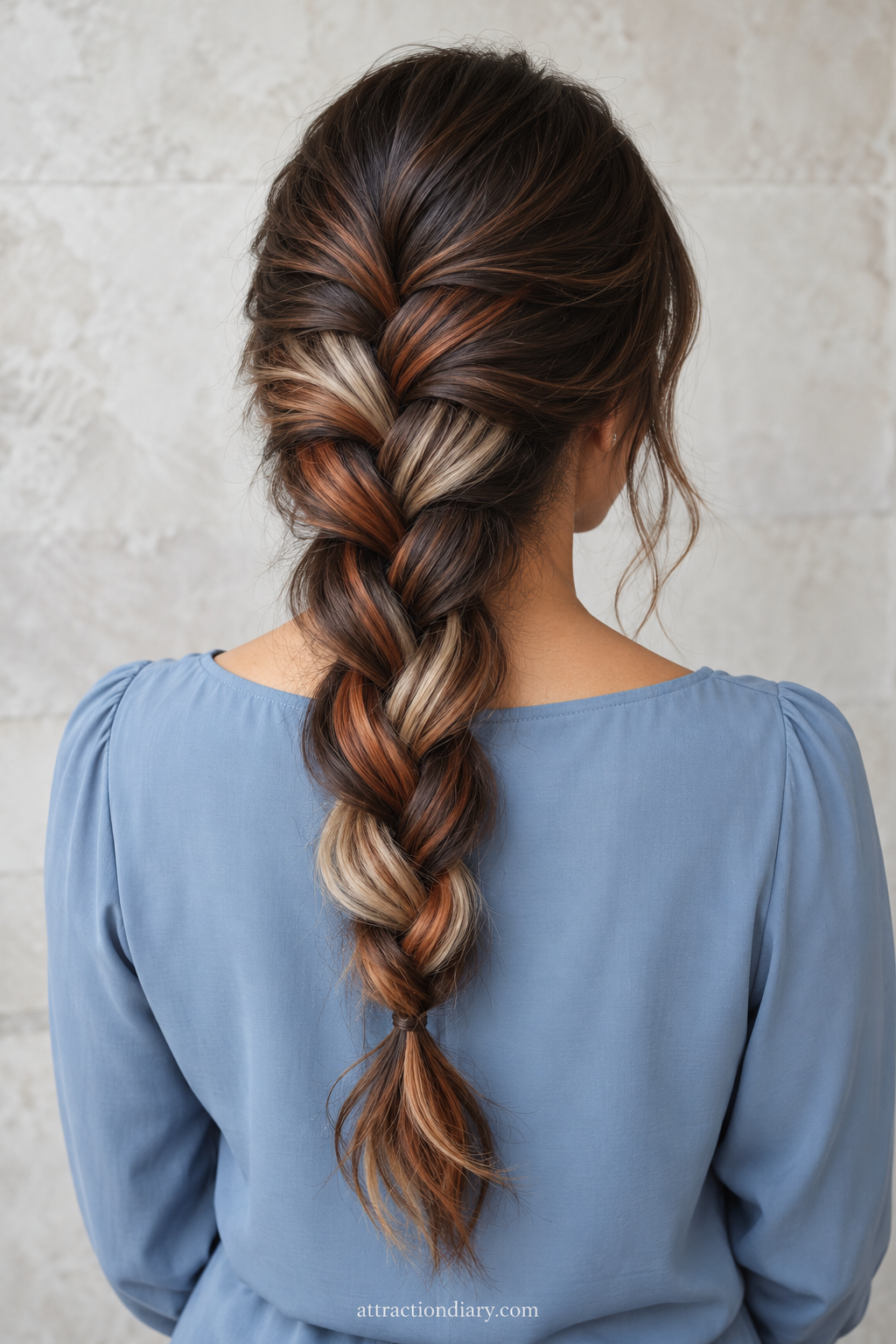
A loose three-strand braid can weave the hidden shades through a darker surface. Copper appears along one turn, cream along the next, while brown keeps the pattern grounded. The effect changes as the braid bends, making a simple style feel more detailed.
Start the braid below the nape so the colored lengths remain visible. Keep the sections comfortable rather than pulling them tightly against the scalp.
15. A Broad Blonde Panel With Small Copper Accents
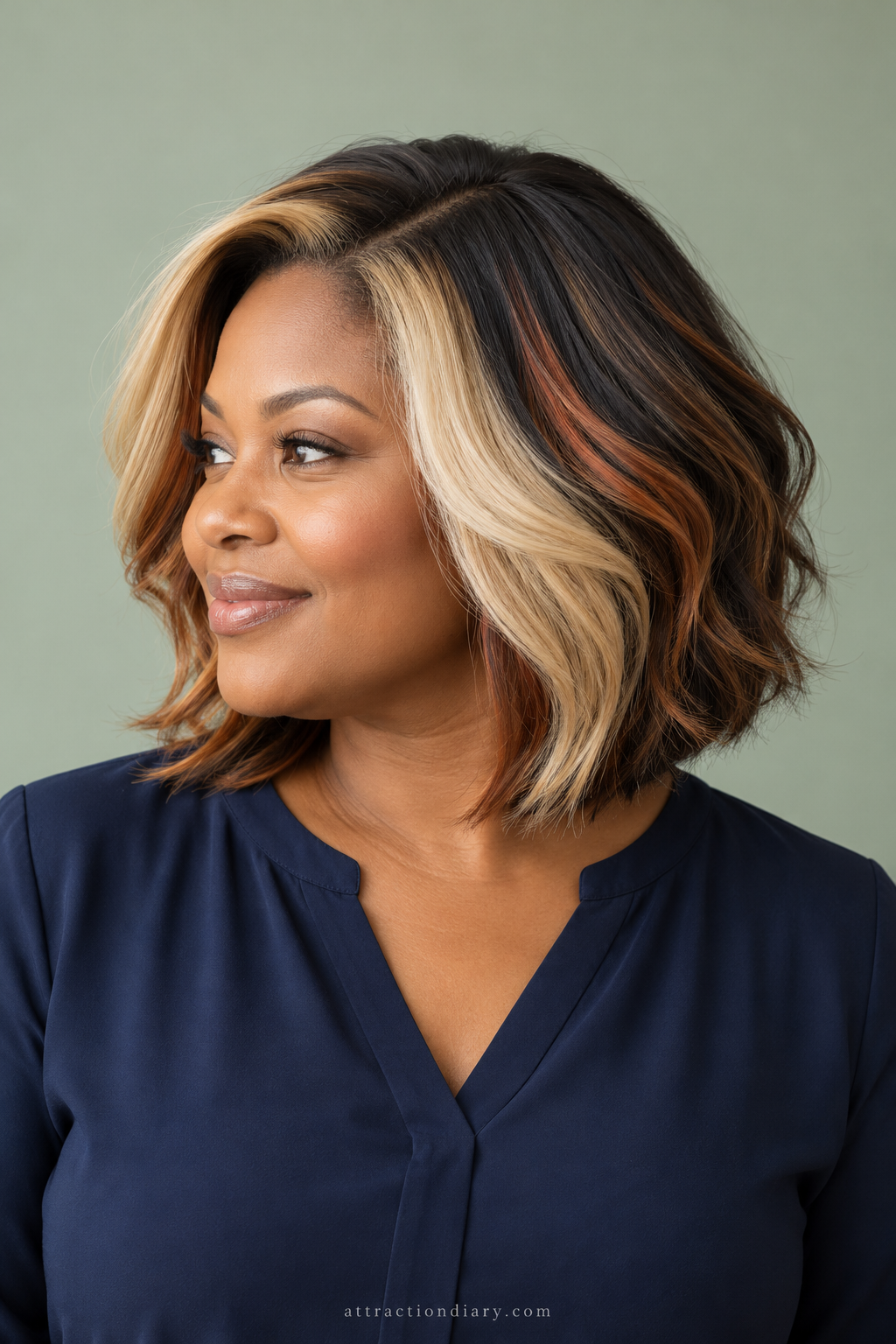
One broad creamy panel can lead the design, with smaller copper sections adding warmth nearby. Dark hair remains visible between the colors and across the crown. This uneven balance feels calmer than dividing the underlayer into three equally large blocks.
Tell your colorist which shade you want to notice first. That decision helps determine the panel widths before the coloring starts. Wearing the hair over one shoulder reveals the main blonde section, while the copper details appear as the lengths move.
16. A Hidden Calico Section Beneath Curtain Bangs
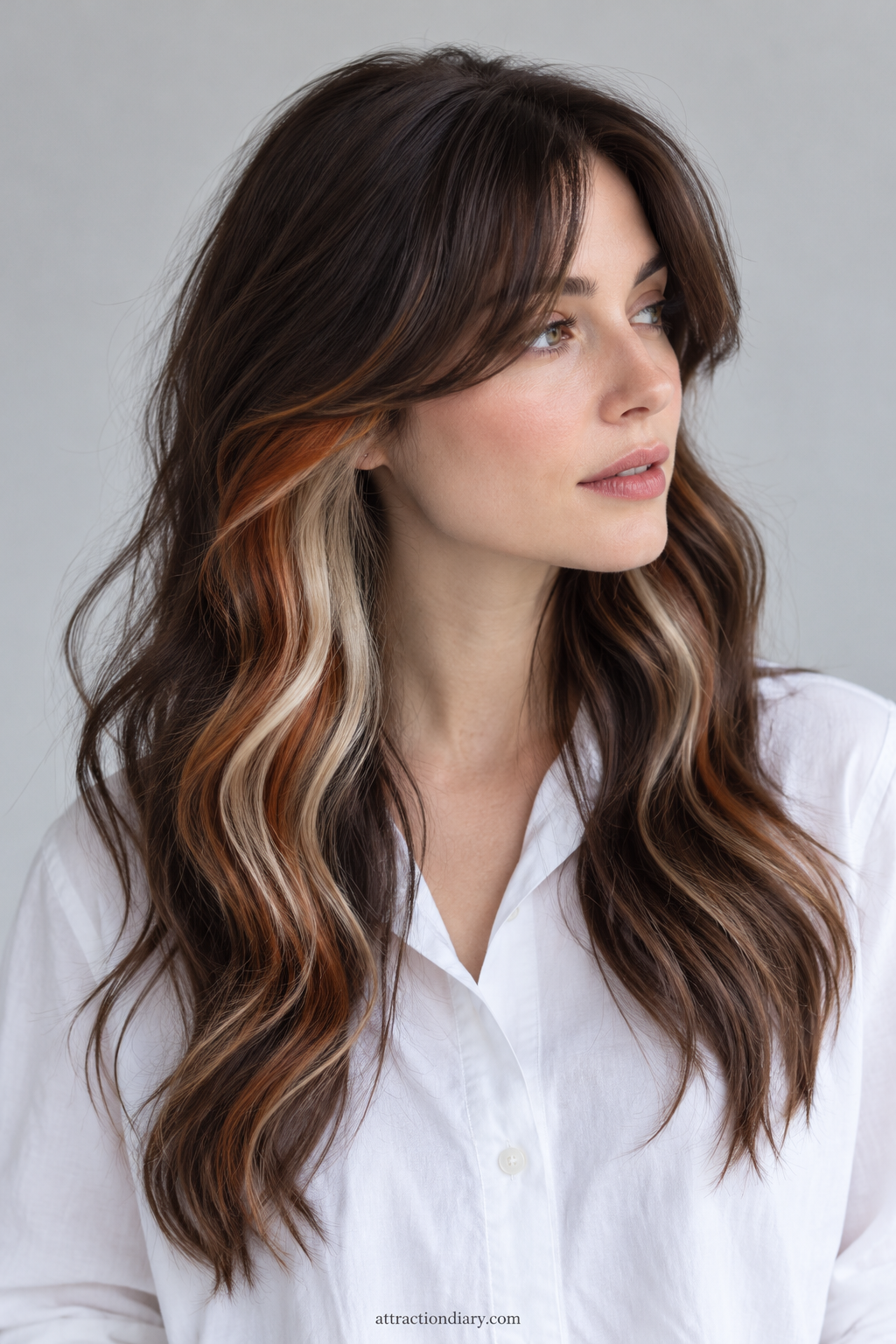
Curtain bangs can stay close to the base shade while the color sits behind them. Dark, face-framing pieces sweep outward and reveal small copper and cream sections near the ears. The bangs soften the front, leaving the bolder pattern lower in the hairstyle.
A stylist can check how the fringe opens before choosing the panel placement. Too much color directly behind a short bang may show constantly rather than staying hidden.
17. Soft Calico Color in a Messy Low Bun
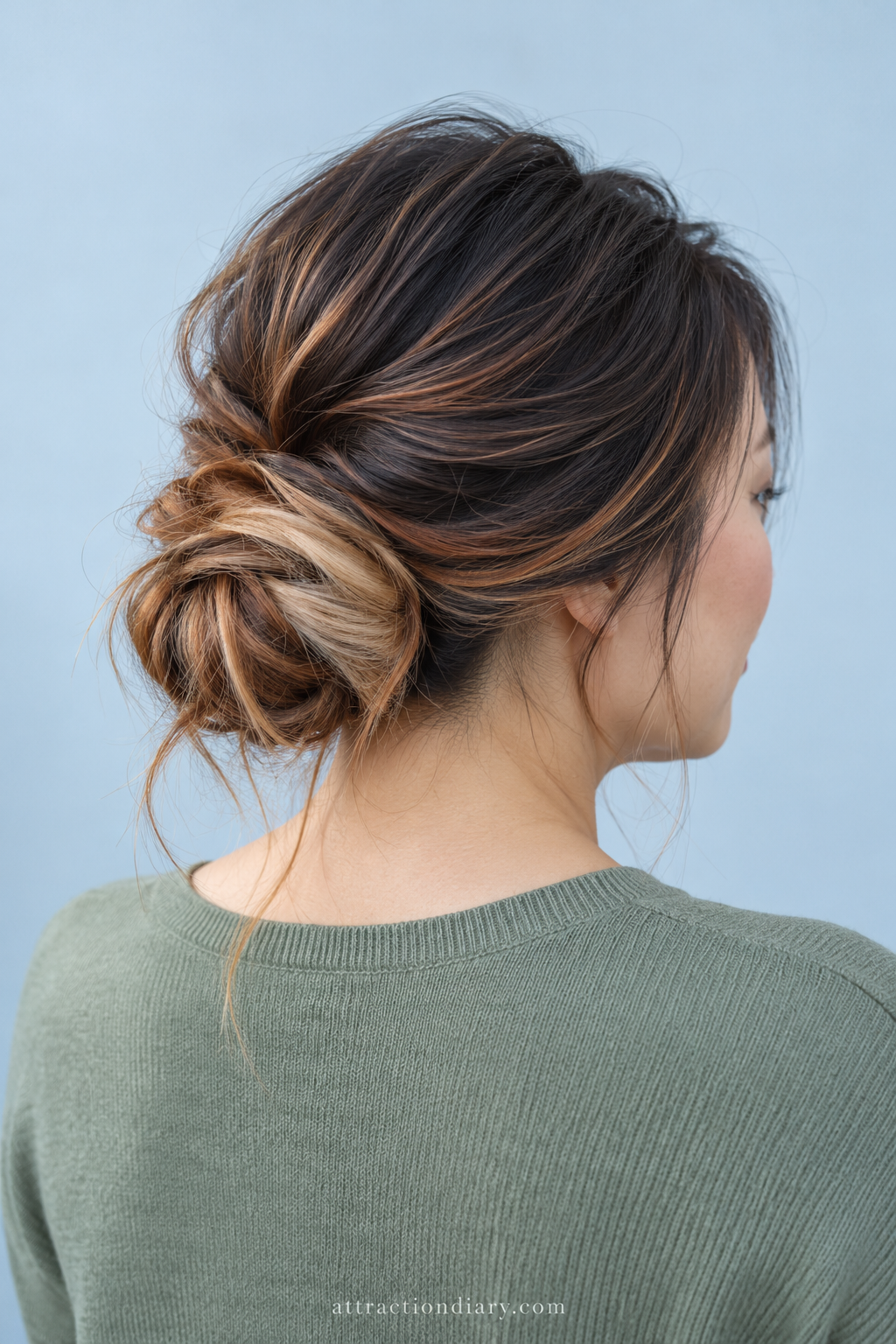
A relaxed low bun exposes the underside in a different way from loose hair. Copper and cream can appear around the nape and along the folded lengths, with the darker crown keeping the shape simple. A few loose pieces prevent the finish from looking too formal.
Twist the bun gently and secure it with comfortable pins. The goal is to show a little contrast, not to pull every colored section into view.
18. A Calico Peekaboo Panel on One Side
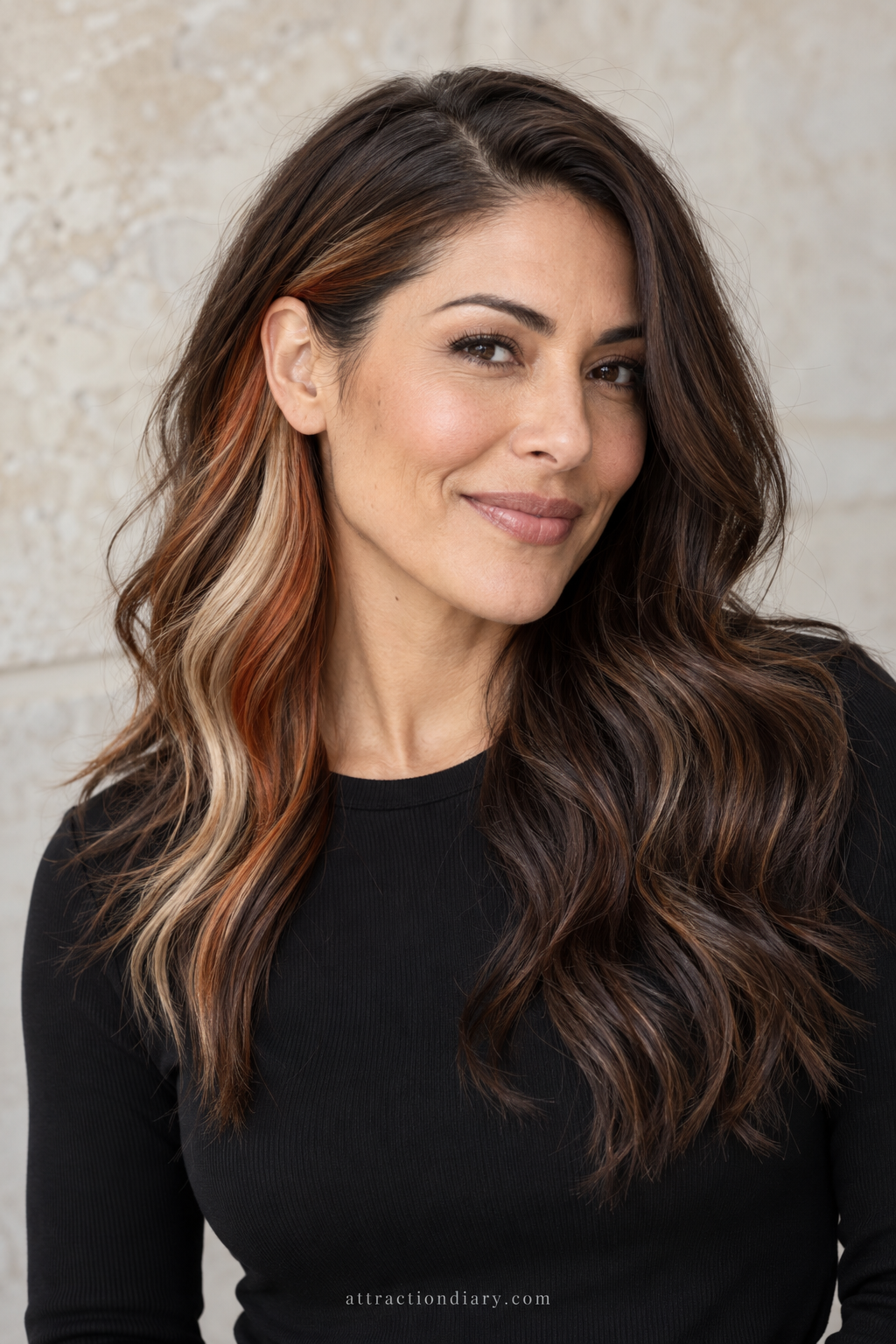
A single side panel offers an uneven but deliberate version of the trend. Copper, cream, and brown sit beneath the hair above one ear, leaving the rest of the head mostly unchanged. The color becomes visible through an ear tuck or side-swept style.
Choose the side you usually show in photos or wear away from your face. The panel can be narrow or broad, depending on how hidden you want it.
19. Long Straight Hair With Crisp Calico Blocks
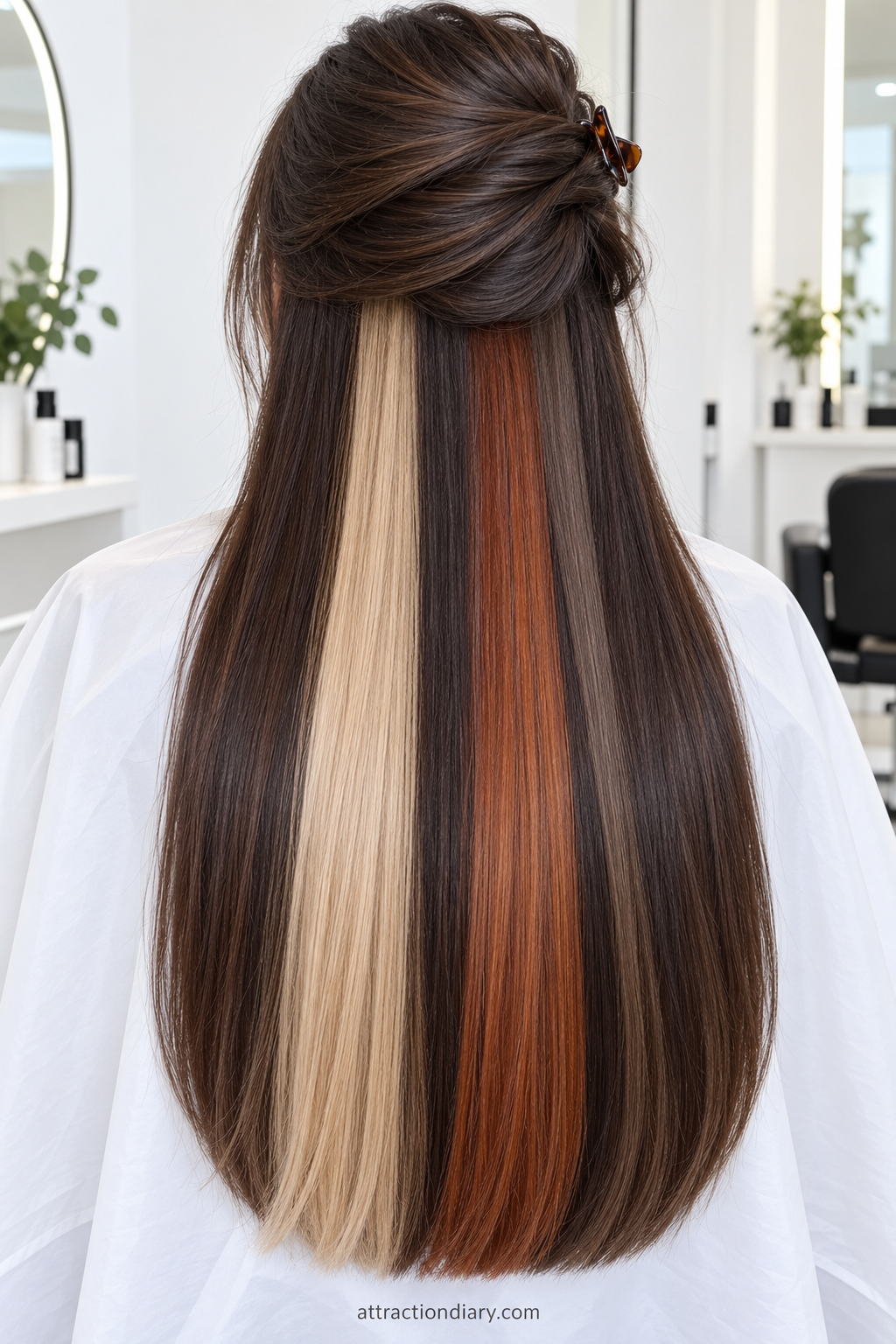
Straight lengths make the boundaries between dark brown, copper, and pale blonde easy to see. The top layer acts as a smooth cover, while the lower sections create a clear graphic pattern. A simple trim keeps the ends from distracting from the placement.
You do not need to straighten your hair every day to enjoy the color. Use the sleek finish as one styling option, and discuss how the panels will look with your natural texture.
20. A Subtle Calico Panel With Muted Shades
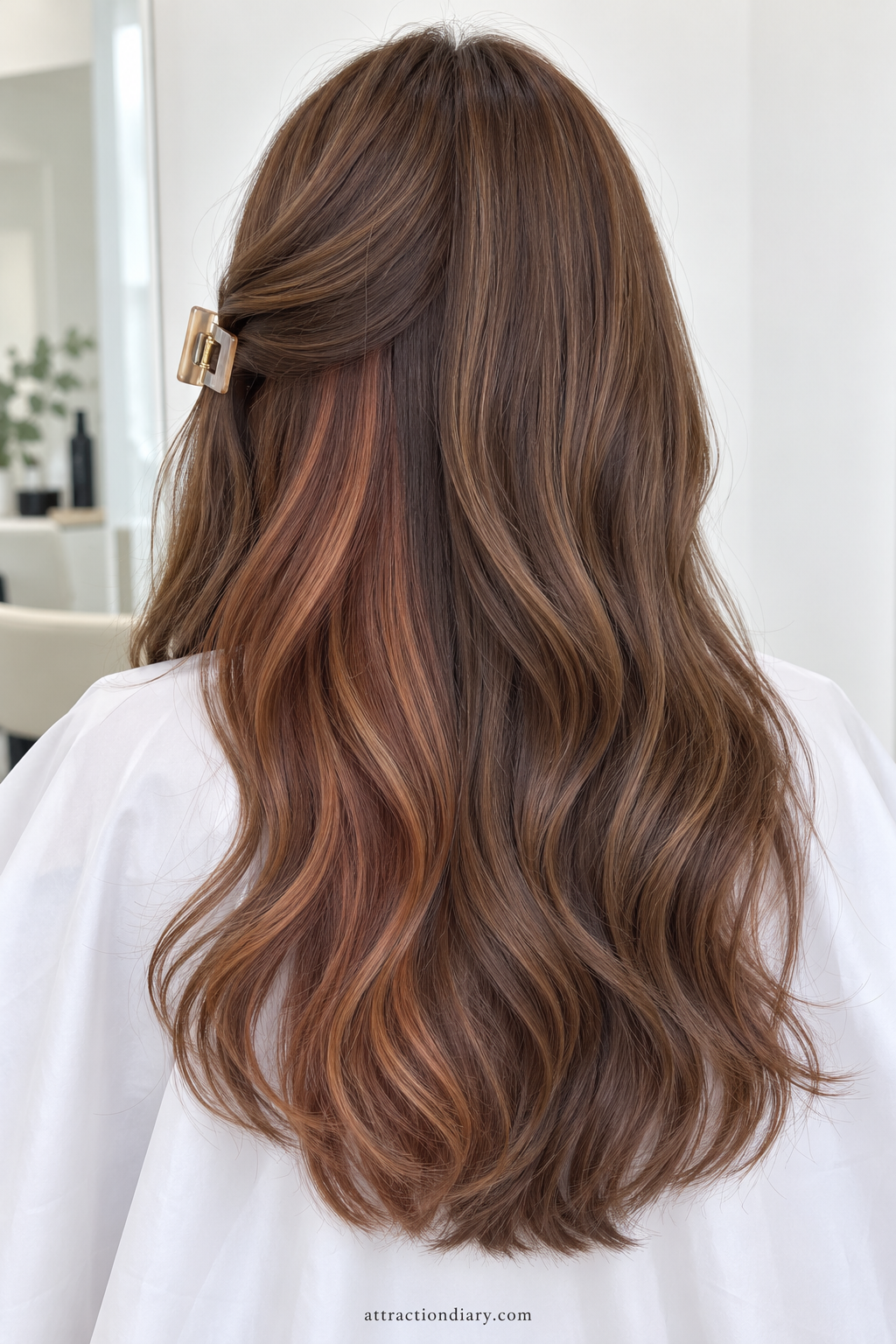
Muted caramel, soft copper, and medium brown offer a gentler take on calico color. The shades are closer together than black and pale blonde, so the underlayer blends more easily with the surface. Long waves help the colors appear as quiet shifts rather than sharp stripes.
Bring a reference with the level of contrast you prefer, not just the same color names. A colorist can adapt the tones to your starting shade.
Conclusion
A hidden color panel can be subtle or bold depending on its width, placement, and contrast. Pick the arrangement you would enjoy with your hair down as well as tied up. A clear consultation gives your colorist a better starting point than color names alone.