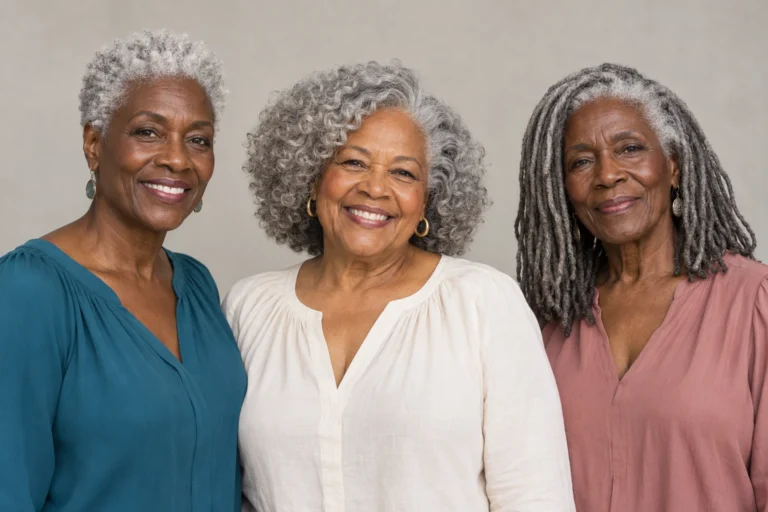
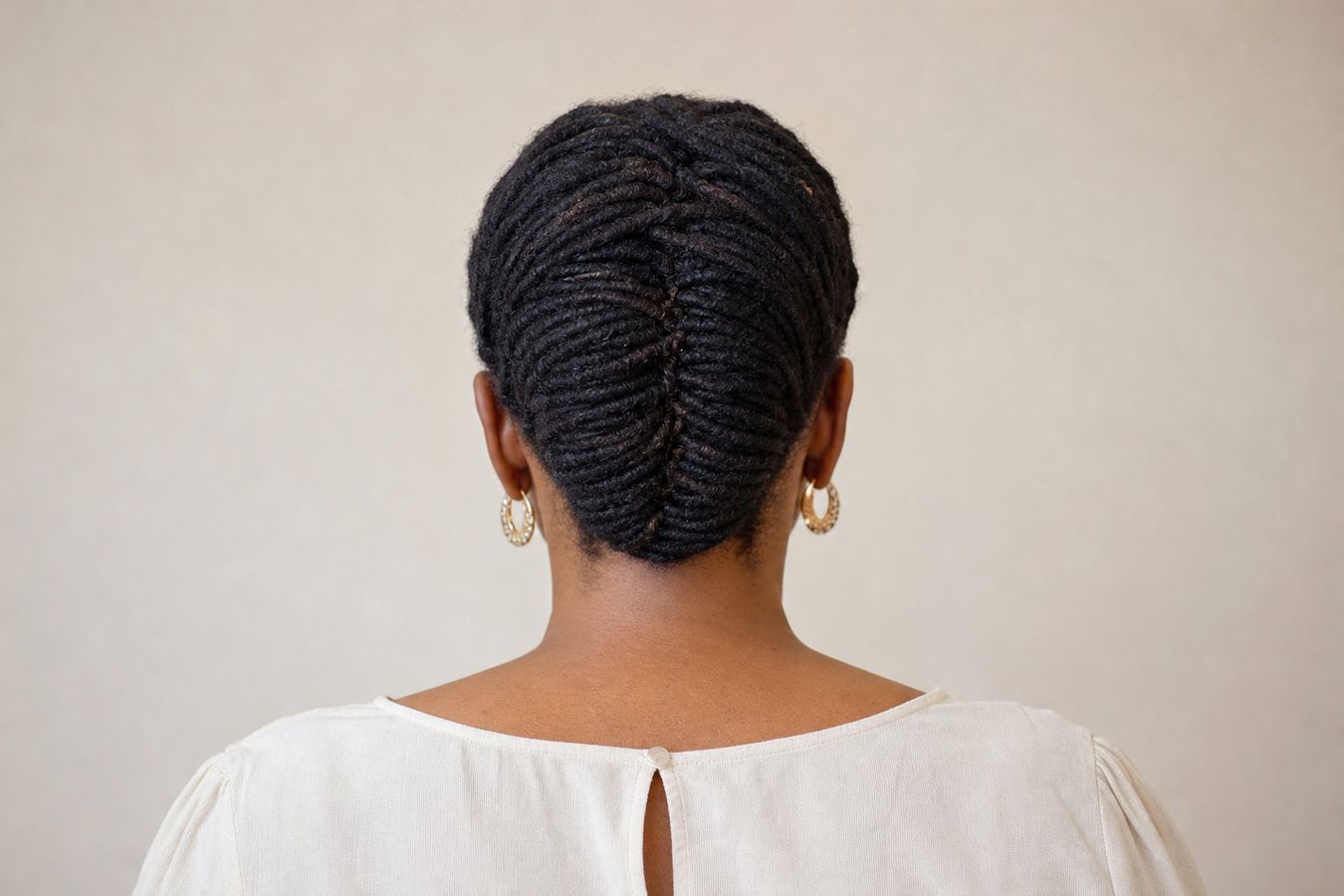
You can enjoy the length of your mature locs without wearing them down your back on a warm day. These updos lift shoulder-length and longer locs away from your neck, from low tucked shapes to taller crown styles.
Whichever you choose, it shouldn’t tug at your hairline or hurt when you turn your head. Heavier locs may need support in several places, and a stylist can help with the more involved shapes.
1. Loc French Roll
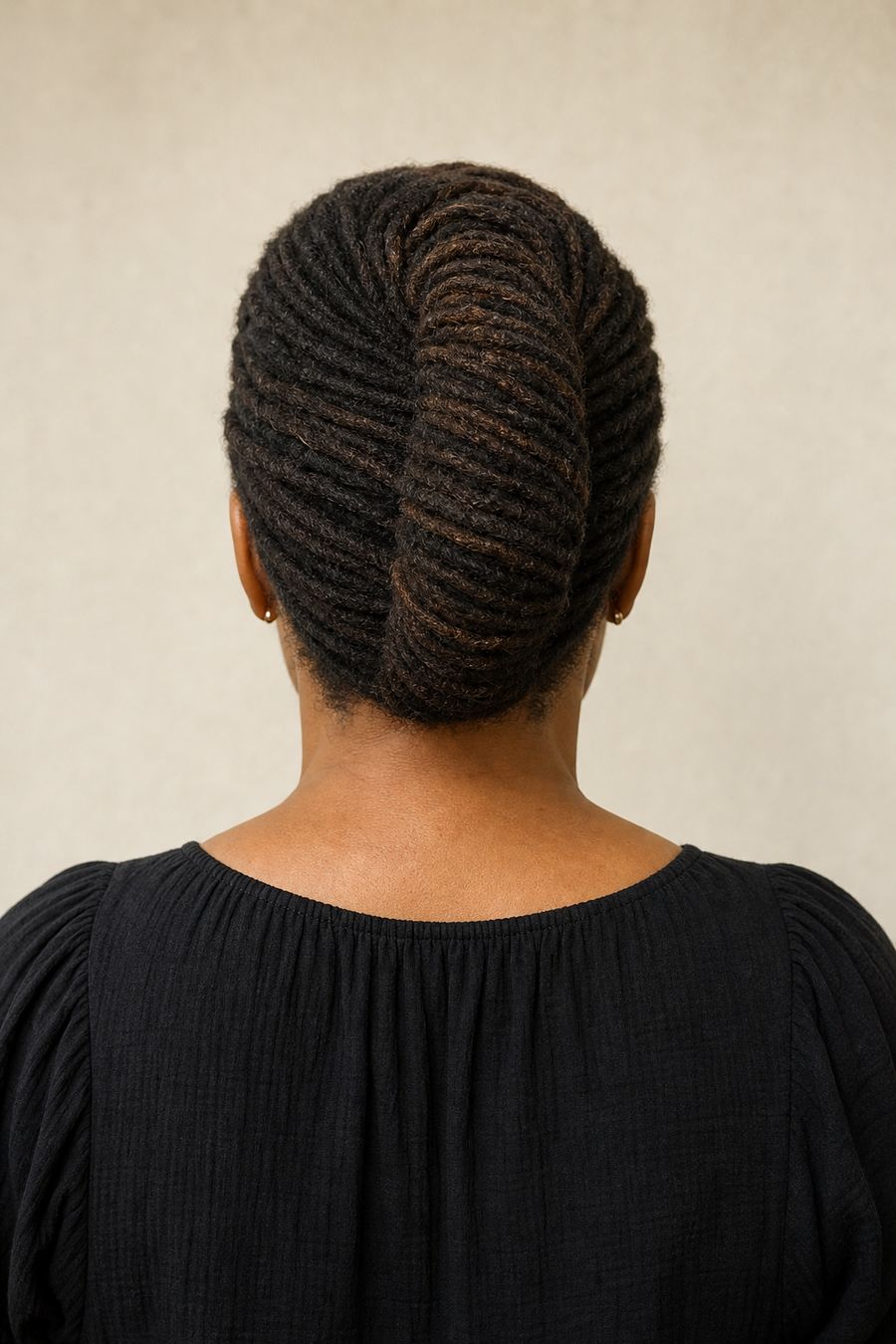
A French roll gives you a long, folded shape that stays close to the back of your head. If a projecting bun feels too bulky, this vertical roll offers a more contained outline while still showing the texture of your locs.
The length folds inward from one side, with the ends hidden along the center seam. Large hairpins can support that seam; with heavier locs, getting help with placement can make the roll easier to wear.
2. Low Loc Chignon
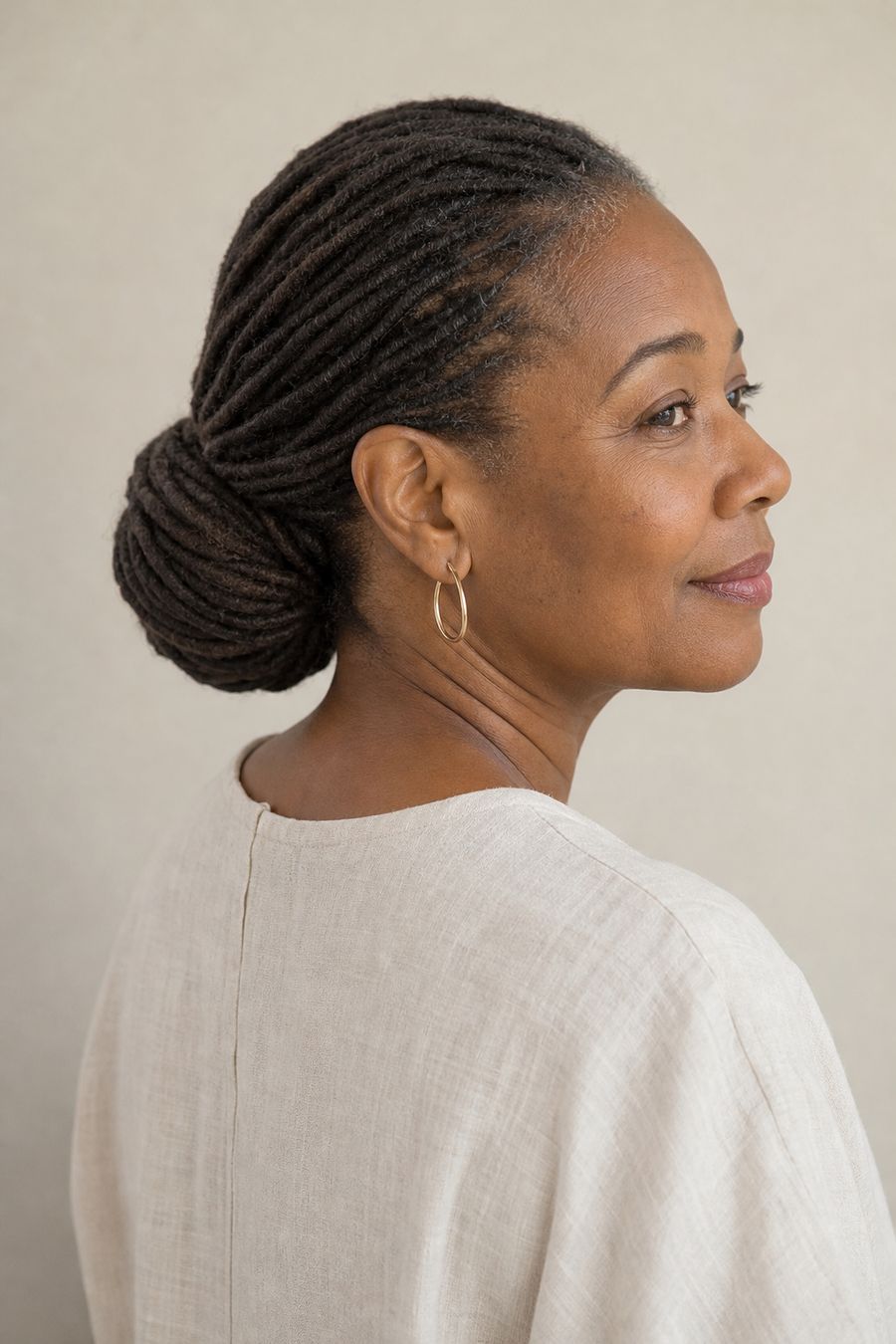
If you like your updos low and understated, a loc chignon keeps the fullness at the back rather than on top. A few locs wrapped around the outside give the rounded bundle a finished outline.
This shape begins with a loose low ponytail, with the lengths folded into the bun. Very long or thick locs will make a larger chignon, so it needs to sit a little higher to keep its lower edge off your neck.
3. High Loc Crown Bun
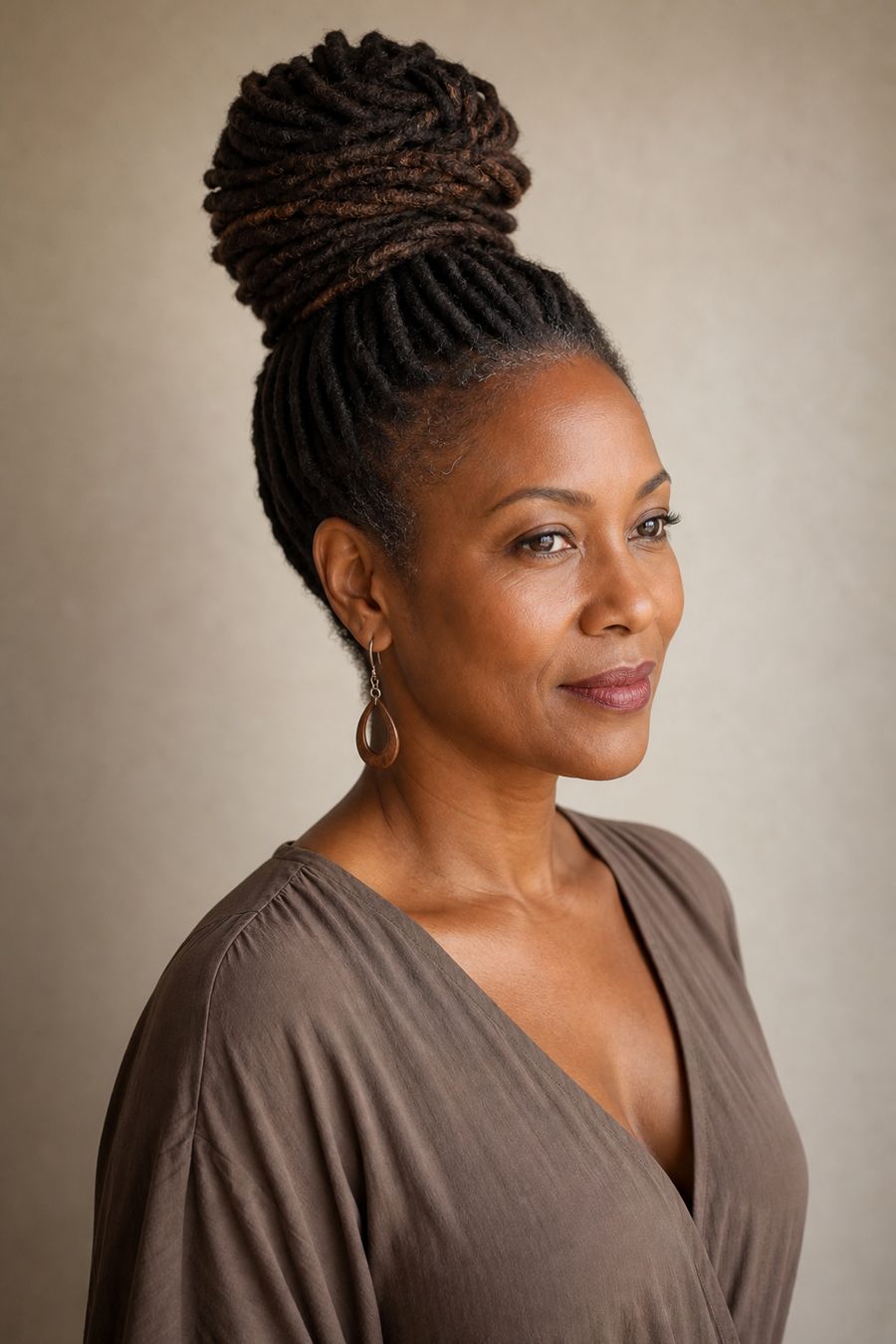
The open neckline and generous crown bun are the appeal here. All that length becomes one broad shape, leaving your shoulders clear without hiding the texture of your locs.
A soft, broad tie works well at the base, with the lengths wrapped loosely around it. You don’t need a fresh retwist for this to look intentional.
For heavier locs, a wider, flatter bun is a more manageable option than a tall stack.
4. Double Loc Space Buns
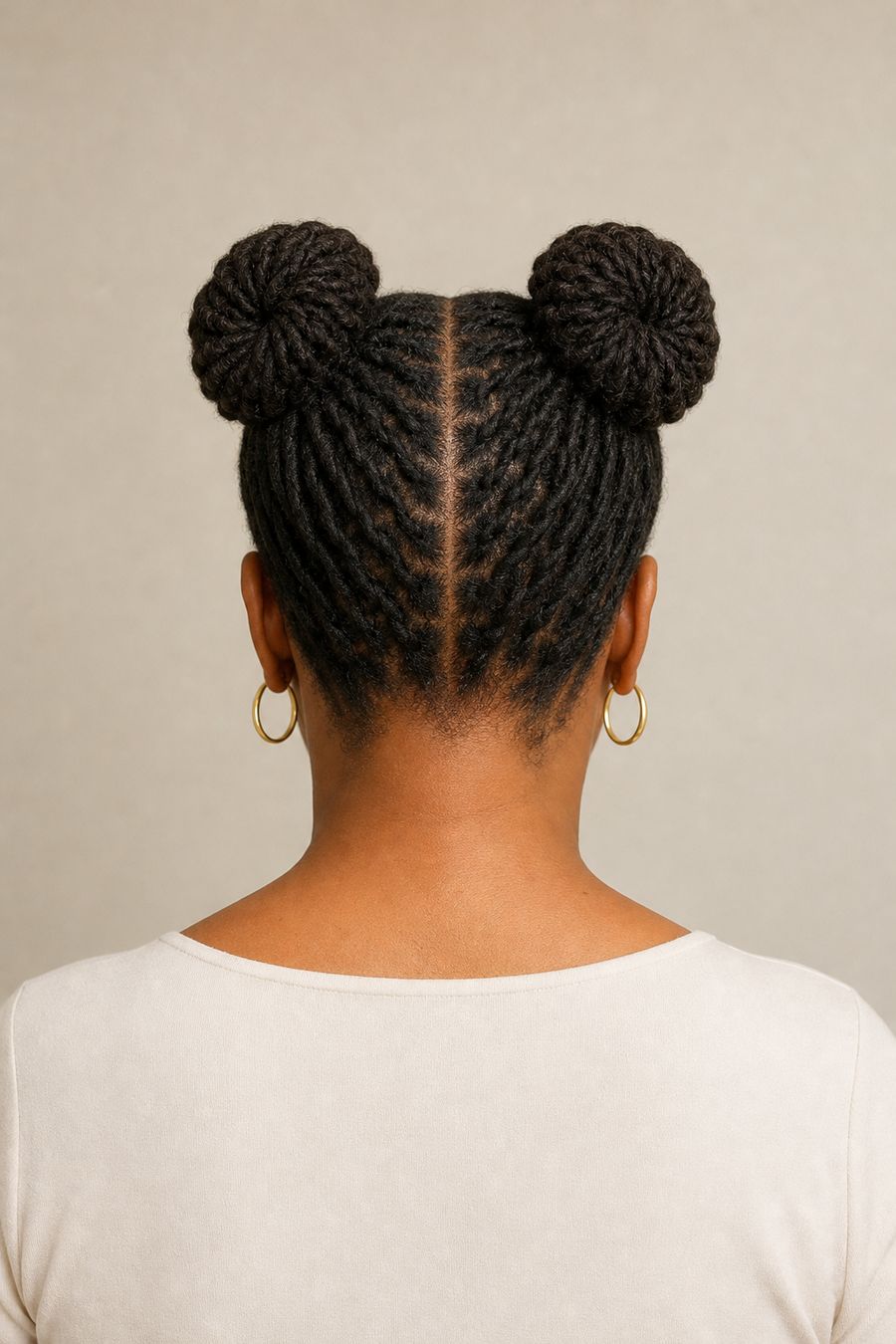
Two buns give you a playful outline and split the length between two places instead of one.
That can be appealing if your locs make a single topknot feel oversized. A center part and similarly placed buns keep the look balanced, though they don’t have to match perfectly.
Each side wraps into a rounded bun above the ears, with the ends tucked inside. Shoulder-length locs can work here as long as they reach their respective bases.
5. Flat-Twisted Loc Updo
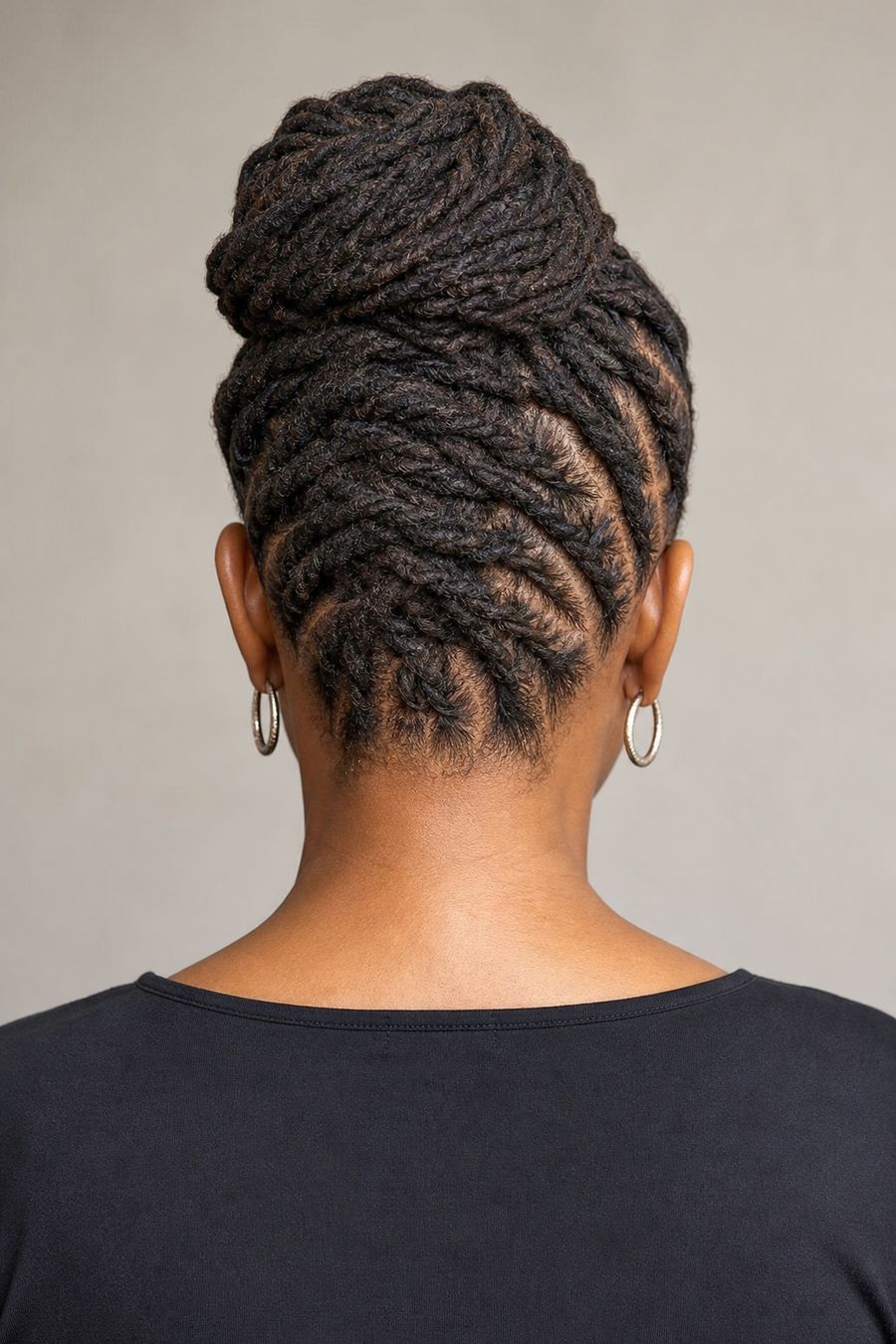
Sweeping rows give this updo detail from the nape all the way to the crown. Broad sections of locs are flat-twisted upward, with the remaining lengths tucked into a compact bun.
Smaller locs let the rows show clearly; very thick locs can make them bulkier. Larger sections allow a looser finish at the scalp, and help with the back sections is useful on your first attempt.
6. Loc Halo Wrap
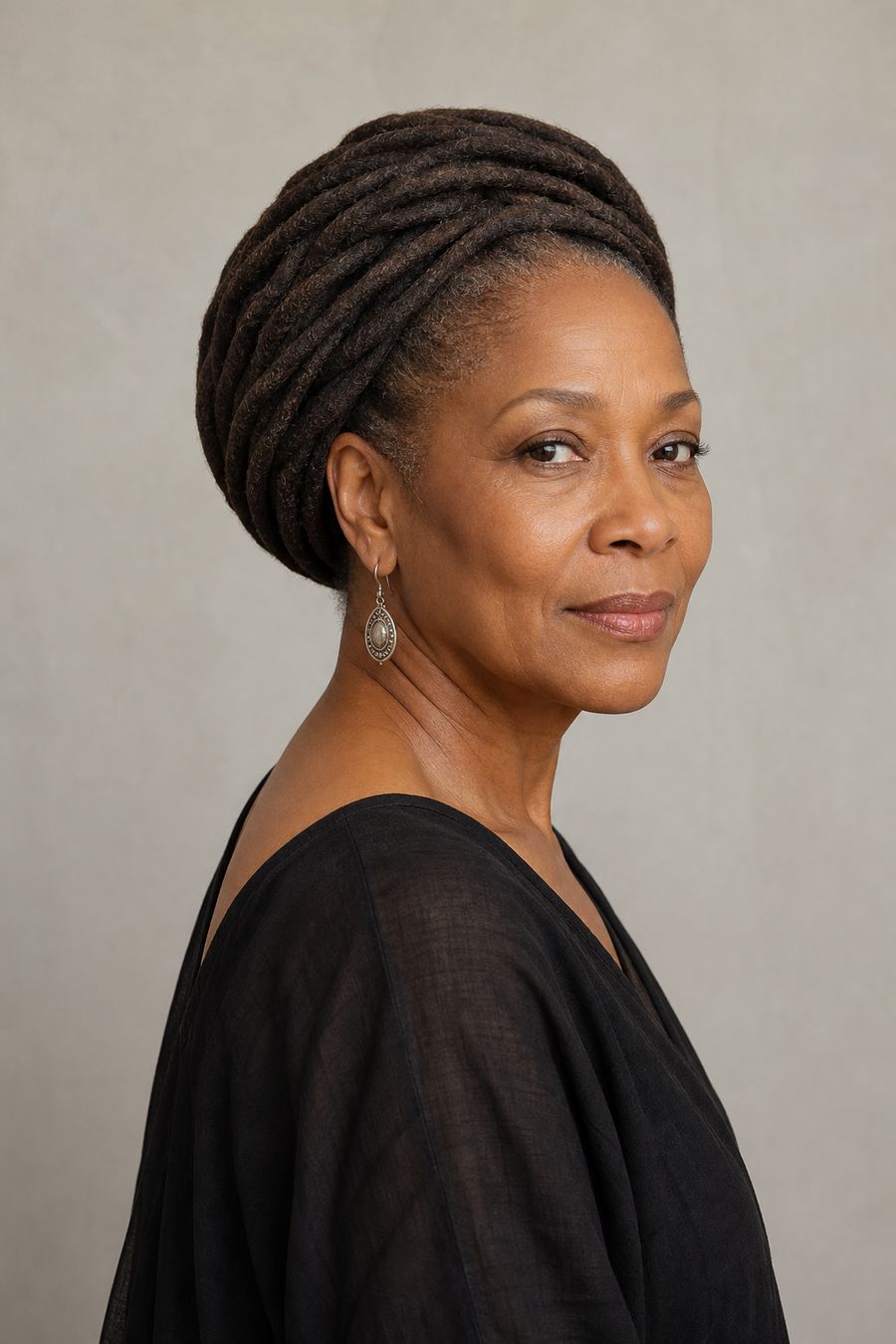
A halo wrap frames your face with a broad band of texture instead of gathering everything into one bun. The lengths overlap gently around the head, so the finish is softer than a braided crown.
Mid-back or longer locs make that continuous wrap easier. Shoulder-length locs would need several sections joined along the way rather than one long sweep.
The band sits behind the hairline, leaving your forehead open and the back lifted away from your collar.
7. Basket-Weave Loc Updo
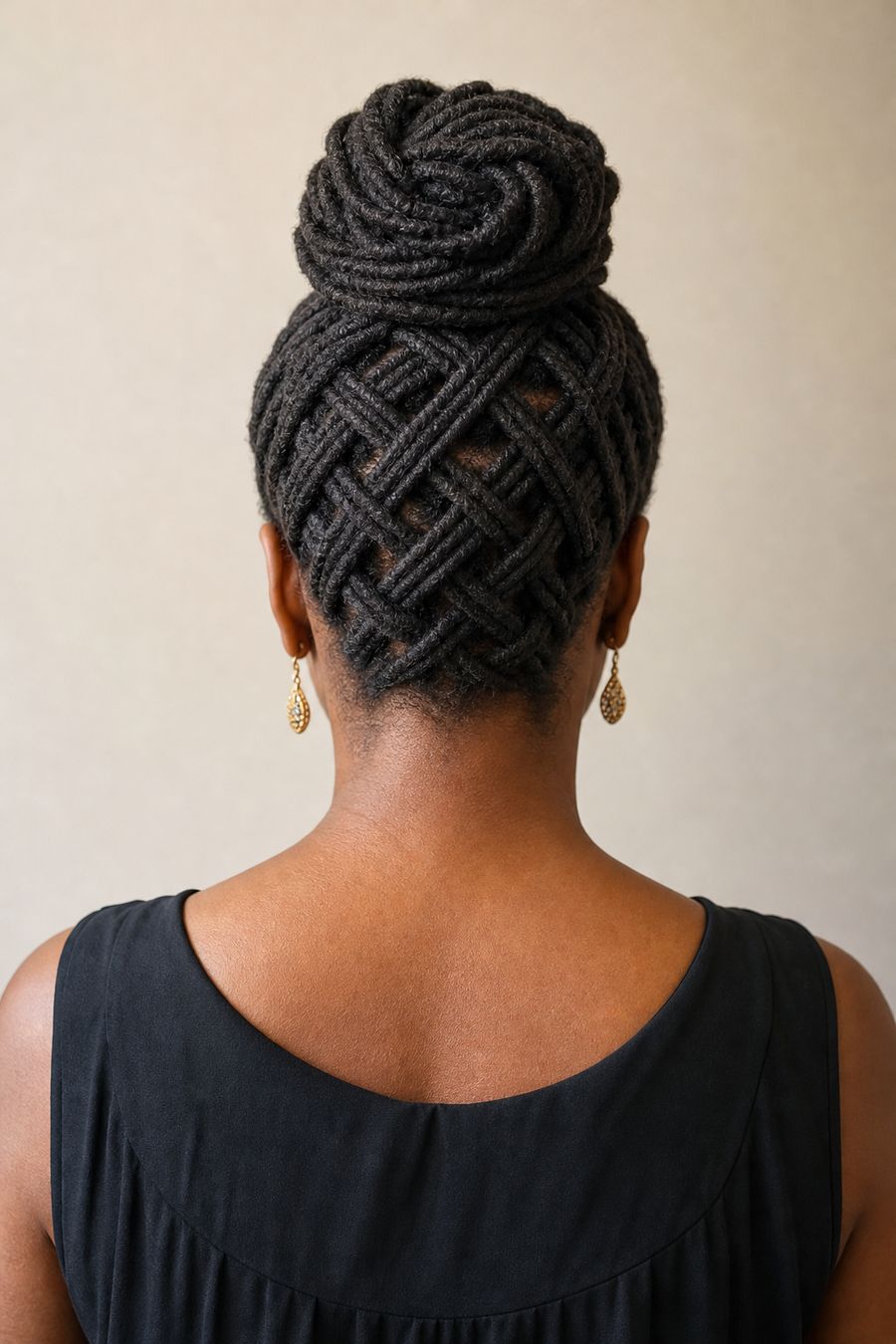
The woven surface makes this one worth a closer look. Wide sections cross over one another at the back, leading into a compact bun above the patterned panel.
Smaller or medium locs show the crossings most clearly and bend into the weave more readily. This is a good choice when you want the back of your updo to have as much detail as the front, but it takes more arranging than an everyday wrap.
8. Loc Pompadour Updo
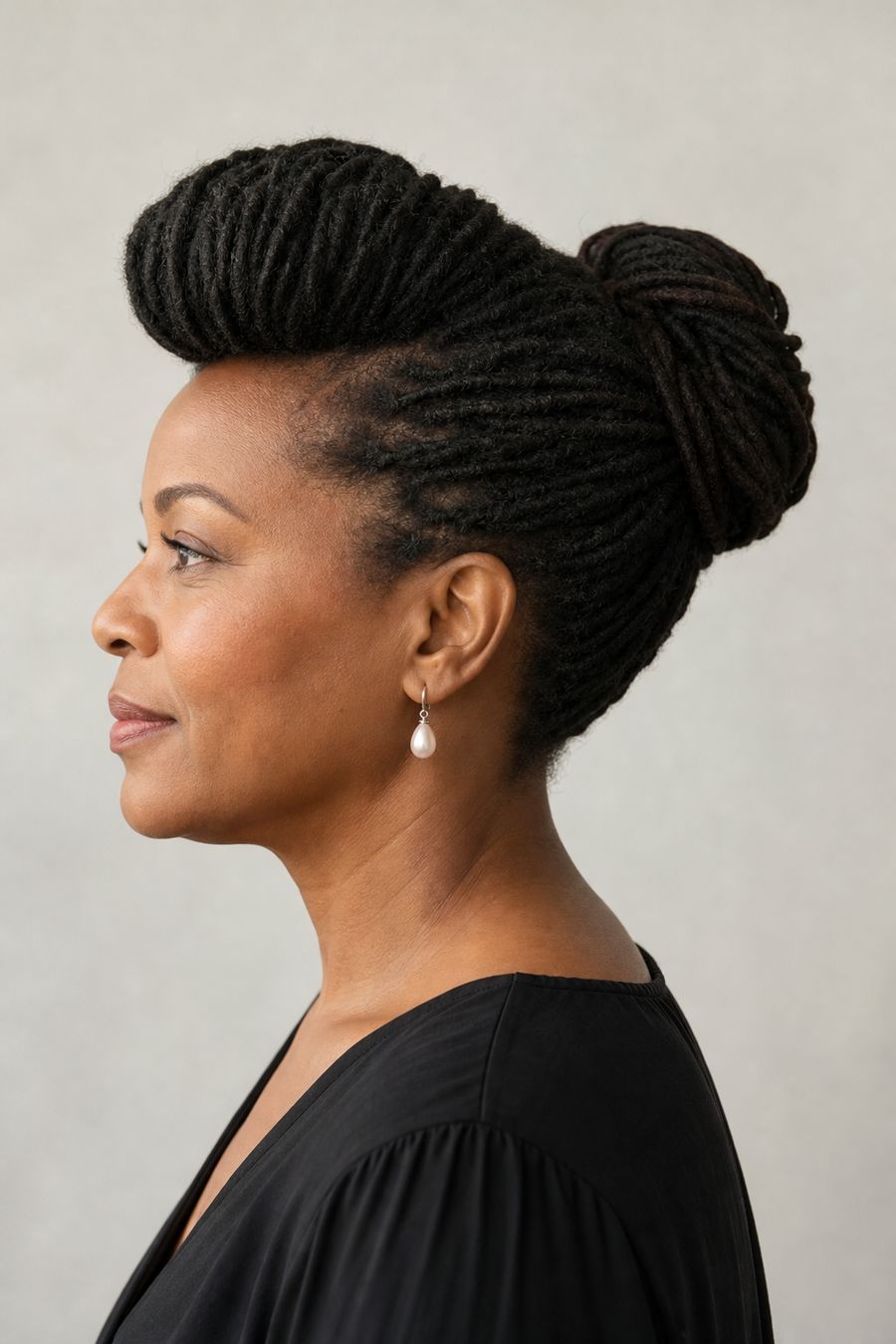
A rounded front roll brings the attention toward your face, while a compact bun keeps the back simple. You get height at the front without needing a tall shape all over.
Leaving out a front section before making the bun gives you the length to fold backward into the pompadour. With heavier locs, a lower curve may feel steadier than a high roll; the shape should come from the folded lengths, not a taut hairline.
9. Side-Swept Loc Barrel Roll
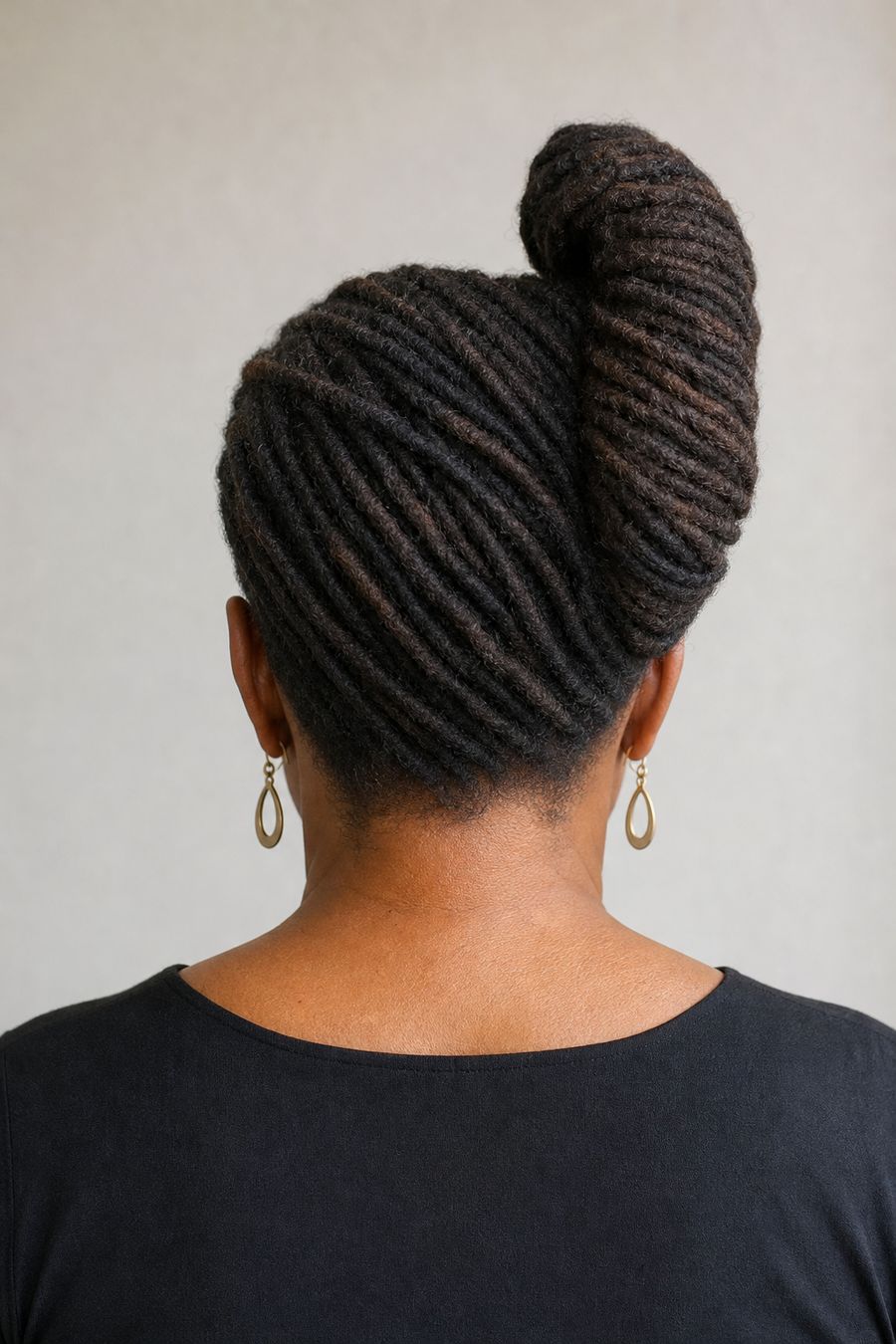
For an off-center shape without loose lengths over your shoulder, there’s the side-swept barrel roll. The locs travel diagonally across the back and fold into a substantial roll above one ear.
Rolling them as a broad section gives a softer finish than tightly twisting each piece. The asymmetry is part of its appeal, but it also puts the weight to one side.
If your locs are especially heavy, this may suit a shorter outing better than an all-day style.
10. Loc Infinity Bun
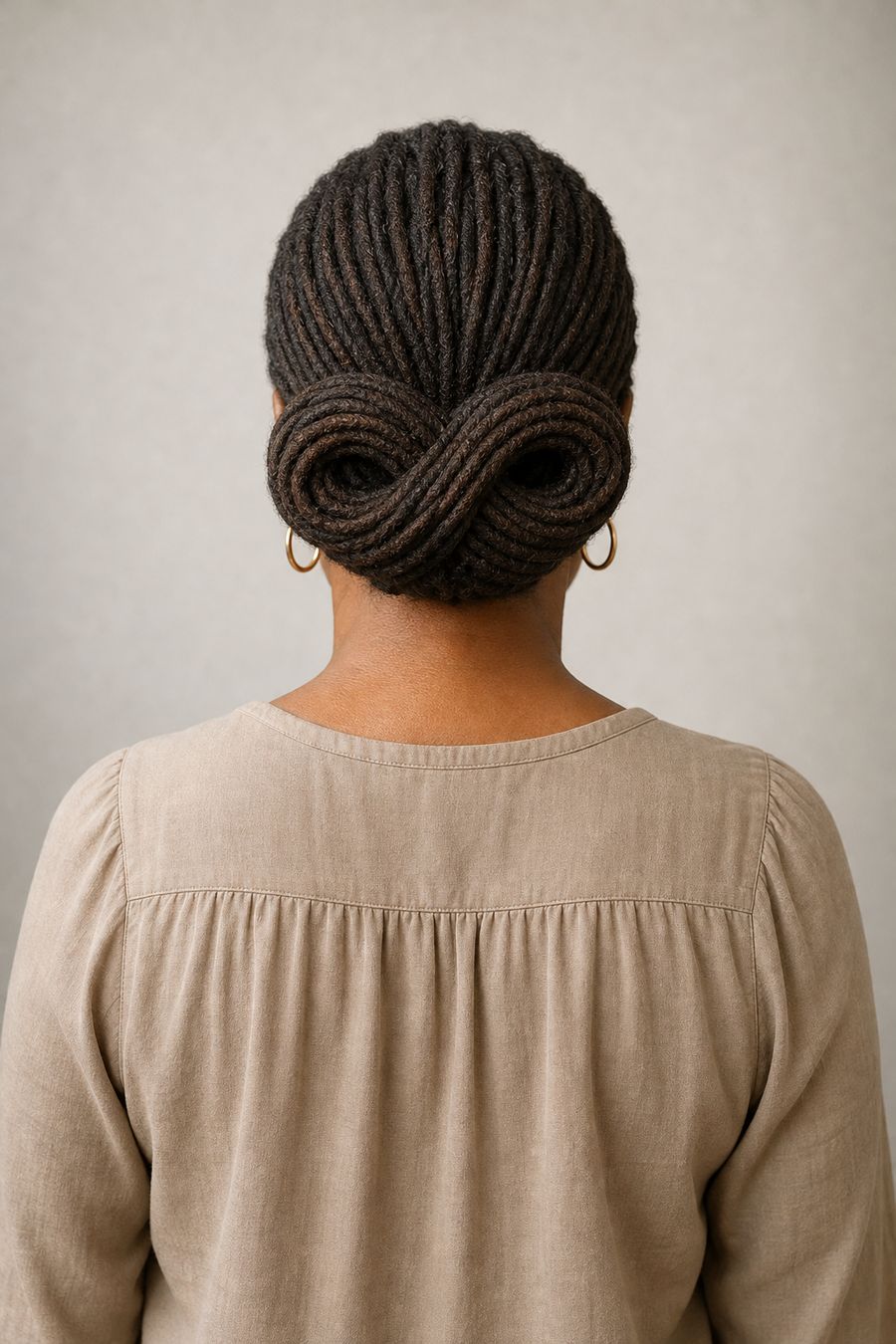
Prefer width to height? The two connected loops of an infinity bun spread across the back of your head in a sideways figure eight.
Long, flexible locs are helpful because the gathered length has to curve into both loops.
Each side needs its own support, with the center crossing holding the shape together. Very thick locs will give you a fuller outline rather than a sharply defined infinity symbol.
11. Braided Loc Topknot
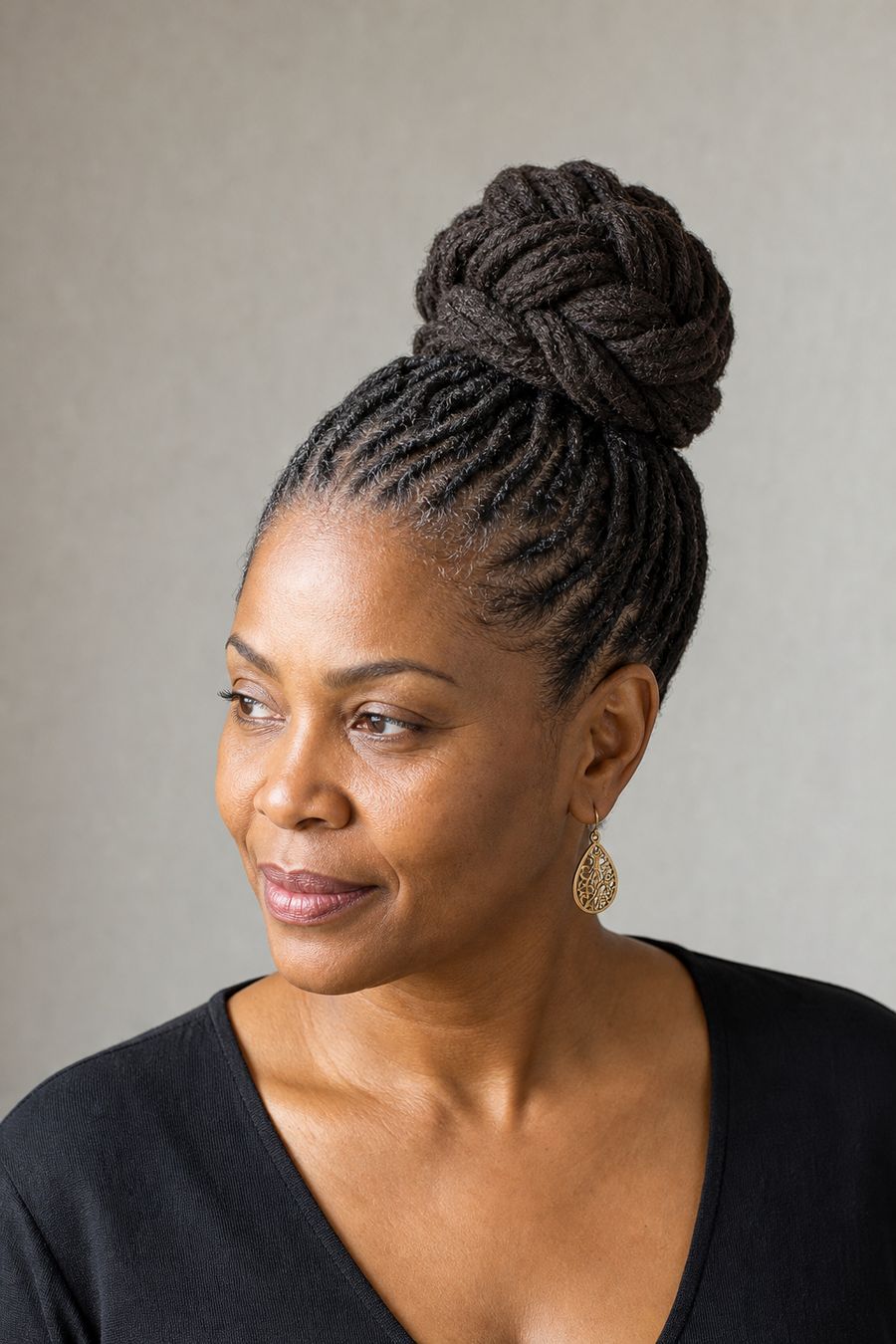
The chunky braid gives this topknot its ridged, structured surface. It’s still a high wrapped bun, but you can see the braid pattern running through the coil.
A loose three-section braid through a crown ponytail creates that texture before the length wraps around the base.
Too tight a braid becomes stiff and harder to curve. You’ll need enough length for both braiding and wrapping, so shorter shoulder-length locs may not reach.
12. Loc Petal Bun
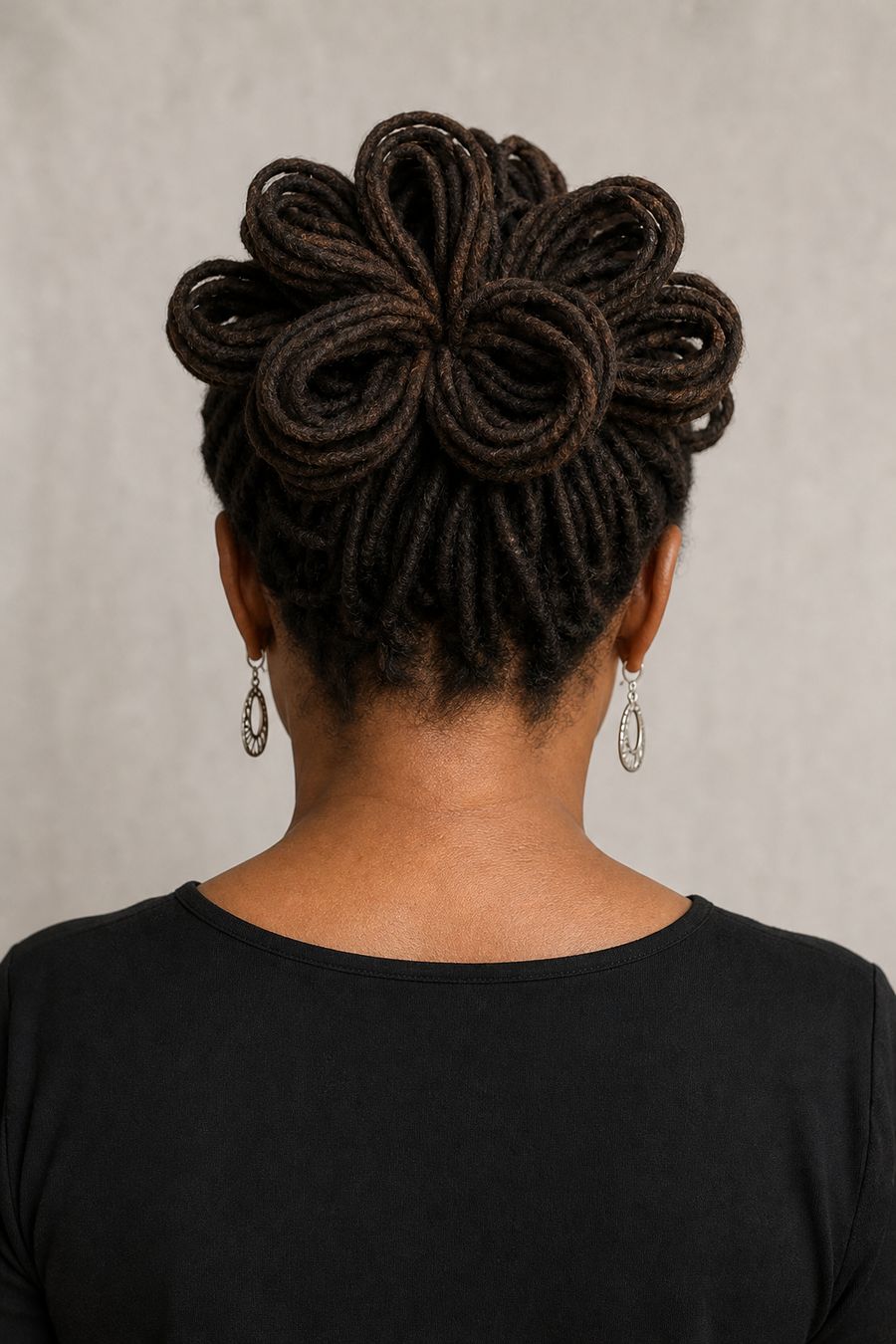
Soft folded loops give this bun its flower-like outline. Rather than forming a solid coil, the sections spread outward around a central base, making a decorative shape at the upper back of your head.
Smaller, flexible locs are easier to arrange into petals, and a little unevenness keeps the finish soft.
Each loop needs support near its base. It takes more arranging than a simple wrapped bun, but that open, layered shape is what makes it different.
13. Three-Bun Loc Updo
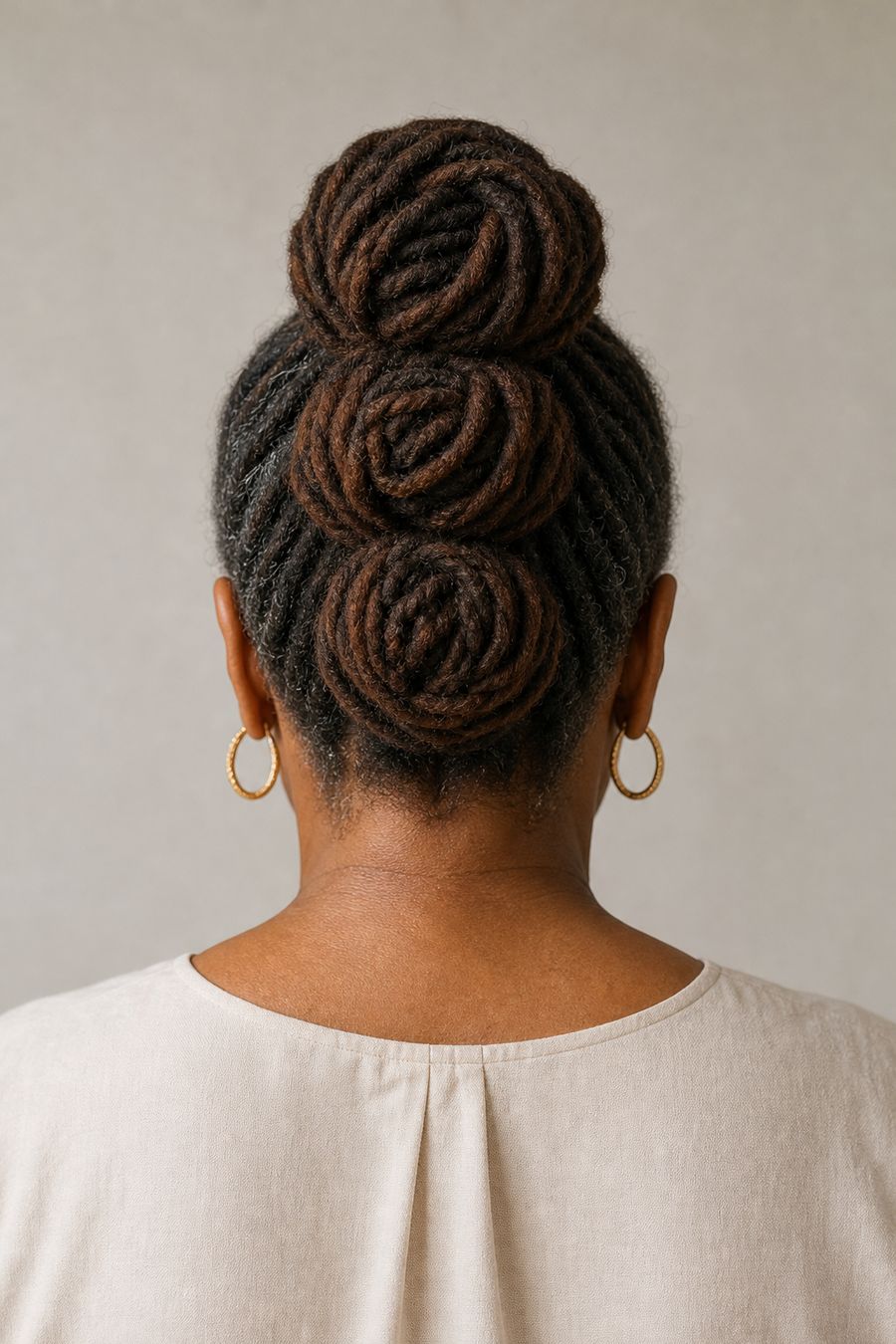
Three stacked buns give you a vertical shape without gathering all your length into one large bundle. It’s an appealing alternative if a single bun feels awkward or looks bulkier than you’d like.
Upper, middle, and lower sections become separate rounded buns down the center back. They can touch while still looking distinct, with the lowest one sitting above the neckline. You can also adjust each bundle separately rather than redoing the whole style.
14. Loc Gibson Tuck
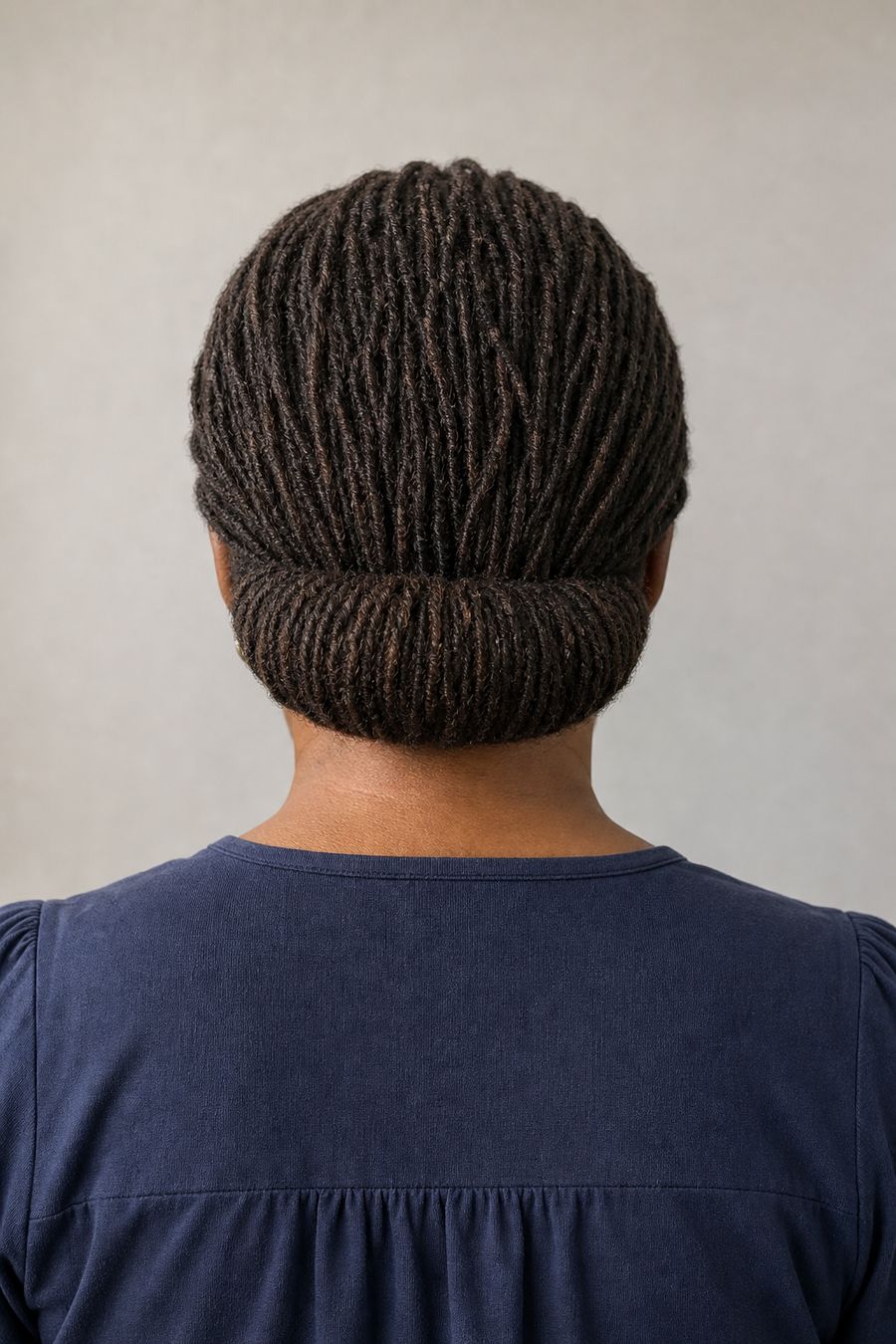
A Gibson tuck has a broad, rolled-under finish that stays closer to your head than many wrapped buns. It’s a lovely option if you prefer a low shape with less projection.
The length folds upward and inward from a loose low ponytail, with support across the width of the roll. Smaller locs bend into this shape more readily; thick or very long locs can make it bulky.
For an uncovered neck, this version sits slightly higher than a traditional nape roll.
15. Loc Rope-Twist Crown
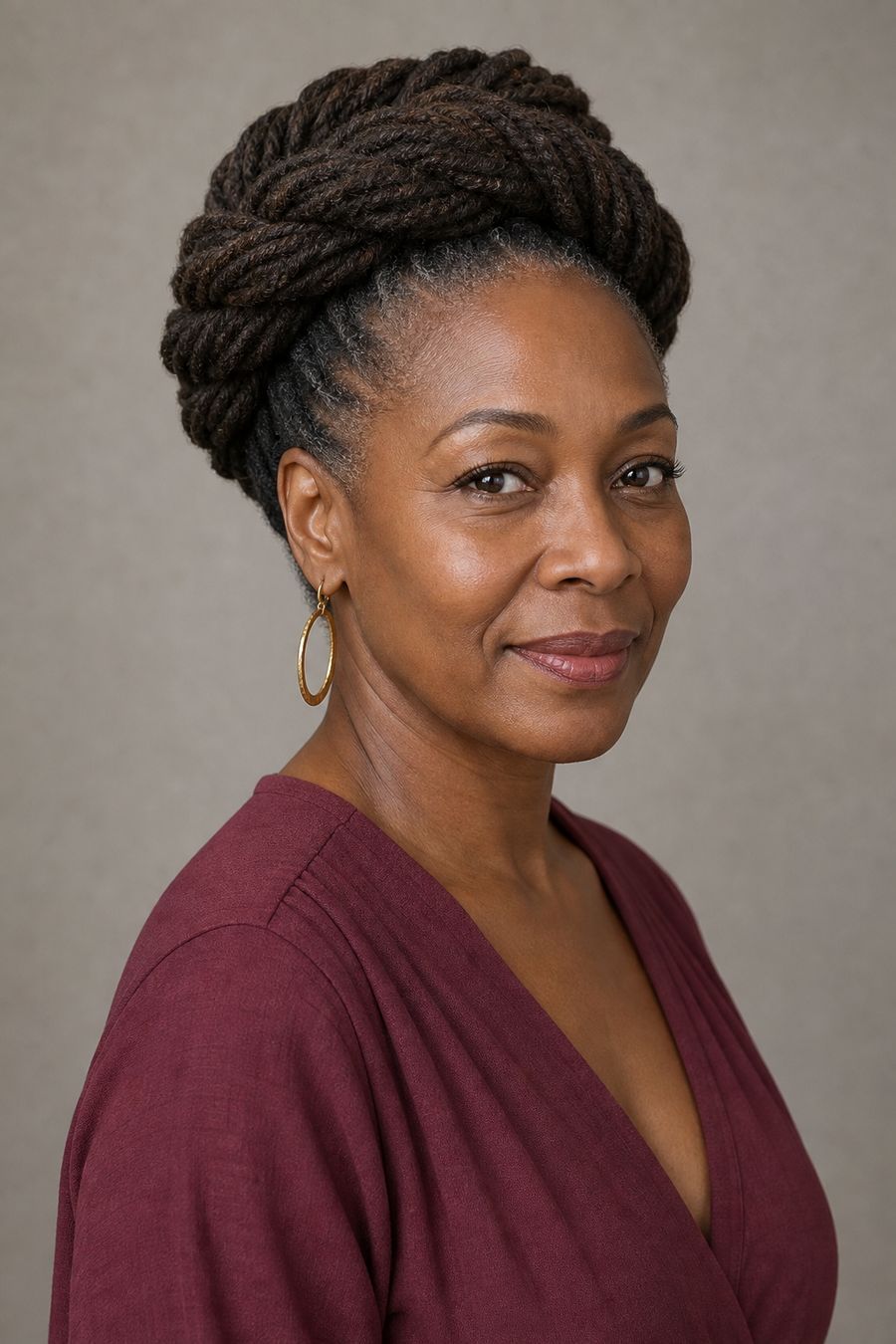
If you like a crown with more definition, the rope texture gives this one a raised, sculpted outline. Two chunky twisted bundles curve around the sides and overlap across the top.
Long locs make the continuous shape easier to achieve, with the ends tucked beneath the crown. The twisting belongs in the lengths rather than tightly at the scalp. Compared with a loosely overlapped halo, this version has a more pronounced band.
16. Loc Beehive
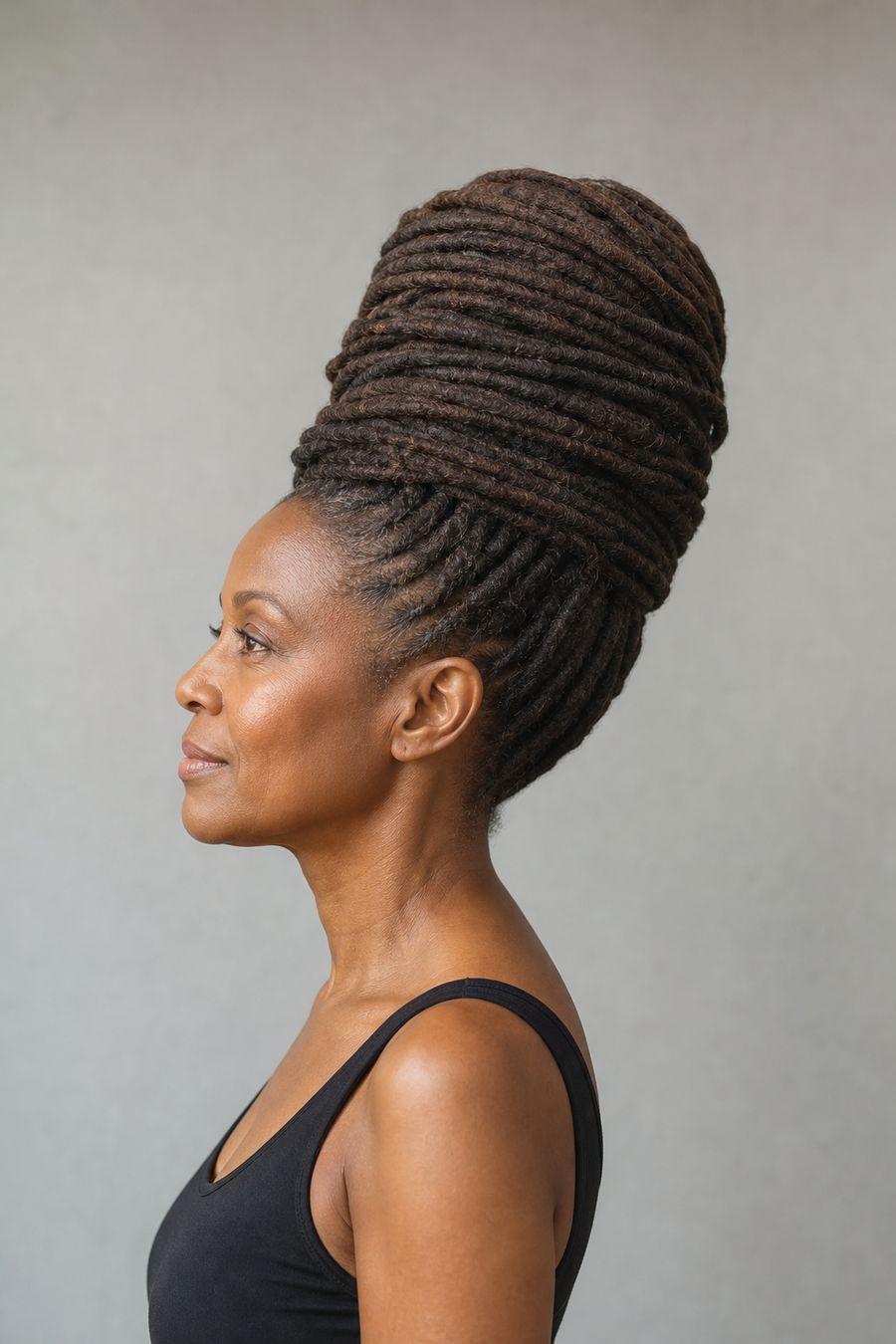
A beehive puts the volume above your head rather than around your shoulders. Layered wraps build a tall, rounded silhouette, tapering gently above a broad crown base.
There’s no need to backcomb mature locs for this look; the height comes from arranging the lengths. Longer locs provide more wrapping material, but also more weight, so a centered structure matters. This is one to save for a day when you have time for a more involved updo.
17. Loc Bow Bun
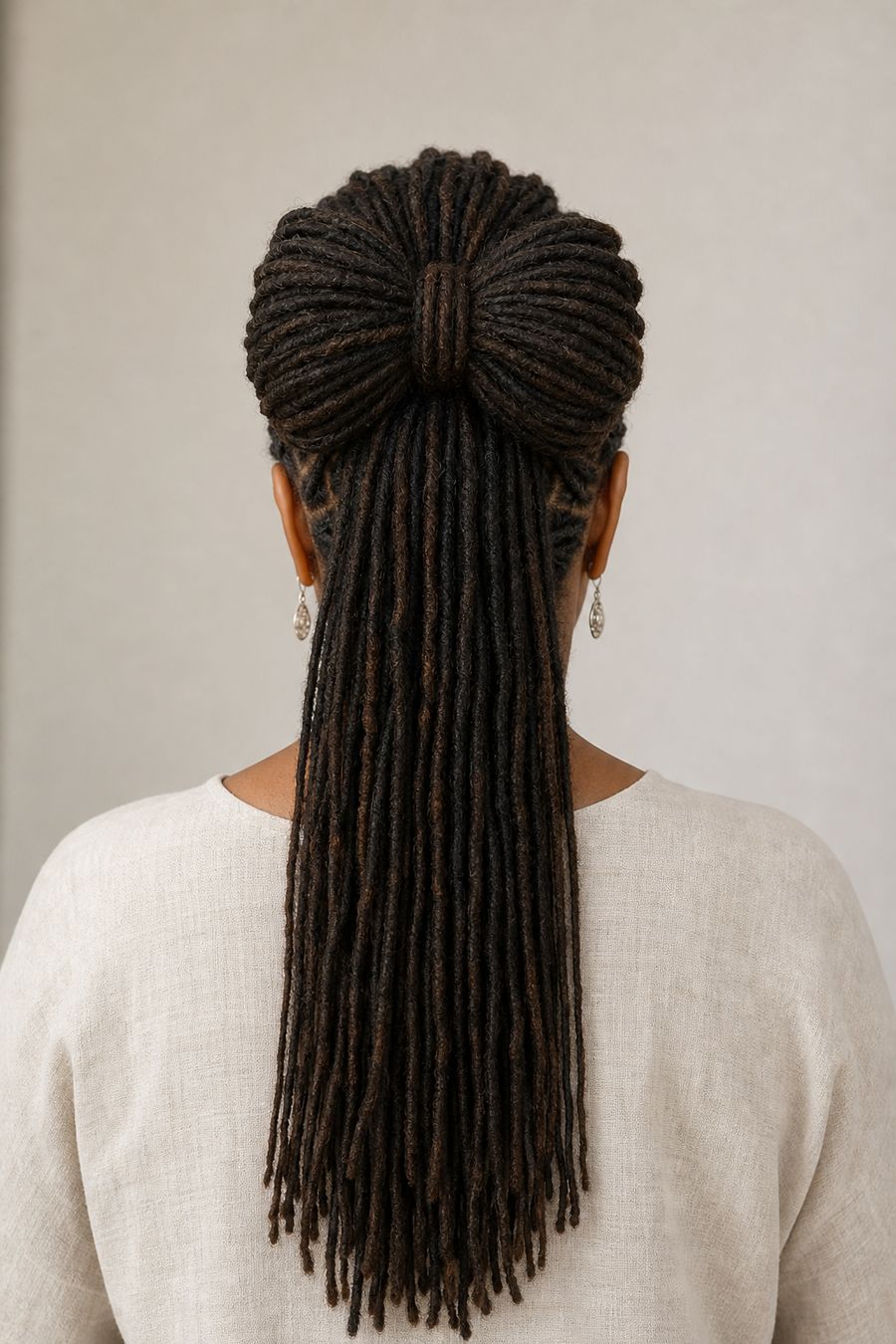
Two broad loops and a wrapped center make this a more decorative take on a gathered bun. The bow sits high at the back, with a fuller, more textured finish than you’d get with loose hair.
Flexible, smaller locs fold into the loops more easily. An upper-back ponytail provides the base, while a separate section wraps across the middle. Both loops need support of their own so the center wrap isn’t holding the whole shape.
18. Crisscross Loc Nape Bun
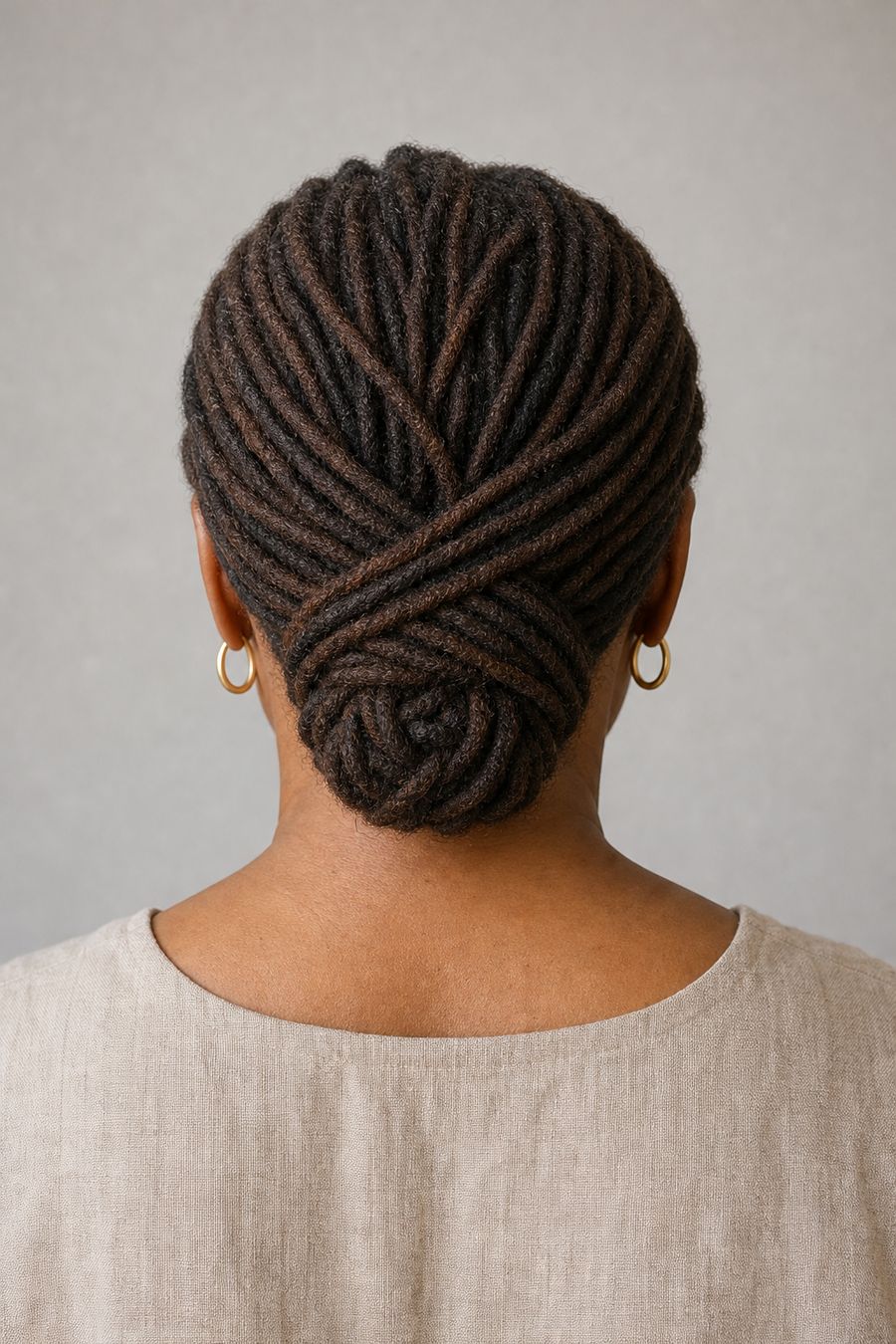
The crossed side sections add detail without taking away the quiet feel of a low bun. They sweep diagonally over the back of the head, then wrap around a compact bun just above the nape.
Leaving those sections out while making the bun makes the crossing easier to arrange afterward. Broad, relaxed bands suit the shape better than tightly pulled ones. For very dense locs, a wider bun can help keep the lower edge from dropping onto your neck.
19. Loc Faux Hawk Updo
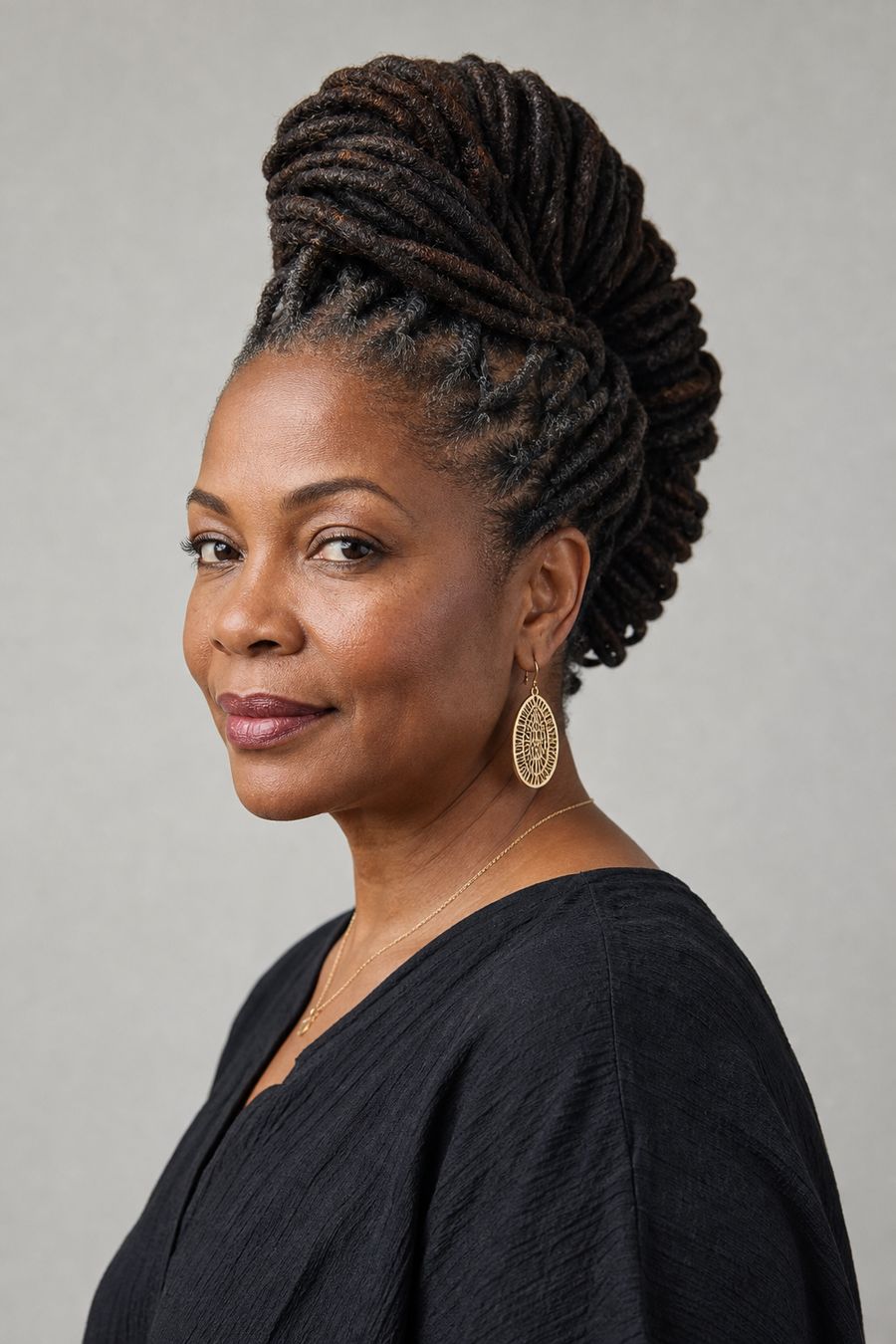
You can get the height and central shape of a faux hawk without shaving or cutting the sides. Folded locs form a textured ridge, while the sides sweep gently inward.
Unlike separate stacked buns, the upright loops overlap into one continuous line from front to back. That takes some arranging to balance. A lower ridge is usually easier to support with heavy locs, and the sides don’t need to be stretched flat for the shape to show.
20. Loc Spiral Rosette Updo
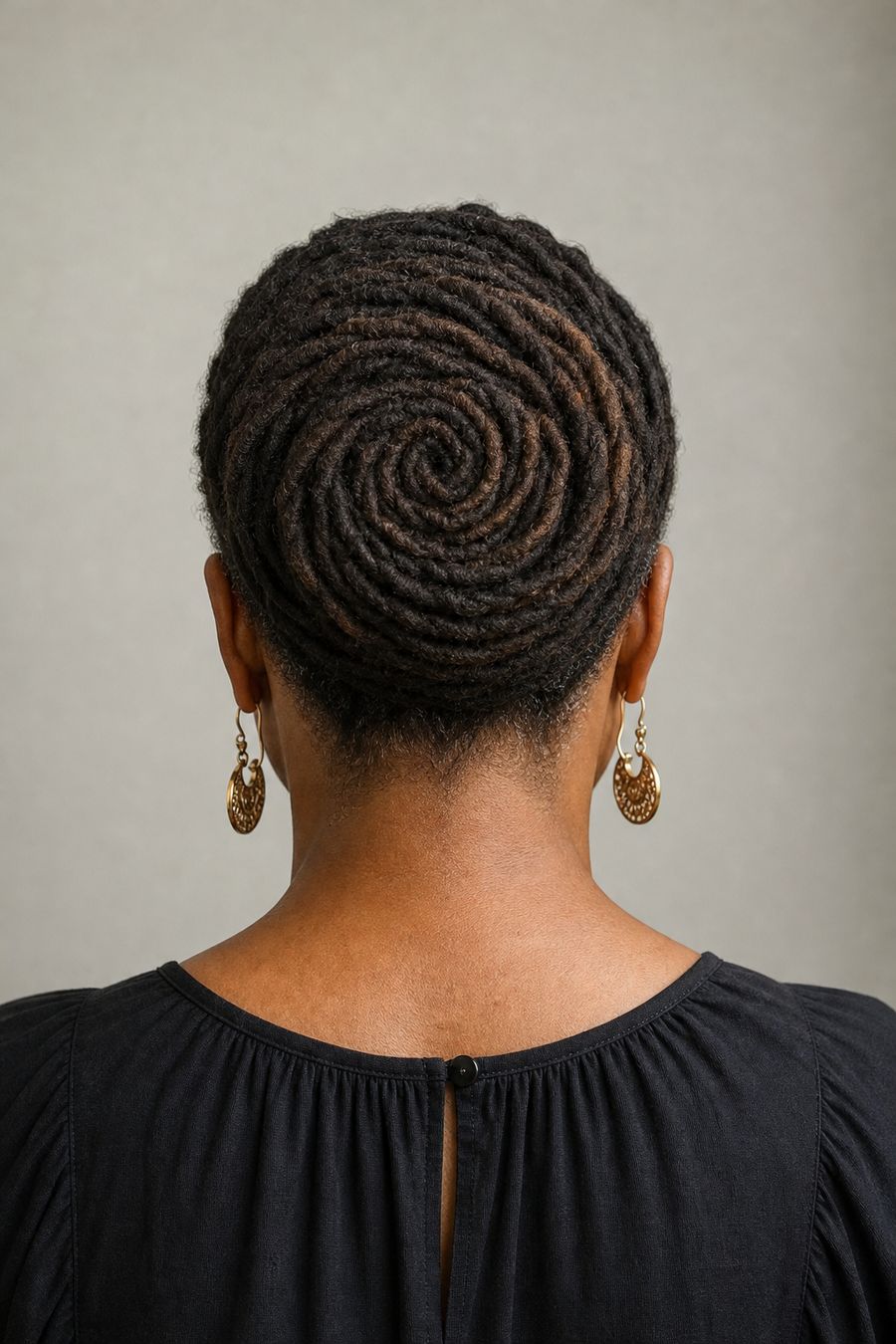
A flat rosette shows off your locs in visible spiral turns rather than a rounded bundle. The broad coil sits against the back of your head, making this a good option if you like detail without much projection.
Flexible locs and enough length for several turns help the pattern show. The bundle winds outward from the center, with each turn secured along the way so the outer edge doesn’t sag. Keeping the turns beside one another, rather than stacked, preserves that flat spiral.