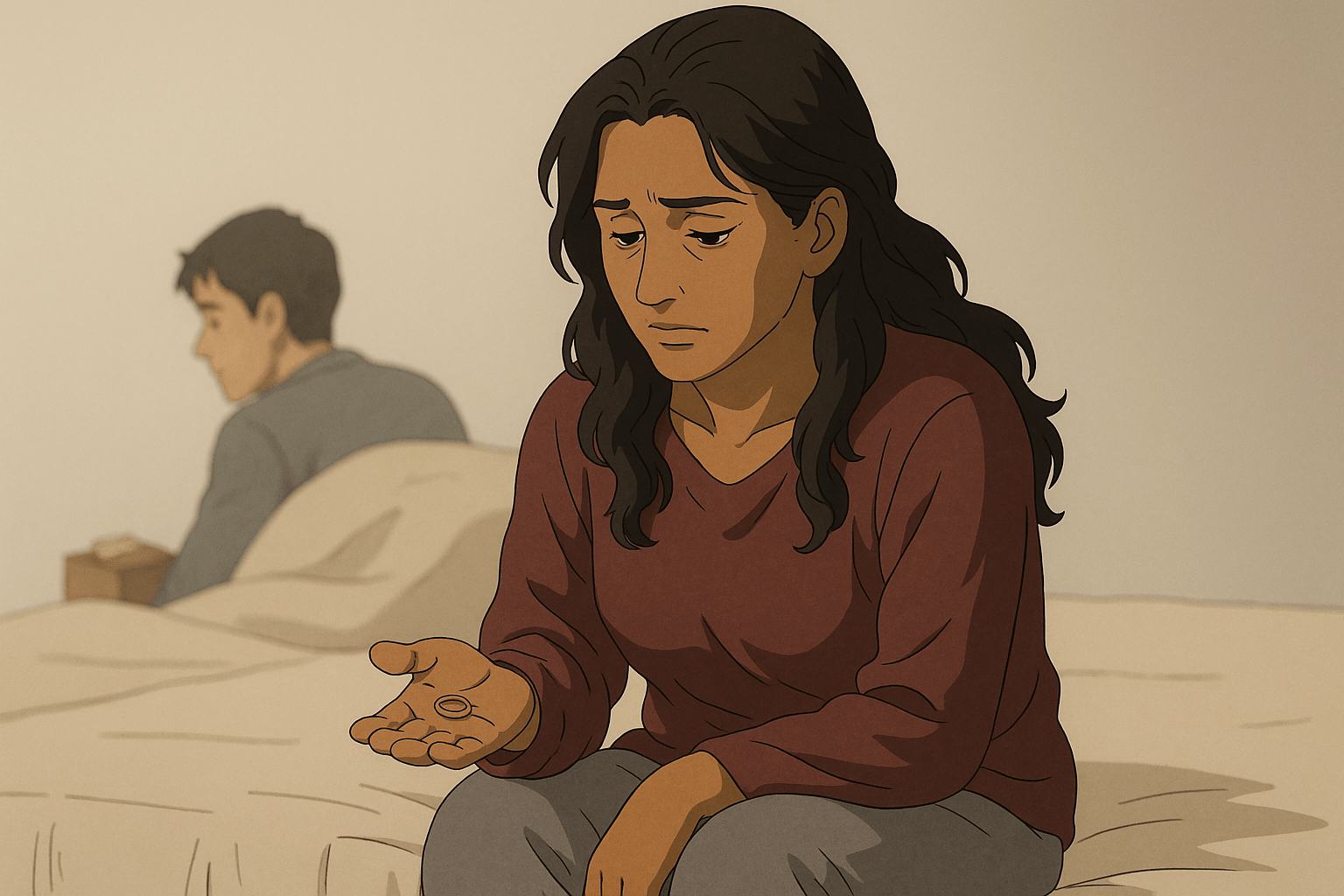
Feeling unhappy in a relationship doesn’t always show up as constant arguments or dramatic breakups.
Sometimes, it’s quieter — a slow emotional drift, a gut feeling you keep ignoring, a growing sense that something just isn’t right anymore.
Before you make a decision, you need to pause and ask yourself the right questions — the kind that dig beneath the surface.
Here are 15 honest questions to help you figure out where you stand — starting with four to begin that reflection.
1. Am I staying out of love — or out of fear?
This question hits hard when you stop long enough to really think about it.
Are you still here because you genuinely love your partner and see a future with them… or are you afraid of being alone, starting over, or disappointing people around you?
Fear can dress up like loyalty, but it drains you over time.
There’s nothing romantic about staying where your heart doesn’t feel alive anymore.
Love feels expansive — fear feels suffocating. If your connection feels like you’re walking on eggshells or stuck in emotional survival mode, you owe yourself honesty about why you’re still holding on.
2. Do I feel safe being fully myself around them?
Real connection means showing up as your full self — the weird parts, the sensitive parts, the unfiltered thoughts — without constantly worrying about judgment.
If you’re always editing yourself, trying to avoid conflict or tiptoe around their reactions, you’re not in a space built on emotional freedom.
Ask yourself: when was the last time you felt relaxed around them? Not just physically together, but mentally at ease?
If your relationship feels like a performance, emotional exhaustion is inevitable — and that’s not sustainable love.
3. When we disagree, do I feel heard — or dismissed?
Conflict isn’t the problem. How you both handle it reveals everything.
If every disagreement ends with you being silenced, blamed, or emotionally shut down, something deeper is broken. Feeling unheard over and over turns small cracks into emotional distance.
Respect during conflict matters more than fake peace. You don’t need someone who “never fights” with you — you need someone who listens when things are hard.
If you constantly feel like your thoughts get bulldozed, that’s not love — that’s emotional neglect dressed up as calm.
4. Am I growing in this relationship — or shrinking?
Relationships should challenge you to grow — not make you smaller. If you’ve slowly started silencing your needs, dropping your passions, or losing your sense of identity just to keep the peace, that’s not love — that’s self-abandonment.
You shouldn’t have to trade your voice for their comfort. A healthy partnership encourages your evolution, not your erasure. If you look in the mirror and barely recognize who you’ve become since this relationship started, that’s a red flag you can’t afford to ignore.
5. Do I feel emotionally supported — or emotionally alone?
Being in a relationship should feel like having a teammate, not like doing emotional heavy lifting by yourself.
If you constantly feel like you’re carrying the emotional weight of the relationship, or you’re going through hard things and your partner barely shows up, that emptiness adds up.
It’s possible to be committed to someone and still feel deeply alone.
Support doesn’t always mean having the answers — sometimes it’s just being present. If your partner can’t sit with you through your low moments or celebrate your wins without shifting the spotlight, then you’re in something unbalanced.
A healthy relationship is about showing up emotionally, not disappearing when things get real.
6. Am I afraid to bring things up because I already know how they’ll react?
You shouldn’t feel scared to talk about your needs, feelings, or even frustrations. If you already know the conversation is going to be turned against you, lead to drama, or leave you apologizing for simply speaking up — that’s not healthy communication. That’s a dynamic built on fear and emotional control.
The right person doesn’t punish you for expressing yourself. They lean in when it matters. If you’re constantly bracing for a reaction instead of having open dialogue, then you’re not in a safe space — you’re in survival mode. That chips away at your peace faster than any argument ever could.
7. Do I still look forward to spending time with them?
There was a time when seeing their name pop up made your chest feel lighter.
A time when being around them felt like home. But now? You might feel numb. Or tense. Or even relieved when plans get canceled.
When connection turns into obligation, it’s a signal your heart is checking out, even if your body hasn’t caught up yet.
Sometimes people stop making the effort. Sometimes the joy gets buried under resentment or routine.
If the idea of quality time feels draining instead of exciting, you owe yourself the honesty of asking why. Avoiding the answer doesn’t protect the relationship — it just prolongs the ache.
8. Am I still respected — or just tolerated?
Love without respect slowly turns toxic. You can feel when someone’s tone has shifted.
When they roll their eyes instead of listening. When they start speaking to you like you’re a burden or inconvenience. Tolerance isn’t care — and it definitely isn’t love. It’s quiet disrespect wrapped in apathy.
Respect shows in small moments — how they speak to you when they’re frustrated, how they regard your time, how they respond when you express hurt.
If you feel like you’re constantly trying to prove your worth, that’s not connection — that’s emotional erosion. You deserve to be seen and valued, not merely endured.
9. Am I still attracted to who they are — not just how they make me feel?
Physical or emotional comfort can sometimes trick you into staying. But deep down, do you still admire the person they are? Their mindset? Their values? Their character?
Attraction isn’t just about butterflies — it’s about feeling proud to love the whole person, not just craving the role they fill in your life.
If you wouldn’t choose them again for who they are today — not who they used to be — then your heart’s trying to tell you something.
Growth happens. People change. And sometimes, we outgrow the very person we once thought we couldn’t live without.
10. Have I started fantasizing about being free?
It’s one thing to crave space. It’s another to daydream about what life would be like without them — and feel relieved at the thought.
That quiet craving for freedom isn’t just boredom or a rough patch. It’s your intuition trying to get your attention. The mind will often picture freedom before the body is ready to walk away.
You might dismiss it as “just stress,” but fantasies of leaving usually mean there’s a deeper emotional hunger being ignored.
Don’t shame yourself for imagining something better. Those thoughts often reveal what your soul is starving for: peace, clarity, or simply your old self again.
11. Am I still in love — or just afraid to let go?
Sometimes we stay because we think leaving means failing. Sometimes we stay because the idea of starting over is terrifying.
And sometimes… we stay because we used to be in love, and we’re hoping it’ll magically come back. But love that has to be forced, chased, or dragged along isn’t love anymore — it’s fear in disguise.
Letting go doesn’t mean you never loved them. It just means you’re brave enough to stop settling. Staying shouldn’t be about guilt, nostalgia, or fear of hurting them.
It should be a choice — and if you’re no longer choosing this relationship from a place of love, then you’re already halfway out the door.
12. Has this relationship made me lose confidence in myself?
Relationships are supposed to build you up, not chip away at your sense of self.
When you start second-guessing your worth, questioning your instincts, or walking on eggshells just to keep things calm, that erosion runs deep.
It’s not always dramatic — sometimes it’s subtle, like shrinking your personality over time just to avoid conflict.
Feeling unsure of yourself around the person who’s supposed to feel like home? That’s not love — that’s emotional imbalance.
When your confidence takes a hit in a space that’s meant to feel safe, it’s a sign something is deeply out of alignment. You deserve to feel rooted in your own skin again.
13. Do I still trust them with my heart?
Trust isn’t just about cheating or lying — it’s about emotional safety.
Can you open up without wondering if they’ll use it against you later?
Can you be vulnerable without bracing for silence, blame, or emotional distance?
When trust fades, love starts to feel like a gamble instead of a refuge.
You don’t need to feel paranoid every time they look at their phone or hang out with friends.
But when you start guarding parts of yourself — hiding feelings, holding back opinions — that’s not protecting the relationship. That’s protecting yourself from the relationship. And that speaks volumes.
14. When I picture my future, are they still in it?
Think about the life you’re building. The dreams, the habits, the everyday reality you’re moving toward.
Do they still fit into that picture in a way that feels exciting and right — or are they just there because they’ve always been?
Sometimes the hardest part of growing is realizing the person walking beside you stopped growing in the same direction.
You don’t have to hate someone to outgrow them. Love isn’t always enough to bridge different paths. And choosing a future that honors your full self isn’t selfish — it’s necessary.
Sticking around just because you’ve already invested years isn’t the same as choosing someone for your next chapter.
15. Would I want my future child to experience a relationship like this?
This question cuts through all the noise. Strip away the memories, the comfort, the fear of being alone — would you want someone you love deeply to have this exact dynamic?
Would you want them to feel the way you feel most days in this relationship?
You deserve the same kind of love you’d wish for your future family — one built on kindness, respect, safety, and joy.
Staying in something that teaches you to settle only guarantees you’ll keep repeating it. And breaking that cycle starts with telling yourself the truth.
16. Have I been holding on to potential instead of reality?
It’s easy to fall in love with what could be. The idea of who they might become, how the relationship might feel someday, or how things might get better “once they change.”
That future version becomes the excuse that keeps you stuck. But love built on hope instead of what’s real today is emotionally exhausting.
Reality matters. Who they are right now — how they treat you, how they show up, how you feel — that’s what counts.
It’s painful to let go of potential, but it’s even more painful to stay in something that only exists in your head. You deserve a love that’s grounded, not imaginary.
17. Am I still choosing this — or just avoiding the pain of ending it?
There’s a quiet difference between choosing someone each day and simply staying because the alternative feels unbearable.
Endings are hard. They shake everything. But dragging out a relationship just to avoid the discomfort of heartbreak ends up doing more damage in the long run — to both of you.
Avoiding pain doesn’t protect you from it. It just delays the healing. Staying out of guilt or fear creates resentment over time.
And when love starts feeling like obligation, that’s a sign it’s already unraveling. Sometimes the strongest thing you can do is choose the ending that frees both of you.
18. Am I still choosing this person — or just clinging to the routine?
It’s easy to mistake comfort for connection, especially when routines are deeply rooted.
But choosing someone daily is different from just defaulting to what you’ve always done together.
When the relationship becomes more about keeping a rhythm than sharing real connection, it slowly starts to feel hollow, even when everything looks fine on the outside.
19. Do I feel more like myself when I’m alone than when I’m with them?
The right person should amplify your energy, not mute it. When solitude feels more peaceful, more authentic, more you than being in your partner’s presence, that’s not balance — that’s your inner self trying to breathe again without judgment, tension, or emotional weight.
20. Have I stopped sharing things with them because I know they won’t care?
Emotional distance starts when you stop sharing. Not out of secrecy, but because you’ve learned their reaction won’t be supportive or even present.
When you stop telling your partner about your day, your wins, your fears — not out of choice, but out of exhaustion — the disconnect has already begun.