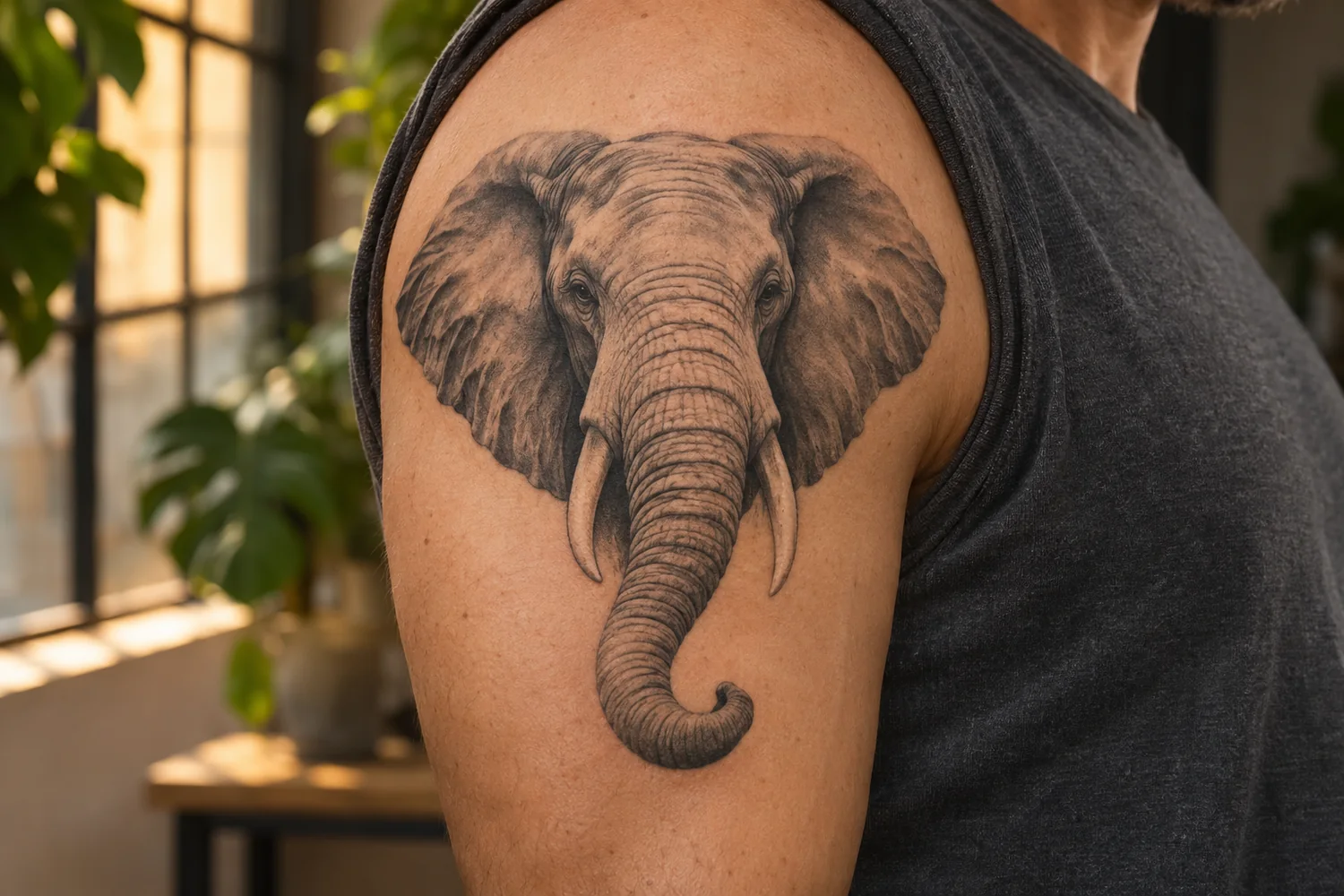
Elephant tattoos can be tiny enough to peek out above a sneaker or detailed enough to give every forehead fold its moment. Their curved trunks, broad ears, and distinctive shapes leave plenty of room to play with scale, color, and drawing style.
These 18 ideas move from simple outlines to larger portraits, with a few flowers, moonlit scenes, and charming little characters along the way. Use your favorites as starting points for a conversation with your tattoo artist about a design and placement that suit you.
1. Tiny Elephant Outline
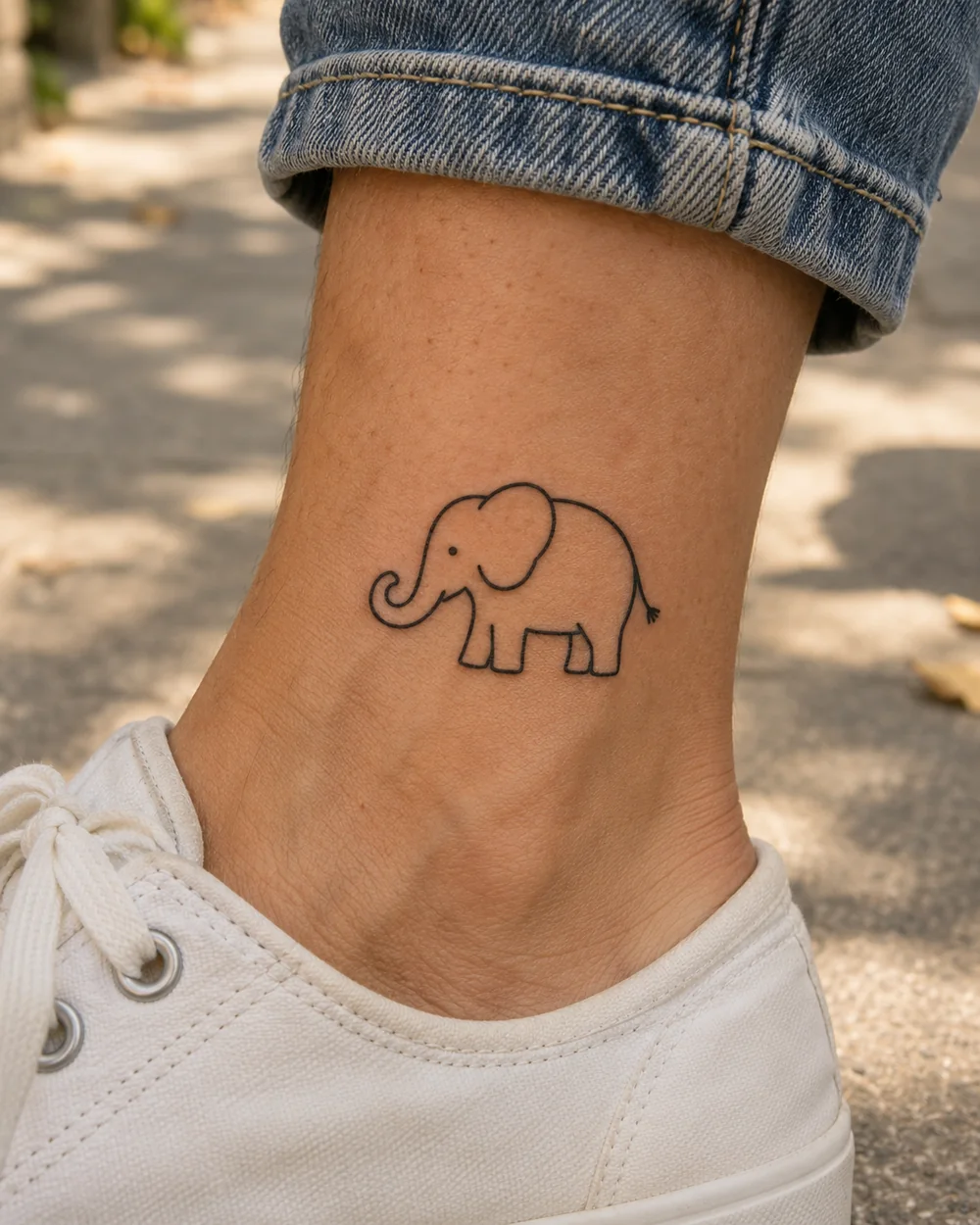
A rounded back, one generous ear, and a little curled trunk can do plenty of talking. This tiny elephant keeps the details to a minimum, giving the silhouette room to shine. Try it above the ankle if you like a small design that makes an occasional appearance beneath your jeans.
2. Single Line Elephant Profile
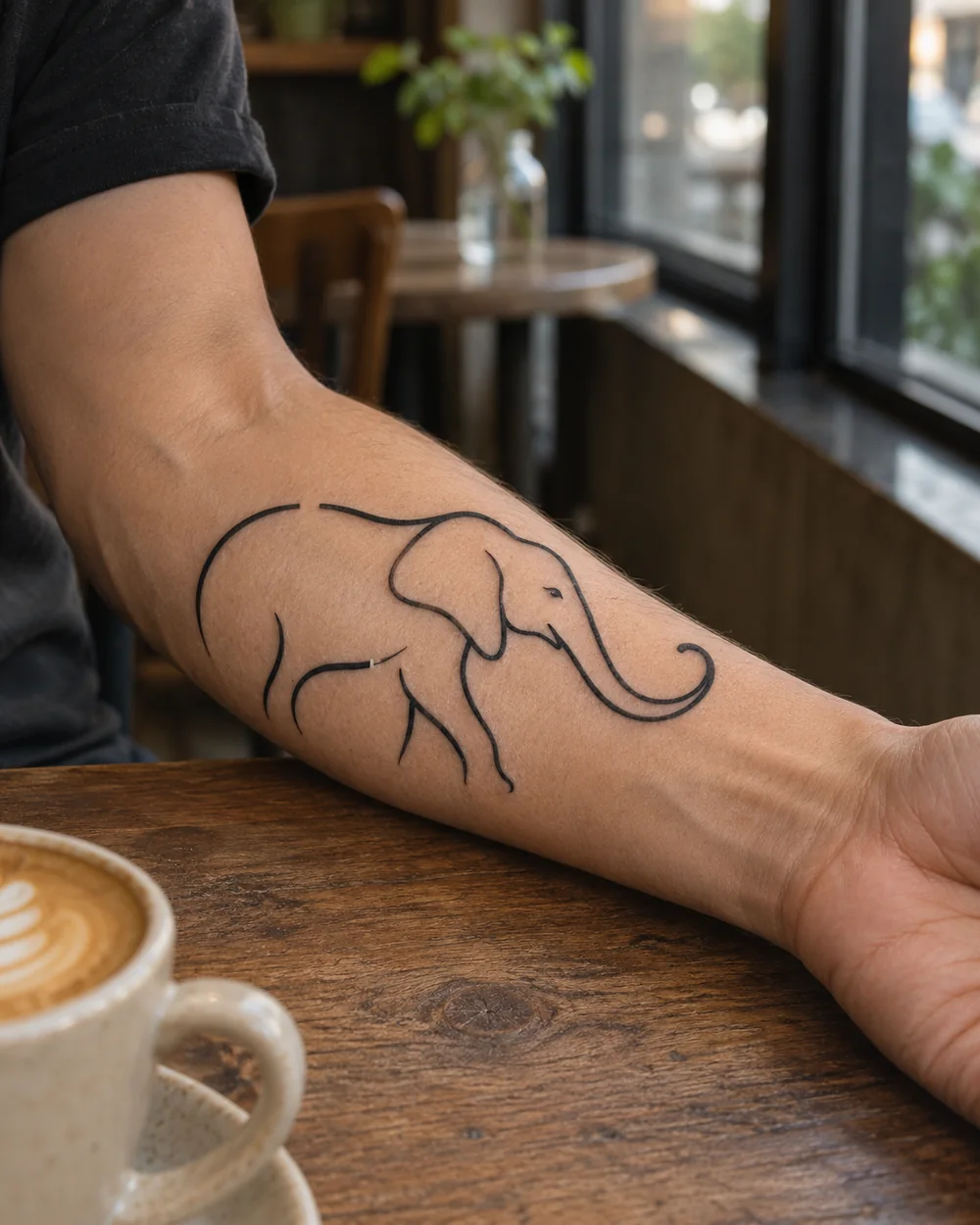
Let one wandering line take the scenic route around an elephant. The trunk, forehead, ear, and back flow together for a drawing that feels wonderfully relaxed. A horizontal placement along the inner forearm gives that sweeping outline space, while a few deliberate gaps keep the whole thing light and airy.
3. Baby Elephant Holding a Daisy
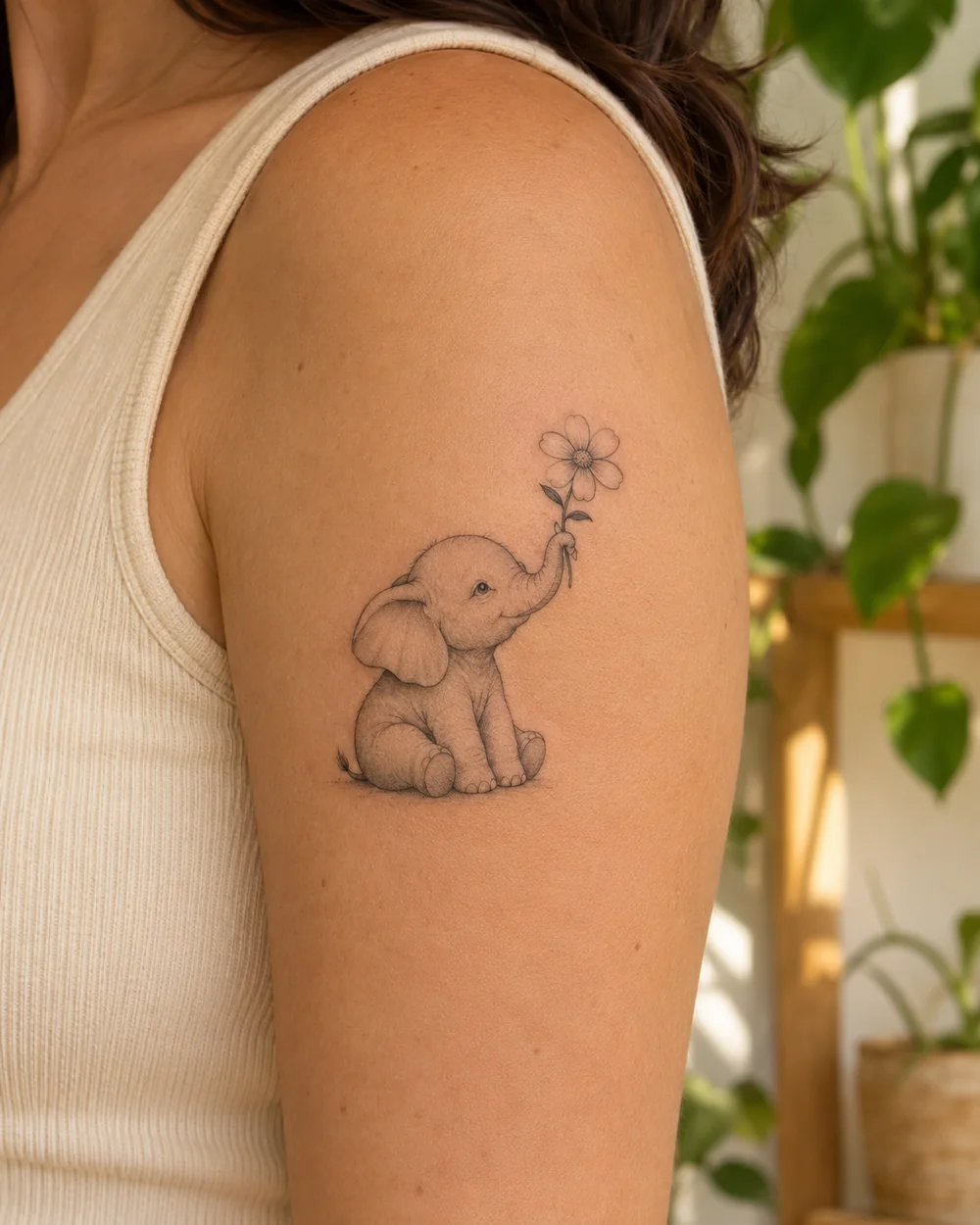
This little elephant has arrived with flowers, and frankly, excellent manners. A single daisy held at the tip of its trunk gives a simple seated pose a cheerful focal point. Keep the petals larger than the tiny facial details so the flower feels like part of the design, not an afterthought.
4. Two Elephants Touching Trunks
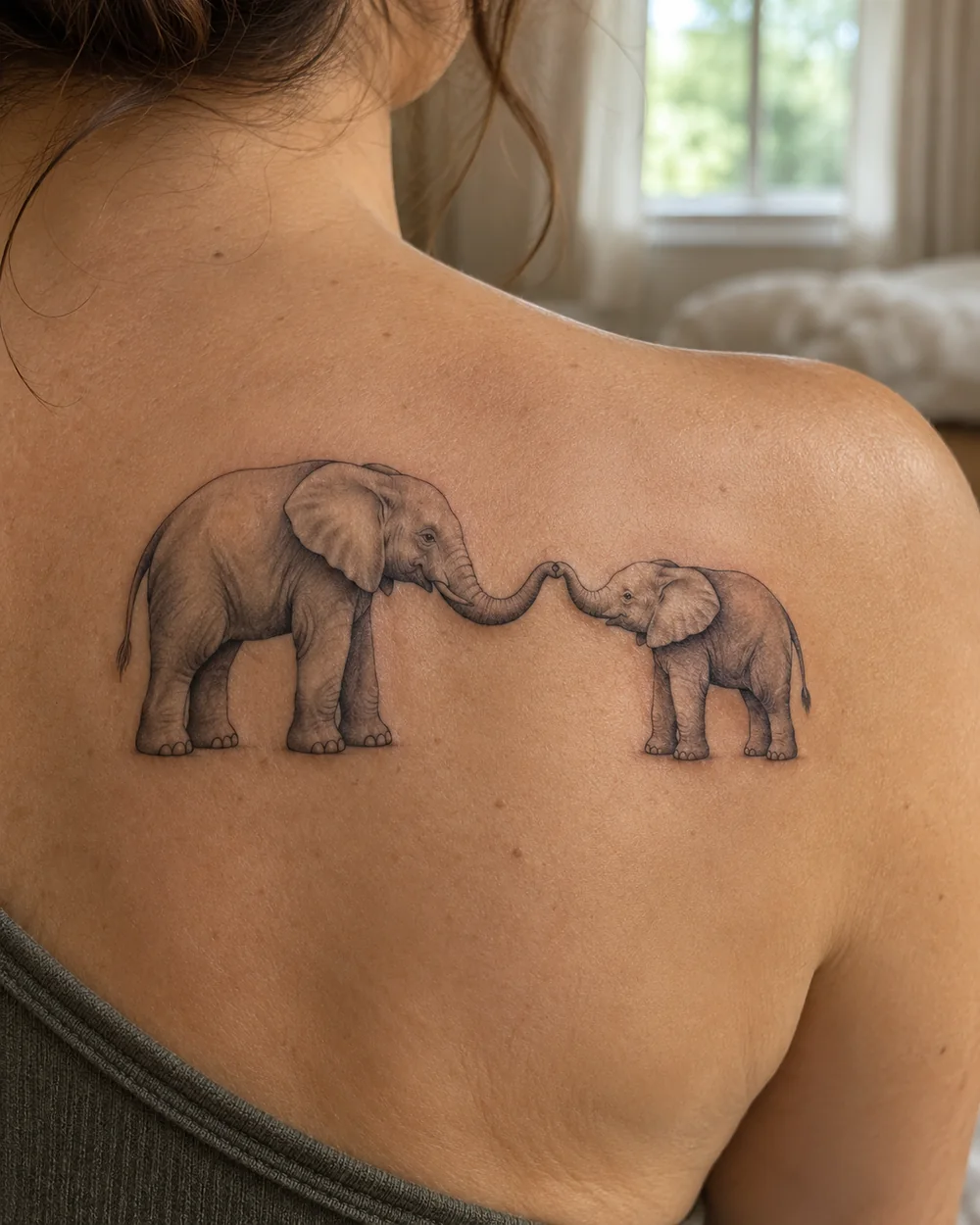
Two facing elephants bring a lovely sense of interaction without needing a caption. Curve their trunks toward each other and leave a little open space between their bodies so both shapes stay clear. Slightly different sizes add character, whether you imagine a couple, close friends, or simply an adorable elephant conversation.
5. Walking Elephant Family
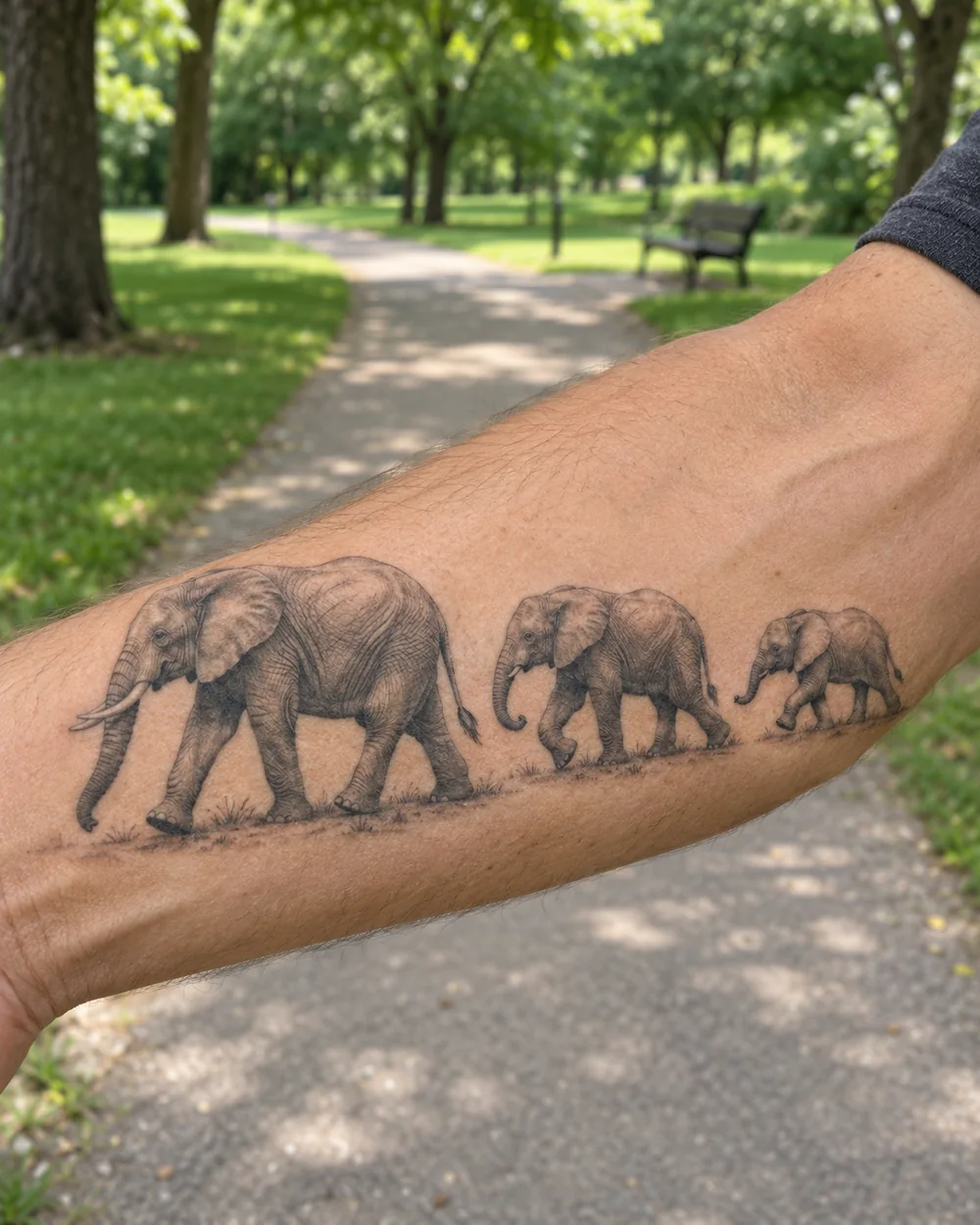
A line of elephants makes the most of a long, narrow placement. Start with a larger figure and follow with two smaller ones, varying their steps so the group feels in motion. The result has a sweet, storybook rhythm, especially when the smallest elephant looks determined to keep up.
6. Elephant With Wildflower Ears
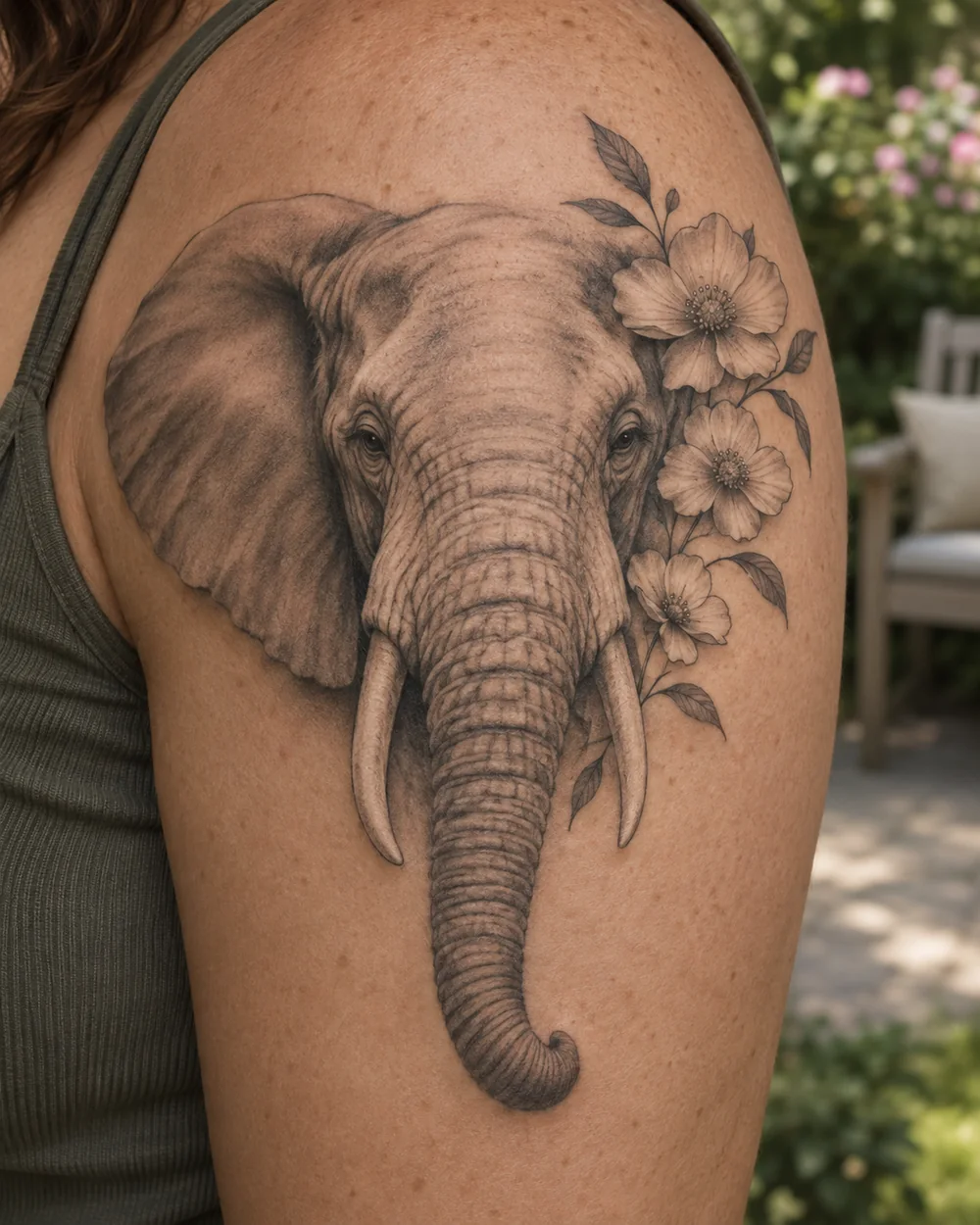
Swap part of the ear outline for loose stems and open blossoms, letting the flowers follow its broad curve. The elephant's face remains the anchor, while the botanical details add a softer edge. Choose a few generously spaced flowers rather than a crowded bouquet; this elephant deserves room to hear the compliments.
7. Watercolor Elephant Splash
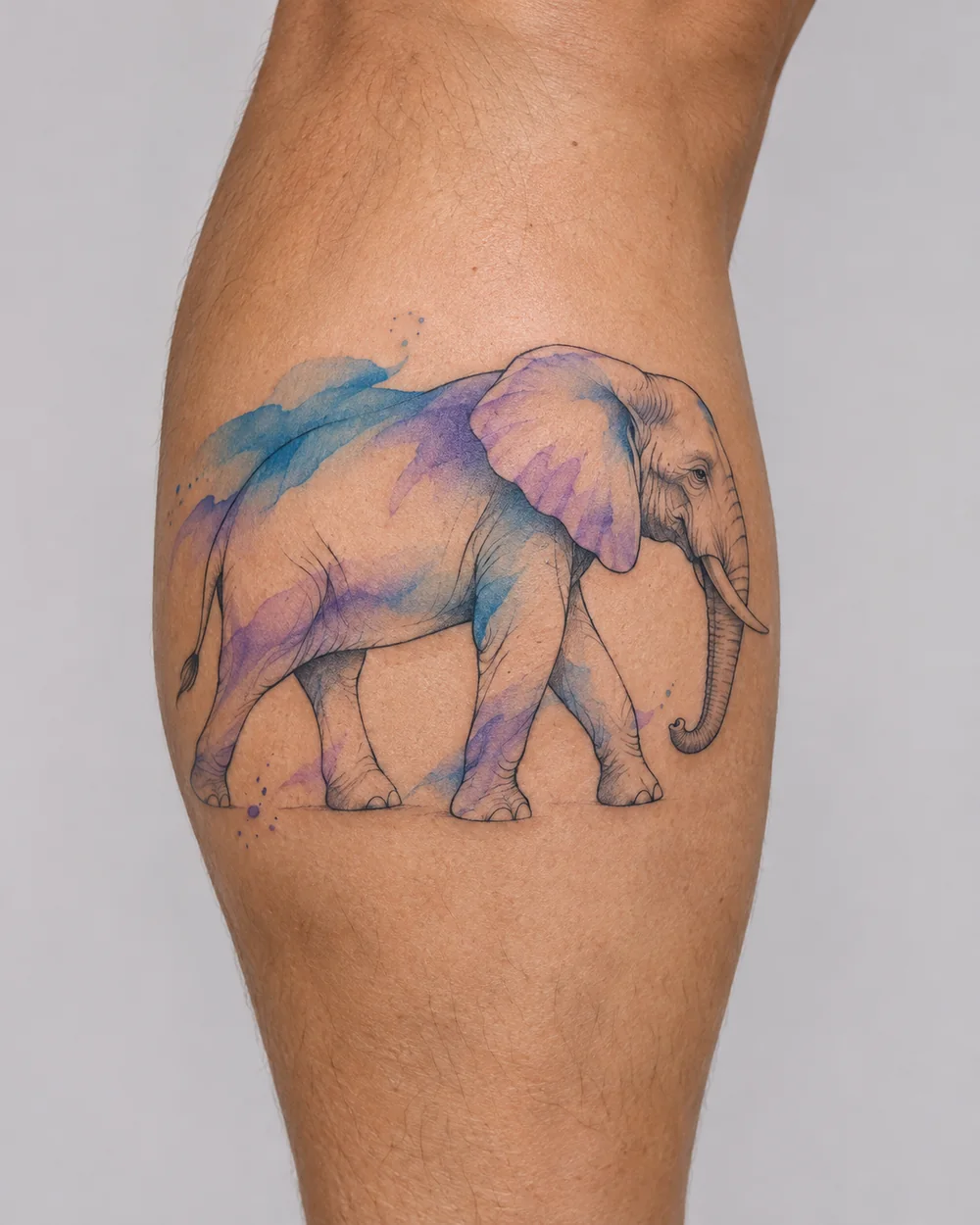
A small elephant silhouette gives a wash of color something to gather around. Loose blue, violet, or peach shapes can spill beyond the outline for a deliberately painterly finish. Keep a few uncolored patches inside the elephant so the black drawing still has breathing room beneath its very cheerful paint party.
8. Geometric Elephant Head
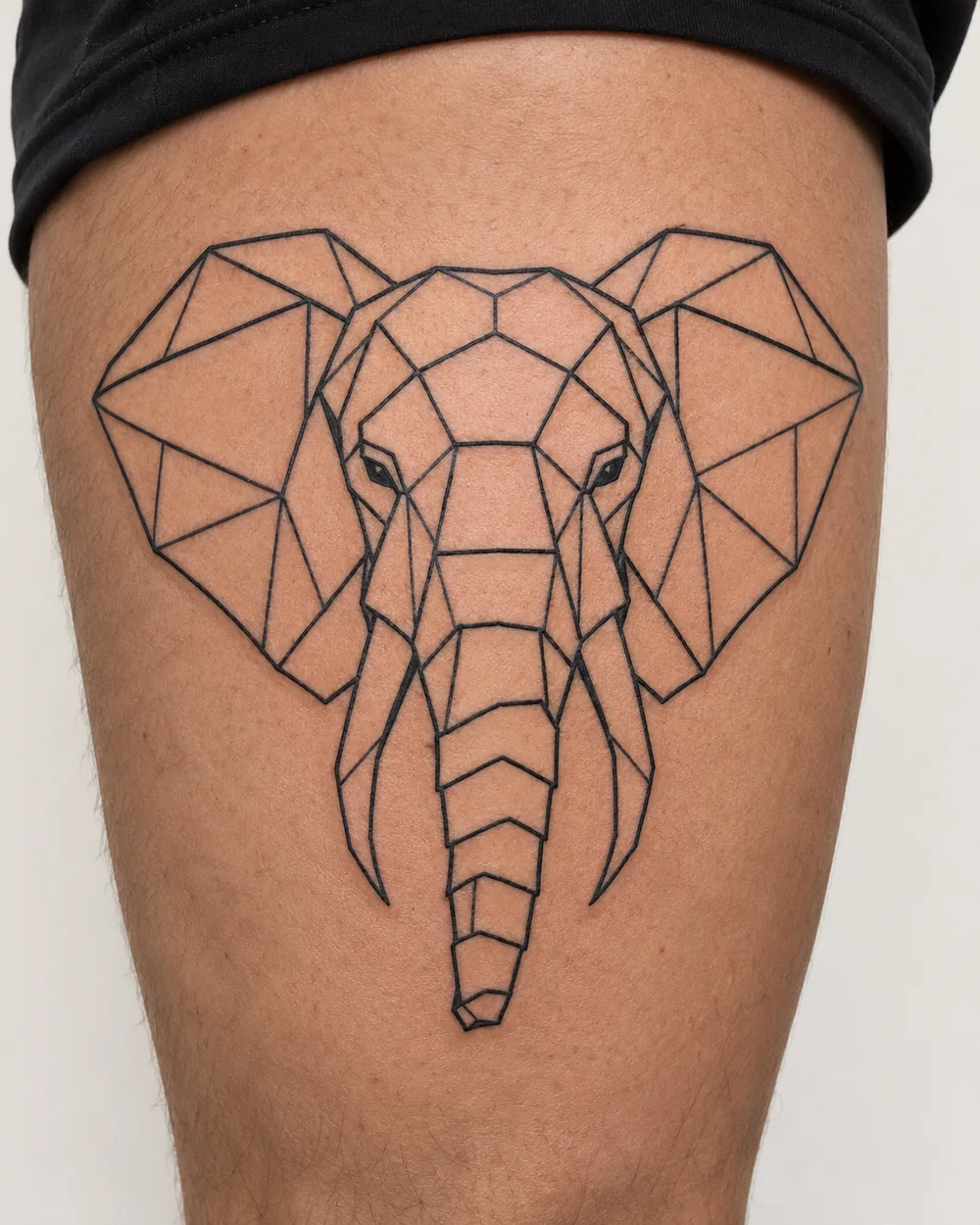
Broad ears and a long trunk make an elephant head a satisfying canvas for angular shapes. A handful of triangles can suggest the face without filling every inch with lines. Let the ears stay relatively open and concentrate the smaller facets around the forehead for a design with a clear focal point.
9. Half Portrait Half Linework
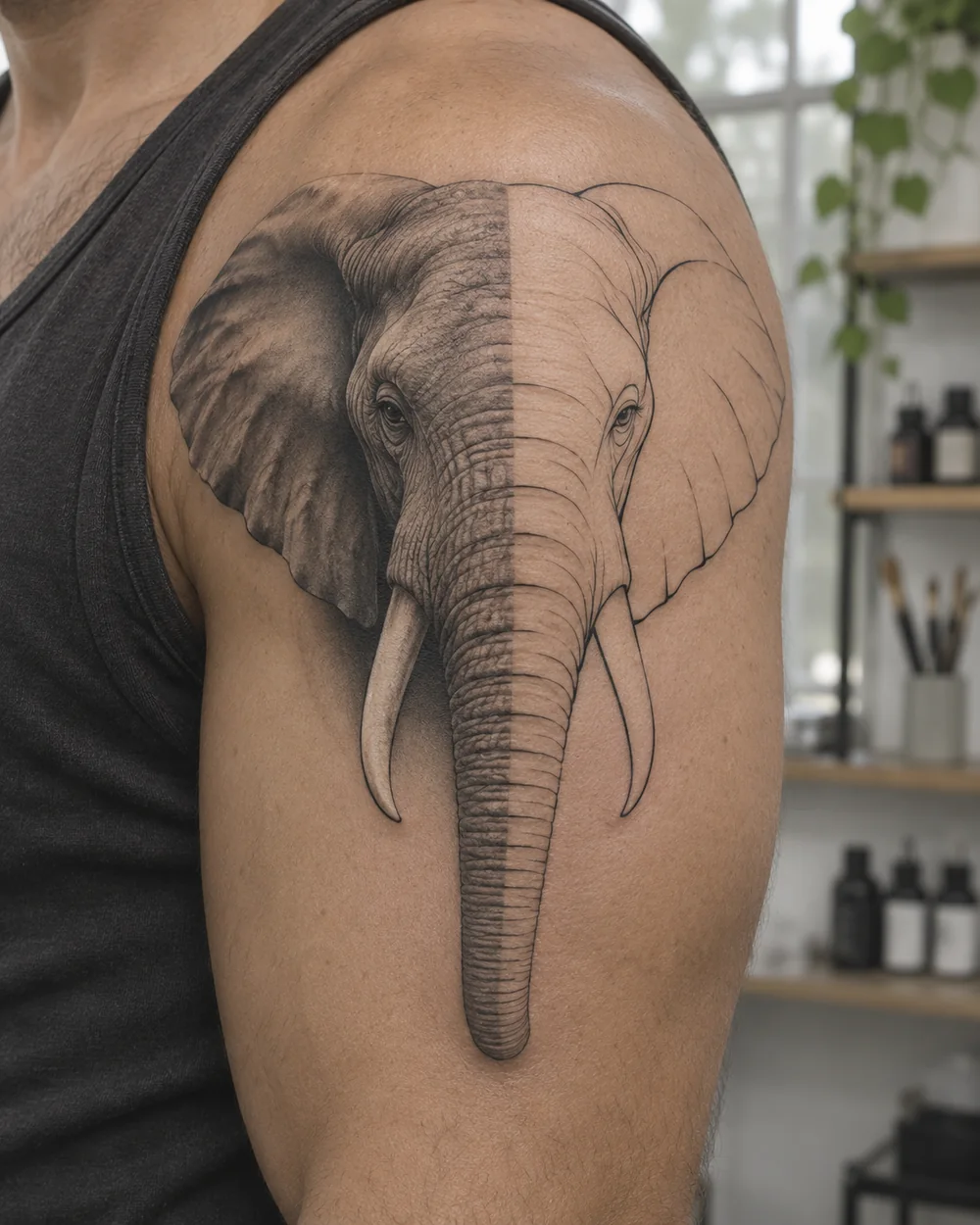
Give the elephant two different drawing styles while keeping one unmistakable face. One side can show soft shading and folds; the other can use a spare outline with just a few interior marks. A shared eye line and centered trunk help this split design feel connected rather than like two separate tattoos.
10. Elephant Beneath a Crescent Moon
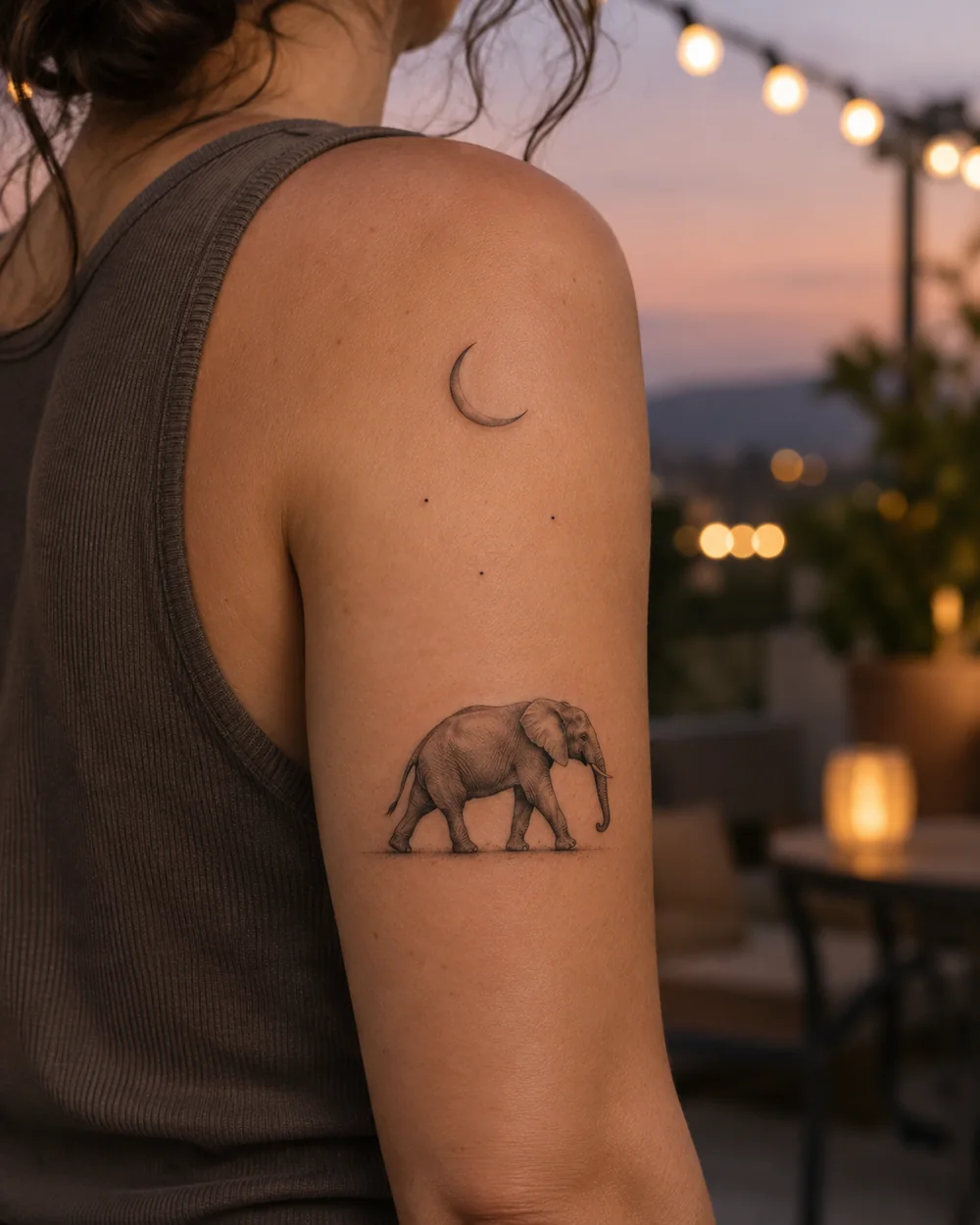
A crescent above a small walking elephant gives the design a quiet nighttime mood. Keep the moon separate from the animal and add only a couple of dots or stars if you want extra detail. The little gap between them makes the composition feel spacious, like an evening stroll with unusually good company.
11. Elephant in a Circular Landscape
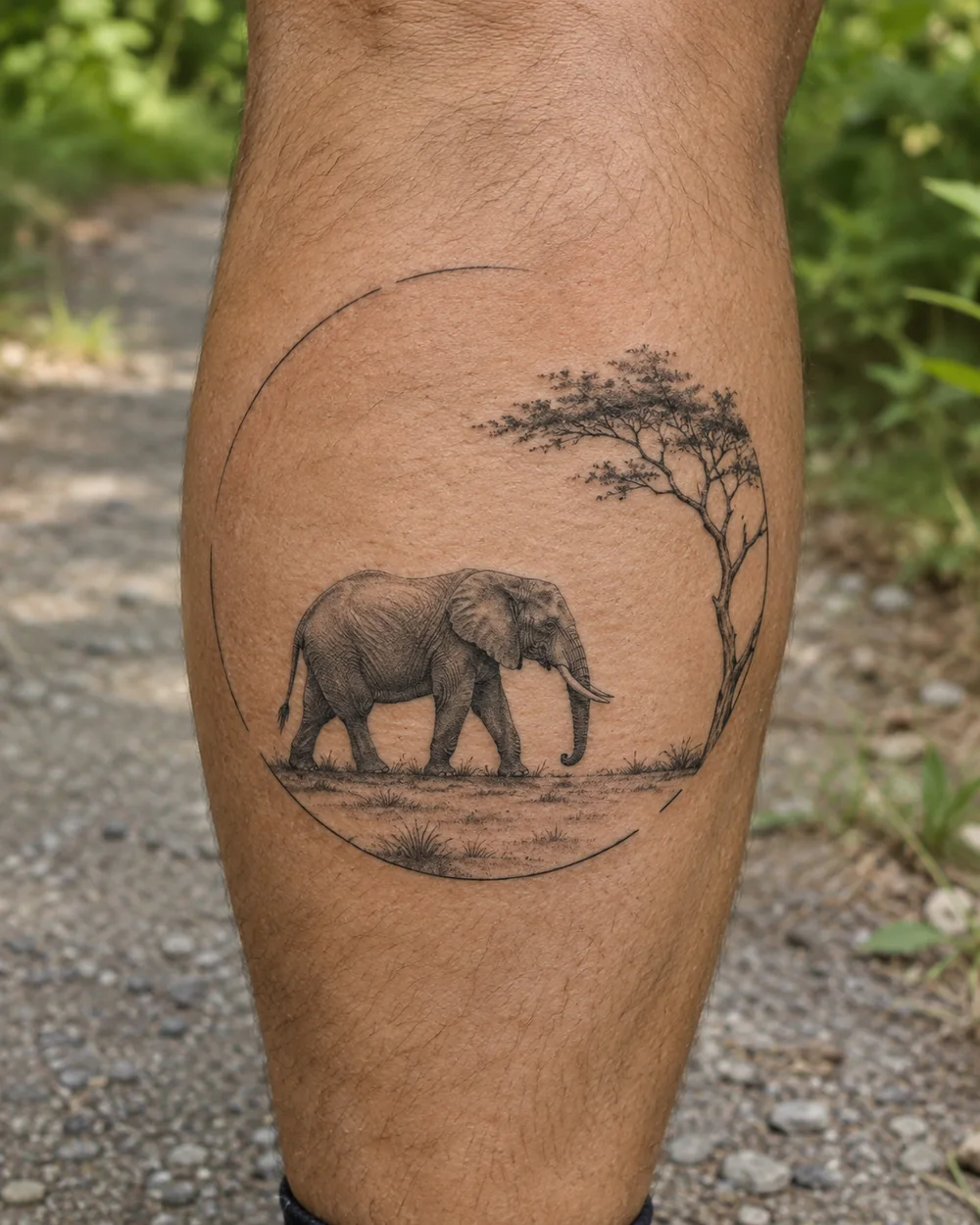
A round frame can hold a whole tiny scene: one elephant, a low horizon, and a single tree off to the side. Leave the sky mostly open so the animal stays easy to spot. This approach suits anyone who likes the idea of carrying a little illustrated window into the outdoors.
12. Bold Traditional Style Elephant
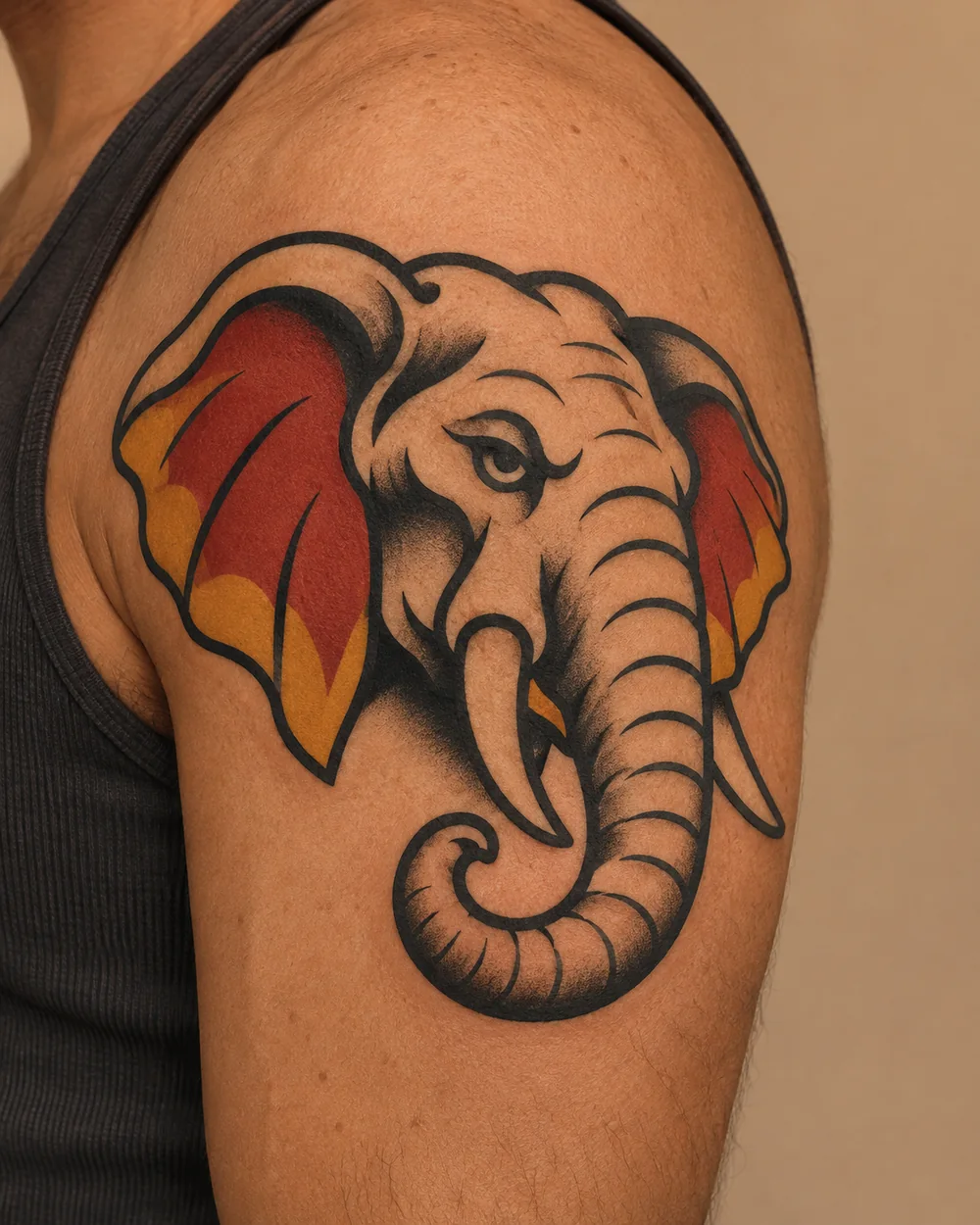
Thicker outlines and a small color palette give this elephant a confident, graphic personality. Try a turned head, broad ears, and simple red or mustard accents rather than lots of tiny decoration. The expression can be downright charming, with enough swagger to make a modest upper-arm placement feel like the main event.
13. Dotwork Elephant Silhouette
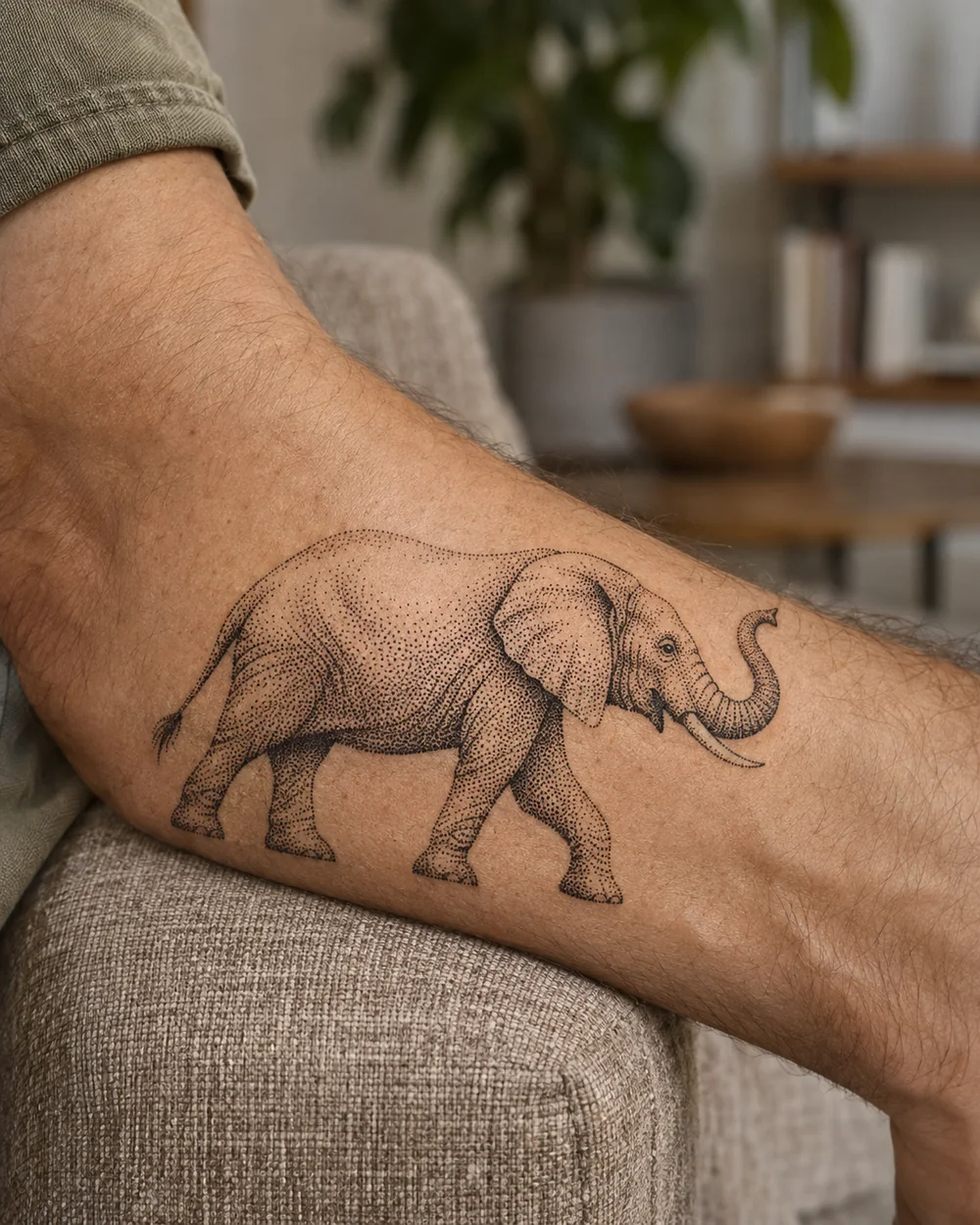
Build the shadows from little dots and let the elephant's outline do the rest. Denser stippling beneath the belly and inside the ear creates contrast without covering the entire shape. An upward-curving trunk adds a lively finishing touch, like this elephant has just spotted something much more interesting across the room.
14. Elephant Peeking Through Leaves
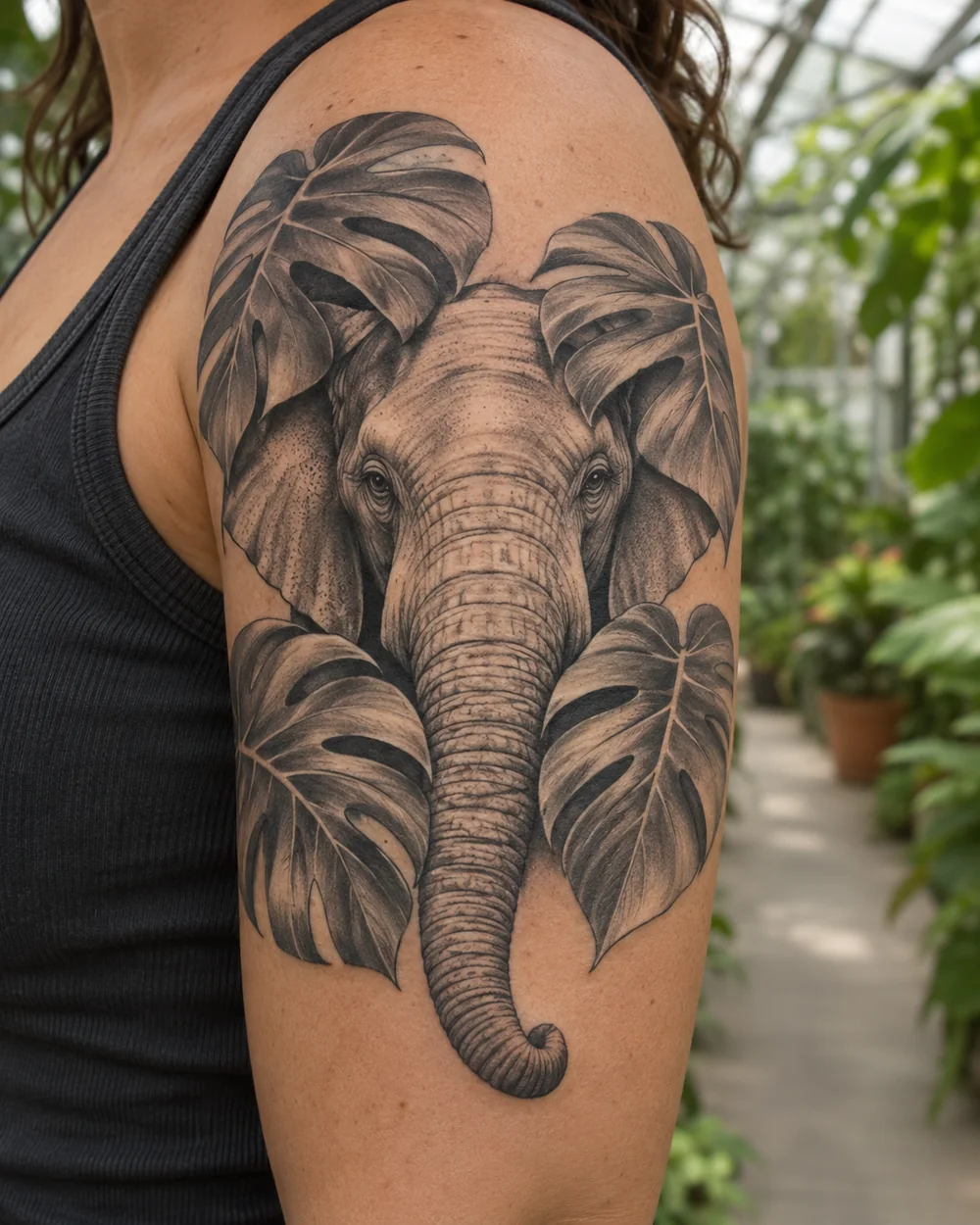
Frame an elephant's face with a few oversized leaves, allowing the forehead and trunk to emerge between them. Uneven leaf heights keep the arrangement from looking too tidy. A mostly black-and-gray palette puts the focus on overlapping shapes, giving this curious little face the best hiding place that absolutely fools nobody.
15. Sketchbook Elephant
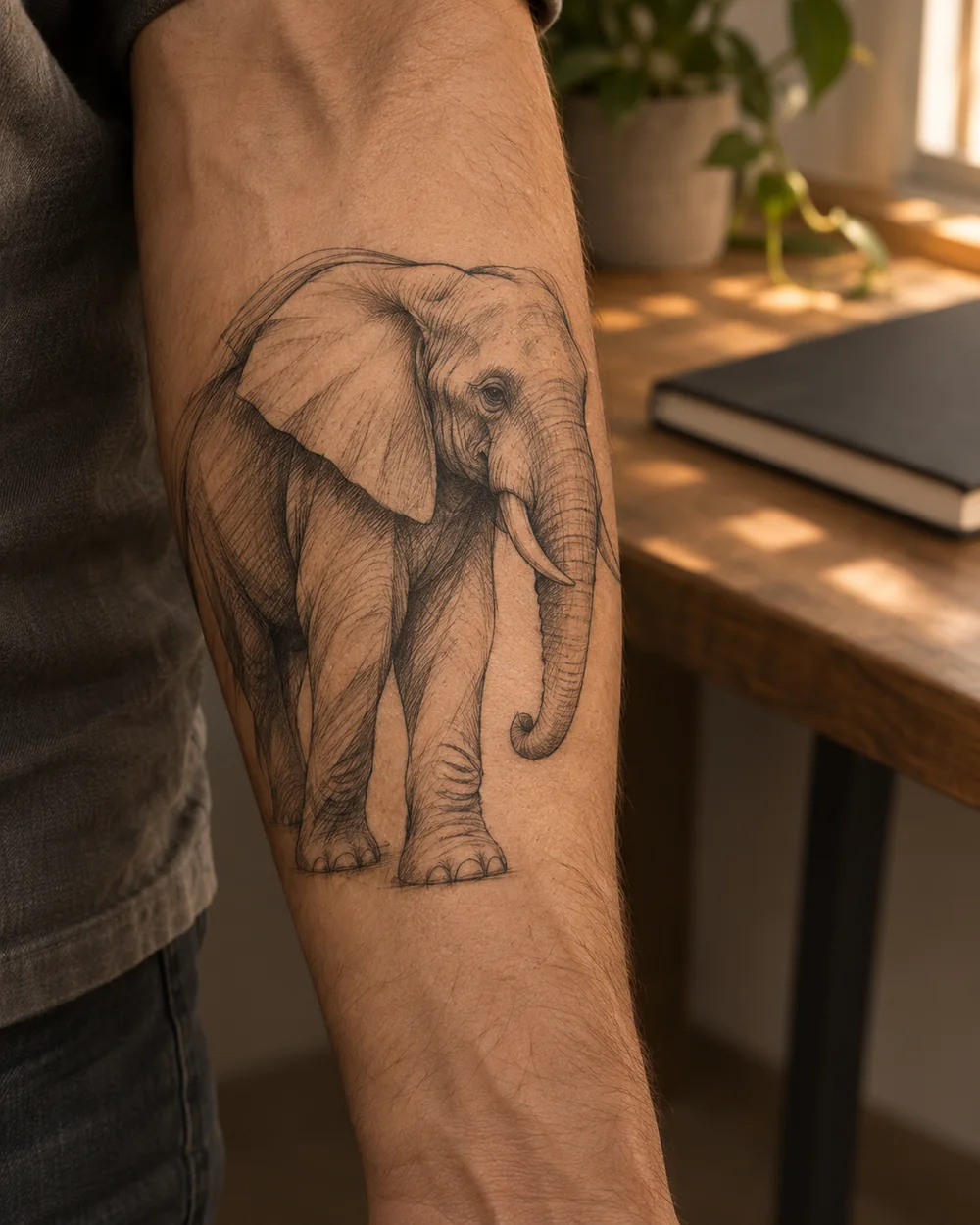
Loose contour marks can make an elephant look freshly drawn in a favorite sketchbook. Use a few doubled lines around the back and ear, then keep the eye and trunk more deliberate. That balance brings an unfinished, artsy charm without losing the animal beneath a tangle of enthusiastic pencil impersonations.
16. Close Up Elephant Eye
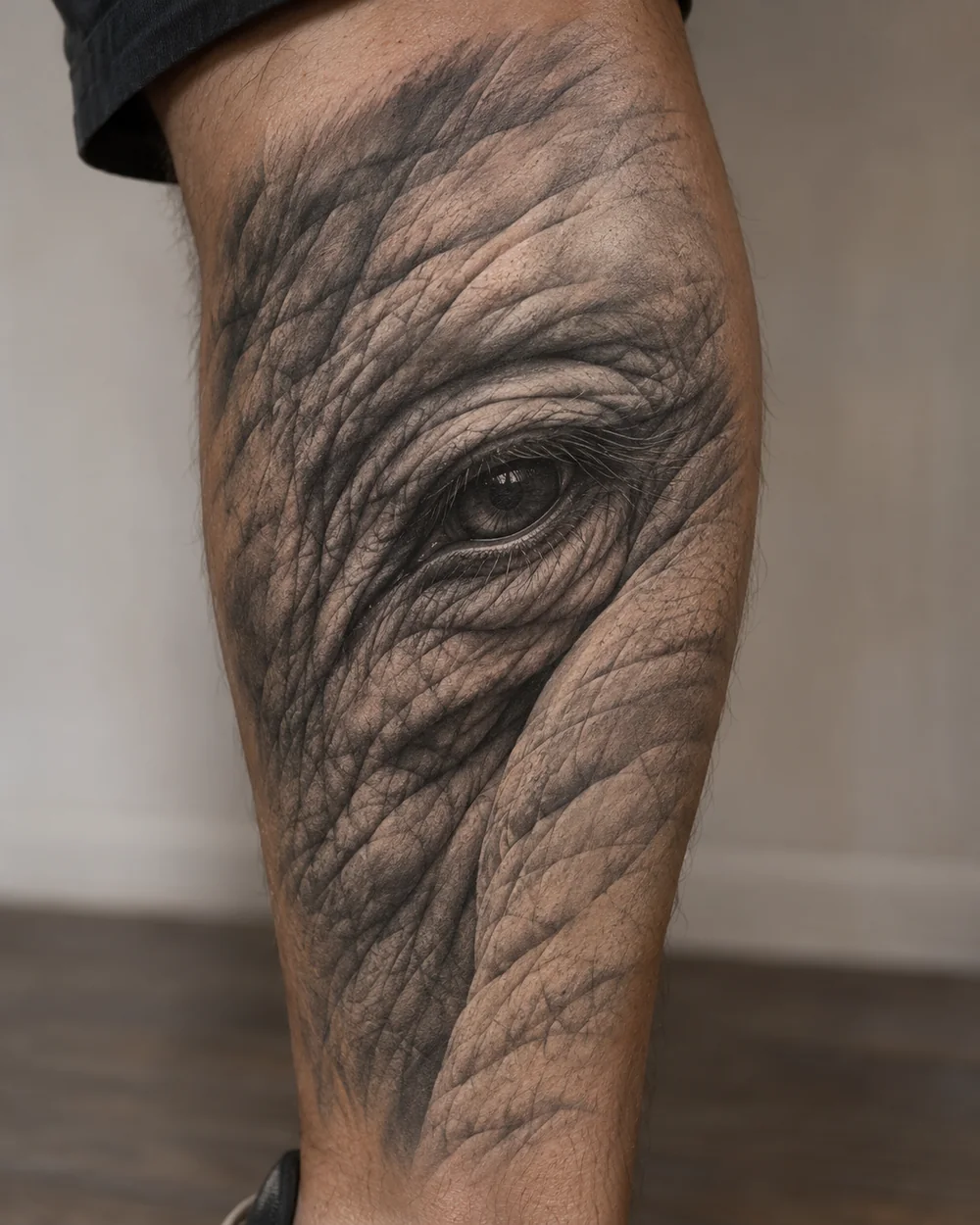
For a less expected take, focus on one elephant eye and the folds around it. The cropped composition gives texture the spotlight, with the ear or trunk only hinted at along an edge. Keep the eye clearly defined within the shading so the design feels intentional, rather than a mysterious patch of wrinkles.
17. Detailed Elephant Head Portrait
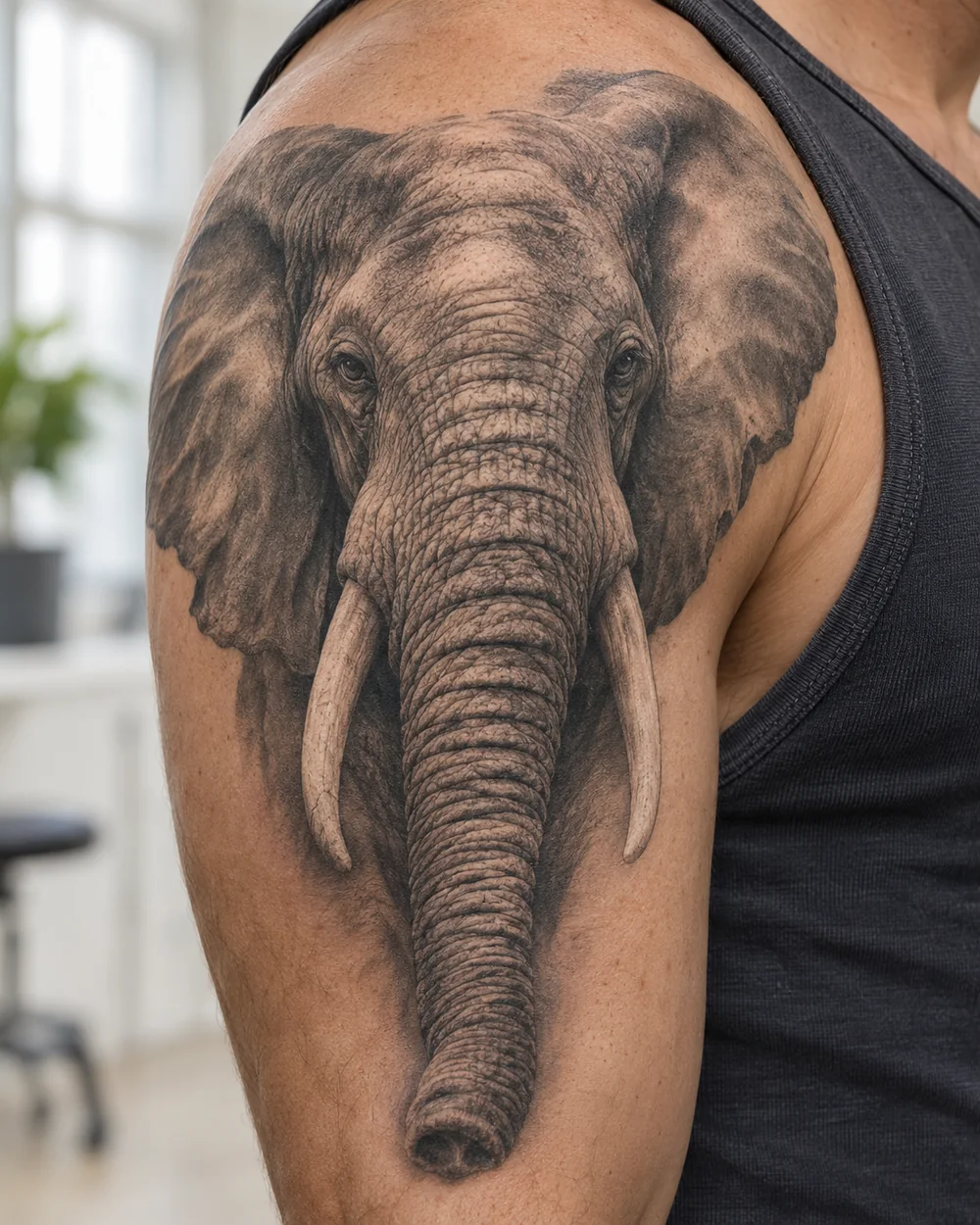
A larger elephant portrait gives those wonderful ears and forehead folds plenty of attention. Soft black-and-gray shading can build the face gradually, with open highlights keeping the trunk distinct. Let the portrait stand on its own if you love the animal's features; sometimes the elephant really is the entire conversation.
18. Full Body Elephant in Motion
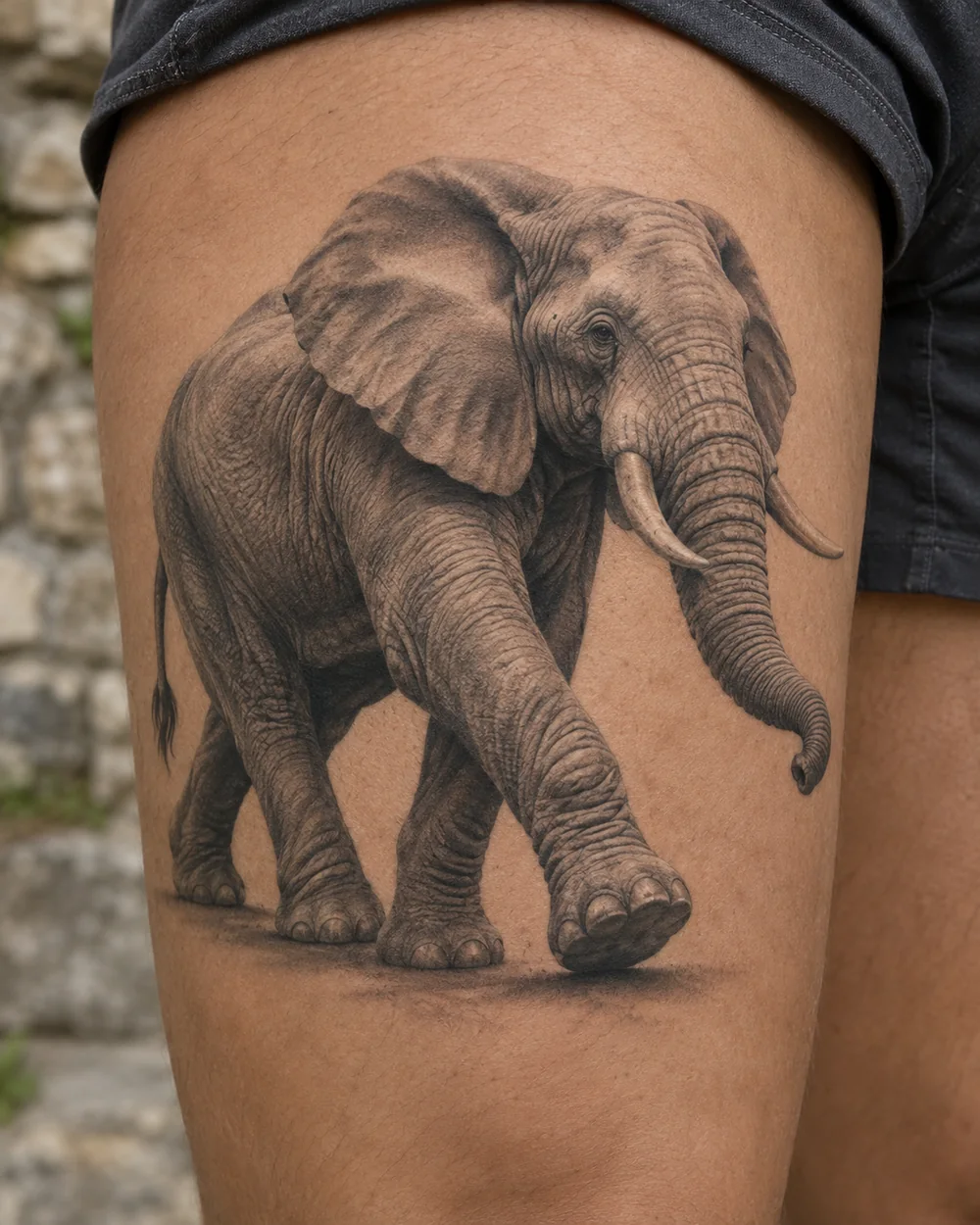
A walking elephant brings a different kind of drama, especially with one front foot lifted and the trunk swinging gently. Leave space around the legs so the pose reads clearly. A generous thigh or upper-arm composition gives the body room, letting the movement lead instead of squeezing every wrinkle into the frame.
Choosing Your Elephant Tattoo
Start with the version you keep coming back to: a tiny silhouette, a playful little scene, or a face full of detail. Save a few favorites and talk through scale, spacing, and placement with your artist. The best part is choosing the elephant that feels at home in your own collection.